Monthly Archives: September 2015

Lot 40

Lot 40 canadian rye whisky bottle

You can’t write a whisky blog in Canada and not mention Lot 40. 🙂

Lot 40 is made by Corby at the Hiram Walker facility (Corby is the same distiller responsible for the Wiser brand of whiskies). Lot 40 is actually a straight (i.e., 100%) rye whisky, and traces its ancestry back to the 18th century in Ontario, Canada. The name apparently refers to the lot where the distiller Joshua Booth’s farm was built. His whisky was resurrected by a descendent of the Booth family in the late 1990s as part of Hiram Walker’s short-lived Canadian Whisky Guild series.

Lot 40 apparently developed a strong (if small) following, and was profoundly missed when production ceased in the early 2000s. Corby brought it back in 2012, with similar composition and packaging. AFAIK, it is all produced from a single 12,000 L copper pot still at the Hiram Walker & Sons plant in Windsor, Ontario. Originally a mix of rye grain and a small amount of malted rye, they switched in 2013 to using 100% unmalted rye whisky (meaning enzymes have to be added). Later batches (e.g., 2015 onward) may also have received more extensive barrel aging, but no age statement is given.

Since its re-release, it has remained a continual favourite with critics and rye whisky drinkers alike – racking up an impressive series of awards. It scores 8.99 ± 0.30 on 13 reviews in my database – which is impressive both for absolute value and consistency. It edges out the Masterson’s Straight Rye 10yo (8.94 ± 0.44 on 12 reviews) and considerably out-competes the recent Canadian Club 100% Rye (8.64 ± 0.39 on 6 reviews). As previously discussed, I think the CC 100% Rye is a great whisky in its own right – but I have to agree that Lot 40 is better overall.

A truly stellar aspect of Lot 40 for me is its nose – a rich bouquet of baking spices (cinnamon and nutmeg in particular) and fragrant floral notes (including heather), with some dark fruits evident underneath. You can also smell the candied sweetness that is the characteristic of new charred oak barrels. Rich and complex, there are absolutely no false notes here­. Honestly I could smell it all night long (which, as my lovely wife has opined, would certainly make it last longer!). 😉

The palate is very pleasing as well, with much the same layered flavours as found on the nose. Not quite as fruit-forward as I was expecting, although still plenty of apple, pear and some prunes. A touch of anise. In addition to baking spices, it also reminds me a bit of the hot/sweet cinnamon candies I grew up on. However, I must admit that I find it doesn’t quite live up to the promise of that wonderful nose. As mentioned in my CC 100% Rye review, I actually like the more fruit-forward profile of the CC offering (as least as far as initial palate goes). Again, there is nothing offensive in the palate here – it is just a touch more subdued than I would have hoped for. Simply put, if the nose is a home-run, I’d rate the palate as a triple.

Lot 40 canadian rye whisky bottleThe finish is relatively long for a Canadian rye whisky, with a soft rye glow that fades into more typical vanilla sweetness (there’s that new oak again). A definite improvement over the very short-lived finish of CC 100% Rye. Again, it’s not going to compete with an expressive single malt, but it is a nice (if fairly simple) finish for this class of whisky.

Lot 40 is the first whisky that really got me appreciating the Canadian rye style. Like many people, I previously tended to turn my nose up at our home and native hooch. If you haven’t tried it, Lot 40 is a real eye-opener. It’s also a great bargain at $40 at the LCBO.

For typical Canadian reviews, you can try the rumhowler’s blog, Whisky Won, or CanadianWhisky.org. For some international perspectives, you can check out the Scotchnoob or WhiskyNotes.be.

Whisky in Korea

Selection from the Malt Shop

I’m just back from my second trip to Seoul, South Korea, and had a chance to look into whisky options available there.

Whisky remains a fairly popular drink in Korea, and you will find it on a lot of bar menus. However, the most commonly available choices are generally limited to scotch-style blends, with only a small number of single malts (if any). Prices for the standard scotch fare are generally a little higher than you would pay in North America, but not hugely so. The various expressions of the two common “Korean whisky” brands you will find – Scotch Blue (by Lotte Chilsun) and Windsor (by Diageo) – are typically all blends, sourced from Scottish distilleries for the Korean market.

In terms of selection for purchase, you can be well served by checking out the liquor boutiques in the basement of the major conglomerate department stores (i.e., where the excellent food courts are kept). I perused a couple, but was generally disappointed by the whisky selection and prices (i.e., mainly blends, and rather expensive at that). You do a bit better for wine here, but this is again not exactly a cheap option. Of course, across Seoul there are plenty of small stand-alone liquor stores – but these can be hard to find (and may be difficult to deal with if you are not fluent in Korean).

Your best option for price remains the airport duty free. Unfortunately, the main terminal at Incheon was undergoing renovations when I was there (September 2015), and many of the larger duty free outlets were closed – including the one that has the largest selection of liquor. However, a new large duty free shop recently opened in the Concourse terminal. It had the common whisky items for international duty free, at the usual excellent prices. While again somewhat more heavily biased toward blends than typical, there were a good number of well-known single malt expressions (especially the travel editions). Sadly, there were no Japanese or Taiwanese whiskies present on my traipse through. Also, unlike most duty frees, the whiskies were intentionally scattered across the entire store. This requires you to carefully scan every display, aisle and shelf when looking for products – and interact with a large horde of sales associates at every turn.

Another option is the small but well-organized Malt Shop, in the Gangnam district of Seoul. This store has an excellent collection of international whiskies, as you will able to tell from their website. Be advised however that not everything you see on that site is available for sale (even if it is shown as in stock). For example, while I counted 5 miniature 180mL bottles of the Hibiki 21yo on the shelf, these were all marked “not for sale”. According to the sales clerk, they were part of the owner’s personal collection. And none of the other miniature Japanese bottles shown on the website could be found in the store. That said, most of the full-sized malt whisky bottles listed were available.

The website does not list prices, and I found these to be somewhat variable in-store. Some of the commonly available single malt expressions were quite reasonable – especially the mid-range ones, which were often comparable or even cheaper to what I would pay here at the LCBO (e.g. most of the Balvenies, Highland Parks, etc.). That said, most of the higher-end and entry-level malt whiskies were typically more expensive than you will find in North America. As an aside, the listed shelf prices assume a credit card purchase. If you are paying cash, you may be able to negotiate ~5-10% off these prices.

The inventory was certainly a lot better than what I can find domestically at the LCBO. There were about half-a-dozen expressions available for each of the common Scottish single malt brands (e.g. Ardbeg, Balvenie, Benromach, Dalmore, GlenDronach, Glenlivet, Glenfiddich, Glenmorangie, Glen Moray, Talisker, Tomatin). In some cases, there were even more expressions than I expected to find (e.g., I counted 9 different examples of Arran malts). Some brands only had a couple of expressions available (e.g., Auchentoshan, BenRiach, Bruichladdich, Glenfarclas, Glenrothes, Highland Park, Jura, Springbank, etc.), although that is understandable in some of those cases.

Of course, what I was really looking for was the selection of Japanese and Taiwanese whiskies. 🙂 While there were only two bottles of Kavalan (one Soloist, one ConcertMaster), there were about a dozen or so expressions for each of the Nikka and Suntory lines. Unfortunately, the Nikka ones were largely entry-level expressions (e.g., Super, Gold & Gold, etc.) – including many that I had never even heard of previously. I did however manage to snag the Taketsuru 21yo, which is one I was really looking to find.

Suntory was generally a better mix, with a range from standard Kakubin to the entry-level Yamazaki/Hakushu malts and mid-range Hibikis. Unfortunately, the prices for all the Japanese whiskies were very high, relative to most of the Scottish malts. For example, they wanted ~$300 CAD for the Yamazaki 12yo, ~$400 CAD for the Hibiki 17yo and ~$600 CAD for the 21yo! It’s true that Japanese whisky prices have been rising rapidly lately (and Korea has significant import taxes on Japanese whiskies), but I could typically find those bottles at a quarter of those prices a year ago in Japan. Even the new entry-level Yamazaki NAS “Distiller’s Reserve” was listed at ~$140 CAD. Simply put, Korea is not a place to look for reasonable prices on Asian whiskies – but you can do okay for the Scottish malts.

The Malt Shop, Gangnam, SeoulIn any case, the Malt Shop is definitely worth a visit if you are visiting Seoul and have to some free time. Some of the map links for this store on other blogs are incorrect. Here is a confirmed direct link to google maps, using the store’s address.

It is accessible by public transit, right near the Seonjeongneung subway station. You can access this station off either the yellow Bundang Line (station 214), or the light brown Line 9 (station 927). Once there, take the #4 street exit, and head due south along Seolleung-ro for about 100m – you won’t miss the shop.

Kamsahamnida!


Chivas Regal 12 Year Old

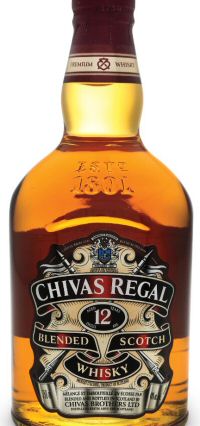
Chivas Regal blend 12yo bottle

If you are just starting to explore the world of whiskies, there are a few generalizations that can actually be helpful (unlike all the misleading ones that I describe here). Specifically, when it comes to blended Scotch whiskies, most of these were not intended to be drunk neat (aka, straight). While decent blends certainly exist, single malts are widely available to fill that higher-end market niche. And so, most Scottish blends are typically engineered to be best suited to mixed drinks or cocktails. Note that that this is not necessarily the case in other jurisdictions, but it is a good rule of thumb for the lower-priced Scotch blends.

But it is also important to keep this feature in mind when perusing reviews. Typically, most expert reviewers only discuss sampling their whiskies neat (with perhaps a bit of water). This is understandable, as it allows them to explore flavours in the greatest detail, in a consistent way. But you may be missing out on an important piece of the puzzle if that doesn’t match how the whisky is commonly consumed (or was intended to be consumed).

Which brings me around to the point behind this commentary – the common Scotch blend, Chivas Regal 12 year old. This is probably the second-best seller in this class after Johnny Walker Black Label, and is especially popular in the US. Yet while JW Black gets an above-average score for a blend (and is certainly quite drinkable neat, in my view), the Chivas Regal 12yo comes in fourth-to-last among all Scottish blends in my Metacritic database: 7.78 ± 0.43 on 15 reviews.

As an aside, don’t let the seemingly high standard deviation mislead you – pretty much none of the reviewers here likes it much. 😉 Only one reviewer gives it mid-range rank – the rest all place it in their bottom 20th percentile (indeed, five of them put it in their lowest 5th percentile). As described here, one of the features of scoring is that higher-ranked items invariably have a lower standard deviation (because they couldn’t be highly ranked otherwise!).

Now, back to the matter at hand: So why does this Scotch place so low in the database, when it seems to sell quite well (and is higher priced than most entry-level blends)? The secret to understanding this is to recognize that Chivas Regal 12 yr old was specifically re-engineered in the 1950s for the palate of “scotch-and-soda” drinking Americans and Englishmen.

Personally, I find it to be a generally boring whisky when served neat – except for a rather unpleasant and harsh grassiness that doesn’t balance well at all with its light sweetness. On the bright side, at least it doesn’t have much of a finish. But this is certainly not one that I want to sip neat – and neither does anyone else that I’ve served it to. This is consistent with the low expert score in the Metacritic database.

But what happens if you serve it the way it was apparently intended to be – that is, combined with soda water? For those of you not familiar, soda water is carbonated water that has some sodium in it – such as Club Soda here in Canada. The sodium component is important, as it tends provide a subjective “drying” effect, that encourages you take another sip.

Typically, scotch-and-soda drinkers mix scotch into soda water anywhere from 1 part in 2, to 1 part in 5 (i.e. 1:1, down to 1:4 scotch:soda). I have experimented on the Chivas Regal 12, and find something almost magical happens around 1:3. Suddenly, all the unpleasant characteristics disappear, and the floral and nutty notes are amplified in a refreshing mix. It’s really quite the startling transformation. When served this way, on the rocks, I’ve seen people happily finish the glass. These would be the same people who politely handed me back the Glencairn after a single sip, when served neat. 😉

My point here is that this is one low-ranked whisky where I believe the combined wisdom of the meta-critic score has it right. But that score really only applies to drinking it neat or with a bit of water. If you are scotch-and-soda drinker, I find this blend works better than most of the others I’ve experimented with.

Chivas Regal blend 12yo bottleBy the way, pronouncing this brand is actually a bit tricky. Most Scots seem to go for something that sounds like SHIV-us or SHIV-is (whereas some in other parts of the UK may go more for CHIV-vers). Americans tend to go more for a SHEE-vus pronunciation, and I’ve even heard SHEE-vass. It seems like only thing everyone agrees on is that it is definitely not to be pronounced CHEE-vis (so, no Chivas and Butthead jokes please). 😉

If you are interested in trying an inexpensive Scottish blend for sipping neat, I’d suggest Johnny Walker Black or Té Bheag. But if (like me) you were gifted a bottle of Chivas Regal 12 yo and don’t know what to do with it, I’d recommend breaking out the club soda. You could also try mixing with other popular options, like coke, ginger ale or coconut water – but I’ve found club soda to do the best job.

For expert reviews of this whisky, you can check out any of the ones on my master review list.  They pretty much all say the same thing. 🙂