Author Archives: selfbuilt

Karuizawa Asama Vintages 1999/2000
Ah, the fabled Karuizawa distillery.  Established in 1955, Karuizawa was one of the early pioneers of Japanese whisky production. Unusually for a Japanese whisky maker, they focused mainly on sherry cask aging. It was always a relatively small operation however, and production was eventually mothballed in 2000 (with the distillery permanently closing in 2011).

Karuizawa was located in a small town on the slopes of an active volcano, Mount Asama. Coming from the end of production, this Karuizawa Asama expression is a multi-vintage bottling of 77 casks from the final 1999 and 2000 vintages. It was bottled in 2012 by the company that bought out all the remaining casks when the distillery closed, Number One Drinks in the UK. Sadly, this is the likely the last Karuizawa release we are ever going to see. Note that this edition is different from an earlier Spirit of Asama release, through The Whisky Exchange.

I believe Karuizawa Asama was mainly released in Europe. It is bottled at 46% ABV, and the casks used were predominantly sherry butts (although some bourbon casks may have been included). As opposed to the expensive final age-statement Karuizawas produced under their own name, this Asama expression was initially sold at a budget price (for Karuizawa stock, that is). Since then, prices for the few remaining Asama bottles have skyrocketed (which is why it currently earns a $$$$$+ in my database).

But somehow, the Dr Jekyll’s pub in Oslo, Norway, recently managed to get some in at the original low price. Rather than gouge their customers, they offered it at 137 NOK (just over $21 CAD) for a standard 4 cl (1.35 oz) pour.  That puts it at the same price point as an entry-level Scottish malt in the bar (note that liquor in Norway is among the most heavily taxed in Europe). I must say, even the bartenders were pretty surprised when they rang it up for me – all the other Karuizawas they have (including several OBs and a custom cask just for Dr Jekyll’s) are in the 400-800 NOK range (i.e., $65-$130 CAD a shot)!

I don’t track many Karuizawa vintages in my database, given their rarity and cost.  But here’s how Asama compares to some other Japanese whiskies (especially those with some sherry finishing).

Hakushu Sherry Cask: 8.96 ± 0.43 on 7 reviews ($$$$$+)
Ichiro’s Malt The Joker: 9.24 ± 0.22 on 4 reviews ($$$$$+)
Ichiro’s Malt Double Distilleries: 8.64 ± 0.27 on 6 reviews ($$$$$)
Karuizawa 1990 Sherry Butt: 9.00 ± 0.30 on 4 reviews ($$$$$+)
Karuizawa Asama Vintages 1999-2000: 8.63 ± 0.44 on 9 reviews ($$$$$+)
Nikka From the Barrel: 8.81 ± 0.40 on 21 reviews ($$$)
Yamazaki Distiller’s Reserve: 8.63 ± 0.32 on 5 reviews ($$$$)
Yamazaki Puncheon: 8.63 ± 0.23 on 10 reviews ($$$$$)
Yamazaki Sherry Cask (all vintages): 9.07 ± 0.30 on 11 reviews ($$$$$+)
Yamazaki 18yo: 9.14 ± 0.21 on 20 reviews ($$$$$)

There is clearly higher than usual variation in reviews of this particular Asama whisky (as there are with a couple of the other sherry cask finished Japanese whiskies).  That’s always an interesting feature to explore further, and I’ll come back to this point at the end of the review.

Let’s see what I find in the glass:

Nose: Now that’s a bit different! You get the obvious hit of sherry (with figs, raisins, and nuts), but with attenuated smokey notes (spent matchsticks, extinguished campfire) and just a slight touch of peat. Very much a rancio profile – how odd for a Japanese whisky. Layered, but in a really unusual way that is hard to describe (“atypical” was the first comment in my shorthand tasting notes). A touch of lemon. Some salt. Slightly floral (hint of apple blossoms). Really distinctive – the closest thing in my experience would be some independent bottlings of Highland Park.

Palate: Like the nose, complex and layered. Definitely a drier type of sherry here, with dried fruits dominating. I do get some sweet syrupy notes however (brown sugar mainly, touch of maple). Spent matchsticks again (I think some people describe this dry smokey note as “gunpowder”). Chewy texture, great mouthfeel.‎ No real burn to speak of.  Certainly leaves a very favourable initial impression in the mouth – you don’t want to swallow! Doesn’t need any water, but a small amount brings up the sweetness slightly without affecting the other characteristics.

Finish: Nice and long, with slow lingering smoke. No real bitterness to my taste buds (YMMV, see comments below). Citrusy, but not a lot of variety on the fruit front, just a lingering sweetness (i.e., more juicy fruit gum than actual fruits). A bit of tobacco and leather. A touch more complexity here would have made it outstanding, but it is still excellent for the Japanese class.
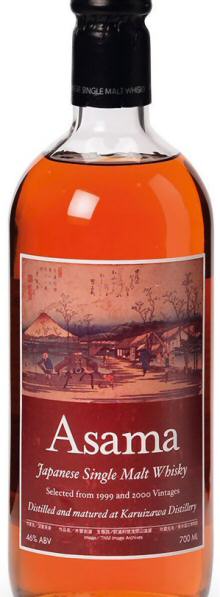
AsamaA quality‎ dram through and through. Its atypical-ness is something you are either likely to love (as I do), or feel frustrated by (i.e., it could seem “unbalanced” to some). I wish I could find a bottle for what the pub paid for it – but that’s highly wishful thinking. Instead, I made do with going back to Dr Jekyll’s the next night and having a second pour. 🙂

Never having expected to try it, I didn’t know much about this one ahead of time. As such, it is ironic that I had just finished the Mortlach 18 year old in the bar before trying Asama. Based on my earlier review of the Mortlach Rare Old, my description of the Asama here is similar to the profile that I would have expected from the Mortlach. But the Asama blew it out of the water on all fronts – nose, palate and finish. The Mortlach just seemed “closed” and toned down to me in direct comparison.

Those who are sensitive to sulphury notes may find the Asama a bit off-putting. As a discussed in the Mortlach Rare Old review, sensitivity to this “biological danger signal” is quite variable among different genetic populations. I suspect some of the sherry casks used here may have suffered from over-sulphuring. To me, that just introduced a distinctive character, but YMMV.

As you would expect give the above, variation among reviewers for this one is high. Like me, Serge of Whisky Fun loves it. Michio of Japan Whisky Reviews and My Annoying Opinions are conflicted on this one, and both give it lower than typical scores. The guys at Quebec Whisky are a good example the the range on this one: top marks from Patrick, above-average scores from Andre and Martin, and a low score from RV. If you get the chance to try it yourself, I highly recommend you give it shot.

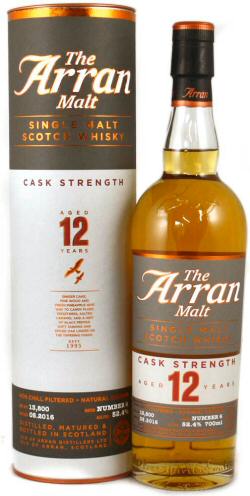
Arran Malt 12 Year Old Cask Strength

The Arran Malt distillery makes a number of very popular single malts in the light flavour class (i.e., supercluster G-H), as well as a large number of wine cask-finished malts.  As discussed in my recent review of their 10 year old expression, while the distillery itself is relatively young, there is a long history and tradition of whisky making on the isle of Arran.

While I found their standard 10 yo expression decent enough, there wasn’t really much for me to recommend it over other entry-level examples of this class.  I almost picked up the 12 year old cask-strength edition last year (on a recommendation from a LCBO employee), but let it pass in favour of a wine-cask finished expression (review to come soon). Fortunately, I had the chance to try this 12 yo malt recently in a restaurant in Norway.

Note that there have been a number of different batches of the Arran 12 Year Old Cask Strength over the last few years. I know the LCBO version was 54.0% ABV, but I’ve seen other strengths reported online for the earlier batches.  The bottle I sampled from appears to have been from the same stock as the LCBO (i.e., 54%).

Let’s see how the relevant Arran Malts do in my Meta-Critic Whisky Database, compared to the competition for similar price, flavour and strength camps:

Arran Malt Lochranza Reserve: 7.93 ± 0.67 on 3 reviews ($$$)
Arran Malt Robert Burns: 8.29 ± 0.61 on 7 reviews ($$)
Arran Malt 10yo: 8.50 ± 0.30 on 20 reviews ($$$)
Arran Malt 12yo Cask Strength: 8.65 ± 0.39 on 12 reviews ($$$$)
Arran Malt 14yo: 8.67 ± 0.28 on 19 reviews ($$$$)
AnCnoc 12yo: 8.62 ± 0.35 on 17 reviews ($$$)
BenRiach 12yo: 8.41 ± 0.27 on 13 reviews ($$$)
BenRiach Cask Strength: 8.86 ± 0.10 on 5 reviews ($$$$)
Benromach 10yo Cask Strength (100 proof): 9.05 ± 0.13 on 9 reviews ($$$$)
Craigellachie 13yo: 8.39 ± 0.44 on 12 reviews ($$$)
Dalwhinnie 15yo: 8.67 ± 0.35 on 18 reviews ($$$$)
Glenkinchie 12yo: 8.25 ± 0.17 on 14 reviews ($$$)
Tomatin Cask Strength: 8.35 ± 0.48 on 9 reviews ($$$$)

And now let’s see what I find in the glass for this 12 yo cask strength sample:

Nose: Very sweet up front, with honey, simple sugar, and maybe even a little light brown sugar. Apple juice, with a wide range of lighter fruits peaking though – including apple, pear, peaches and plums. A bit of anise. Spicy, in the direction of cloves and all spice. Grassy character. Vanilla.  No off notes. Very nice, and a great improvement over the 10 yo.

Palate: Pears and green apple are the dominant fruit notes (and apple juice again). Butterscotch comes on strong now, and adds to the vanilla. Marshmallows. Texture is thick and creamy, giving it a great mouthfeel. Surprisingly easy to drink, and not very hot, despite the 54% ABV. With a little water, there isn’t much change in flavour, but it gains a slightly grainier texture (i.e., less malty, more raw barley). There’s is also a eucalyptus note now and graham crackers. With even more water, pepper and the spices pick up – but the other flavours dull.

Arran12Finish‎: Medium. Longer than the 10 yo, but it would be nice if it were even longer here. Some slight astringent bitterness, but mild. Water may increase this bitterness though, and bring in some artificial sweetener notes, so go easy on it. Frankly the finish (while decent) is the weakest part of this expression.
Wow, this was a pleasant surprise. Personally, I would put this on par with Dalwhinnie 15 as among the best of the light G-H flavour supercluster. Certainly far surpasses the Arran Malt 10 yo, or AnCnoc 12 yo. I regret not picking a bottle up when it was available at the LCBO.

Among reviewers, Josh the Whiskey Jug is a fan, as are Andre, Martin and Patrick of Quebec Whisky. Ralfy and and Gavin of Whisky Advocate gives it a more moderate score. The only truly negative score I’ve seen comes from Jim Murray.

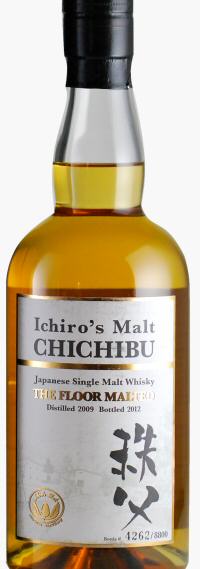
Ichiro’s Malt Chichibu The Floor Malted

Ichiro’s Malt is the brainchild of Ichiro Akuto – grandson of the founder of the fabled (and long closed) Hanyu distillery in Japan. Ichiro founded the new Chichibu distillery nearby, and started vatting his new make with old Hanyu stock for his early releases (see my reviews of Ichiro’s Malt Mizunara Wood Reserve and Double Distilleries).

Following on his inaugural Chichibu single malt release (the appropriately named Chichibu The First), Ichiro released this slightly revised version, known as The Floor Malted. This is in reference to the traditional method of malting barley in Scottish single malts (although it may not be so common elsewhere). Apparently, Ichiro learned this method while in Britain, and he personally hand-malted all the barley for this release while there.

Distilled in 2009 and released in 2012, this 3 year old whisky was bottled at 50.5% ABV. Only 8800 bottles were produced, so it is understandably hard to get a hold of now. I came across it recently at Dr Jekyll’s pub in Oslo, Norway – for the low price of 148 NOK (about $23 CAD) for a standard 4 cl pour. That’s about what they want for an entry-level Scottish speyside in the bar.  Note that alcohol in Norway is heavily taxed, and so it is not the best jurisdiction to go hunting for bargains. But Dr Jekyll’s has one of the best selections I’ve ever seen, and they pass along bargains to their customers (which tells me they must have picked this one up at something near its original 9,000 Yen – $90 CAD – price tag). Thanks to Thomas Øhrbom of Whisky Saga for introducing me to the place. The bottle number was 8229.

According to info online, it is believed to be aged in a combination of primarily ex-bourbon casks as well as Chichibu’s own original quarter casks called “Chibidaru” (or more simply, “Chibi”).  There are not a lot of reviews of it online, but here’s how it compares to other Ichiro’s Malts in my Meta-Critic Database:

Ichiro’s Malt The Joker: 9.24 ± 0.22 on 4 reviews ($$$$$+)
Ichiro’s Malt Double Distilleries: 8.64 ± 0.27 on 6 reviews ($$$$$)
Ichiro’s Malt Chichibu The Floor Malted: 8.56 ± 0.27 on 4 reviews ($$$$$+)
Ichiro’s Malt Chichibu The First: 8.47 ± 0.38 on 12 reviews ($$$$$+)
Ichiro’s Malt Mizunara Wood Reserve (MWR): 8.21 ± 0.55 on 7 reviews ($$$$$)
Ichiro’s Malt Chichibu The Peated: 8.80 ± 0.33 on 7 reviews ($$$$$+)

A step up from the initial release, but not as popular as the third Ichiro’s Malt, the Peated.

Let’s see what I find in the glass for the Floor Malted:

Nose: Definitely a bourbon nose, sweet with honey, pears, peaches and red delicious apples. Vanilla and caramel. A touch of spice, with some honey mustard sauce and eucalyptus. A bit of lemon. Malt comes through very clearly, with cereal notes. The only sign of its young age is a touch of glue – surprisingly few off notes otherwise. Honestly, I’m impressed by the complexity of this three year old malt.

Palate: Very malty, with cereal and biscuit notes most prominent. Similar fruits as the nose. Woody. Initially comes across as somewhat light, but with noticeable alcohol burn (again, likely due to its youth). Texture improves on subsequent sips. Pepper picks up on the spice front, as does some some oaky bitterness. Water helps slightly with burn and improves the texture, but not the faint bitterness – I recommend you try a couple of drops.

Chichibu.Floor.MaltedFinish‎. Shortish. The malty aspects persist the longest, with some of the vanilla and caramel. Turns a bit cakey over time (i.e., dry lemon cake), which is actually a positive for me. Dulls a bit with water, so you will want to go easy here.

An approachable malt, I’m honestly surprised to see this is only 3 years old. Any Canadian whisky I’ve had at that age has been a lot a harsher.  Certainly more interesting than many of the light 10/12 year old Scottish lowlands and speysides. It will be hard for you to come across the Floor Malted “in the wild”, but it was definitely a very good choice for the price I paid in Oslo.

There are few reviews of this whisky among my reviewer base, so I will give you my own score: 8.5 (which puts it right about average for the single malt class).  The lack of much of a finish holds it back from a higher score from me.  But for even more positive reviews, you can check out Dramtastic’s review at the Japanese Whisky Review or Michio’s review at Japan Whisky Reviews. The Whiskey Exchange also has a positive write up for this one.

Arran Malt 10 Year Old

Arran Malt is produced by the Isle of Arran (Arr-en) distillery. Located in the Lochranza village at the northern end of Arran island, this distillery is just over 20 years old.  But don’t let the apparent young age fool you – Arran actually has a long history of whisky making.

In the 19th century, there are believed to have been several dozen whisky producers on the island.  The remote location helped shield their operations from the watchful eye of excise tax agents, and it was apparently not uncommon to refer to “taking the Arran waters” as synonymous with having a glass of whisky in Scotland’s major cities. Eventually, as whisky production became more mainstream (and consistently taxed), the high cost of operation caused whisky producers to shut down on the island.

The modern Arran Malt single malt whisky is very much in the style of the previous production on the island. The base spirit is relatively gentle, creating a soft and light taste – as exemplified by the base 10 and 14 year old expressions. These are finished in a mix of American oak ex-bourbon barrels and first-fill/refill European oak sherry casks. There are also some newer longer-aged expressions available (e.g., 17 and 18 yo). Thoughtfully, Arran expressions are typically bottled at 46% ABV or higher, and are not chill-filtered.

These sorts of light whiskies lend themselves well to cask finishing, and Arran is also well known for one of the widest sets of wine cask-finished malts available (see below for some examples from my database). I will be reviewing a few of these other expressions in upcoming reviews.

For those on even more of a budget, Arran also produces a number of similarly light, entry-level, no-age-statement (NAS) expressions (like Lochranza and Robert Burns). There are even a few lightly peated editions (Machrie Moor and the Devil’s Punchbowl).

Before jumping into the base 10 yo expression, let’s see how the Arran Malts do in my Meta-Critic Whisky Database:

Arran Malt 10yo: 8.50 ± 0.30 on 20 reviews ($$$)
Arran Malt 12yo Cask Strength: 8.63 ± 0.40 on 11 reviews ($$$$)
Arran Malt 14yo: 8.67 ± 0.28 on 19 reviews ($$$$)
Arran Malt 17yo: 8.84 ± 0.26 on 10 reviews ($$$$)
Arran Malt 18yo: 8.92 ± 0.14 on 12 reviews ($$$$$)
Arran Malt Amarone Cask Finish: 8.78 ± 0.37 on 9 reviews ($$$)
Arran Malt Lochranza Reserve: 7.93 ± 0.67 on 3 reviews ($$$)
Arran Machrie Moor Peated: 7.88 ± 0.59 on 11 reviews ($$$$)
Arran Malt Madeira Wine Cask: 8.62 ± 0.44 on 10 reviews ($$$$)
Arran Malt Orkney Bere Barley: 8.80 ± 0.32 on 8 reviews ($$$$)
Arran Malt Port Cask Finish: 8.58 ± 0.40 on 11 reviews ($$$)
Arran Malt Robert Burns: 8.29 ± 0.61 on 7 reviews ($$)
Arran Malt Sauternes Finish: 8.52 ± 0.33 on 11 reviews ($$$)
Arran Malt Sherry Cask Finish: 8.29 ± 0.55 on 11 reviews ($$$$$)
Arran Malt The Devil’s Punch Bowl (all chapters): 8.87 ± 0.30 on 9 reviews ($$$$$)

And now compared to some similarly light malts, in the reasonable $$-$$$$ price class:

AnCnoc 12yo: 8.62 ± 0.35 on 17 reviews ($$$)
BenRiach 12yo: 8.41 ± 0.27 on 13 reviews ($$$)
Cardhu 12yo: 8.08 ± 0.47 on 19 reviews ($$$)
Craigellachie 13yo: 8.39 ± 0.44 on 12 reviews ($$$)
Dalwhinnie 15yo: 8.67 ± 0.35 on 18 reviews ($$$$)
Deanston Virgin Oak: 8.13 ± 0.47 on 12 reviews ($$)
Glen Garioch Founder’s Reserve: 8.34 ± 0.40 on 16 reviews ($$$)
Glen Moray 12yo: 7.99 ± 0.28 on 12 reviews ($$)
Glengoyne 10yo: 8.21 ± 0.33 on 12 reviews ($$$)
Glenkinchie 12yo: 8.25 ± 0.17 on 14 reviews ($$$)
Glenmorangie 10yo: 8.47 ± 0.47 on 23 reviews ($$$)
Hazelburn 8yo: 8.39 ± 0.35 on 11 reviews ($$$$)
Knockando 12yo: 7.91 ± 0.42 on 12 reviews ($$)
Speyburn 10yo: 8.06 ± 0.35 on 18 reviews ($$)

I know those are a lot of numbers, but the up-shot is that Arran is, in general terms, one of the higher ranking examples of the light flavour class (i.e., supercluster G-H). Not bad for a relatively young distillery.

Let’s see what I find in the glass for the 10yo expression. My sample comes from Redditor wuhantang.

Nose: Sweet and malty, with light honey notes. Light fruits as well, mainly green apple,  pear and plum. A bit citrusy. Some caramel. Grassy and a touch floral. Very slight solvent note (glue), which is consistent with the young age – but less offensive than usual. A nice nose overall, very easy-going.

Palate: Very malty again, with Arrowroot biscuits. Sweetened (green) apple juice. Caramel notes pick up further now, and take over from the light honey. Some mild spices pick up too, nutmeg and a touch of cinnamon. Surprisingly watery for 46% ABV, with a very light mouthfeel. Ok, but not overly interesting.

Arran.Malt.10Finish: Medium-short. Oaky bitterness comes up quickly, intermingled with some of the sweet fruit notes. Honestly, reminds me a bit of some of the inexpensive Canadian blends which have similar issues.

My experience of this tasting was going fairly well, up until the finish.  If it weren’t for that quickly emerging bitterness, I would have rated this one consistent with the Meta-Critic average. But as it is, I would personally have to drop it down a couple of points (i.e., 8.3).  The AnCnoc 12 yo is probably a better choice for similar cost, and the slightly more expensive Dalwhinnie 15 yo is definitely a step up in my books. But the Arran 10 yo is still a very decent option in its price class, scoring higher than a number of well-known malts.

Ralfy, Michael of Diving for Pearls, Nathan the Scotch Noob, and the guys at Quebec Whisky are generally all very positive on this expression (although I’m more in line with Martin). John of Whisky Advocate gives it a relatively low score (but that is an earlier version).


WhiskyAnalysis Exceeds 1000 Whiskies

Welcome to 2017!

Whiskyanalysis.com has been up and running for about 18 months now, and just like last year, I thought it would be a good time to take stock of where we are.

The top-line finding is that the Meta-Critic Database has grown to over 1000 whiskies! As always, that encompasses a wide range of Scottish, Irish, American, Canadian and other International malts and blends.

I’ve continued to add new reviewers, so those 1000 whiskies represent over 13,000 individual whisky reviews that I have tracked and manually curated. 😓

The mean Meta-Critic score for all whiskies in the database is currently 8.54, with a mean standard deviation of 0.39. But of course, the range for different classes can vary, depending on reviewer norms.  To help you in figuring out what is a “typical” average and standard deviation score, here is how it break downs for the four main classes that I use to group whiskies:

Bourbon-like: mean average 8.57, mean standard deviation 0.37
Rye-like: mean average 8.47, mean standard deviation 0.46
Scotch-like blends: mean average 8.21, mean standard deviation 0.40
Single Malt-like: mean average 8.54, mean standard deviation 0.39

So when comparing the scores for any given whisky in each of those categories, you can use the numbers above to help calibrate yourself.

I have been adding my own whisky reviews at the rate of about one per week. I expect to keep that up for the conceivable future, as I have a good stockpile of samples to work my way through. Hopefully you will find these individual reviews a good one-stop location for background, tasting notes, relevant Meta-Critic comparisons, and links to further reviews.

And finally, my server stats show we have hit another 1000 milestone – WhiskyAnalysis.com is now averaging over 1000 visitors a day.  That’s about a 3.5-fold increase in traffic since this time last year. Thanks for all the comments, keep ’em coming!

Slainte,
Eric

Storas 21 Year Old Blended Scotch – William Grant & Sons Rare Cask Reserves

William Grant and Sons is an independent, family-owned Scottish spirits company that controls a number of scotch whisky distilleries. The company was established in 1887, and is currently run by descendants of the founder, William Grant.  Indeed, it is the largest of the independent Scottish whisky businesses still owned and operated by a  founding family (i.e., most of the other distillers are owned by large, international spirit conglomerates).

Their core scotch malt whisky brands are Glenfiddich, Balvenie and Kininvie. They also own the grain distiller Girvan, used for a number of popular scotch blends (presumably including the eponymous “Grant’s” blended whisky line). They also own a number of international brands, including Tullamore Dew in Ireland, and Gibson’s in Canada.

W. Grant & Sons has a lot of experience in scotch whisky distilling and blending.  As part of their Rare Cask Reserves series, they have released a number of specific blends (e.g., Ghosted Reserve, Cruinnich).  The LCBO here in Canada received one of these, the 21 year old Stòras (Gaelic for resource – or more simply, store). Only 4,600 bottles of this blended whisky were produced (exclusively for LCBO, as far as I know). It is labelled as batch 15/0408, selected on 13.03.2015, and bottled at 46% ABV.

The LCBO is currently out of inventory, but I managed to pick up a bottle when they were heavily discounted. I thought it would be worthwhile reviewing anyway, as it may give you an idea of what to expect from other Rare Cask Reserves whiskies in the future. A tasting sample also comes from Redditor WDMC-905.

Here’s how some of the core William Grant & Sons scotches fare in my database:

Balvenie 17yo Doublewood: 8.72 ± 0.24 on 11 reviews ($$$$$)
Balvenie 21yo Port Wood: 8.73 ± 0.39 on 13 reviews ($$$$$)
Glenfiddich 18yo: 8.55 ± 0.40 on 16 reviews ($$$$$)
Glenfiddich 19yo Age of Discovery (Bourbon Cask): 8.74 ± 0.31 on 7 reviews ($$$$$)
Glenfiddich 19yo Age of Discovery (Madeira Cask): 8.33 ± 0.43 on 11 reviews ($$$$$)
Glenfiddich 21yo Gran Reserva: 8.66 ± 0.34 on 12 reviews ($$$$$)
Grant’s Blended Sherry Cask: 8.00 ± 0.21 on 5 reviews ($)
Grant’s Family Reserve Blended: 7.61 ± 0.63 on 13 reviews ($)
Kininvie 17yo: 8.82 ± 0.33 on 9 reviews ($$$$$+)
Kininvie 23yo: 8.62 ± 0.29 on 7 reviews ($$$$$+)
Monkey Shoulder 8.29: ± 0.41 on 16 reviews ($$)

Let’s see what I find in the glass for the Storas 21 yo blended scotch:

Nose: Sweet, with lighter fruits (green apple, pear, and plum) and some golden raisins and sultanas. Grape nuts. A good amount of vanilla. Something a bit dusty, like dried barley. Some classic grain notes come through as well, along with a bit of smoke. No solvent smells or off-notes. Definitely seems somewhat Glenfiddich-like overall, but with a touch of a sherry cask finishing.

Palate: Sweet, but tends more toward the dried fruits than fresh ones. More spicy kick than I was expecting, with cinnamon and cloves leading the way. Caramel joins the vanilla, plus some milk chocolate. A bit more oaky now, reminiscent of some common Balvenie editions. Smooth mouthfeel, great balance with the grain. Easy drinking, and perfectly sippable – a good blend, tangy and tasty.

Finish: Medium length. The oaky bitterness builds a little, but its well balanced to the dominant sweet caramel/vanilla.  No new notes here – just a slow fade of the light fruitiness.  Actually pretty decent.

storas-21Not an overly complex whisky, but easily sippable.  The nose doesn’t really do justice to the caramel/vanilla backbone that dominates the palate and finish. I suppose you could say it blends some of the best characteristics of Glenfiddich and Balvenie. Overall, it also reminds me of some of the similarly aged vintage Glenrothes. Perhaps a bit overpriced at the original $190 CAD, but a good deal at the current $90 CAD clearance price, if you ask me.

Personally, I’d give it a 8.7 on my calibrated Meta-Critic rating scale. The only review I’ve seen online from among my Meta-Critic database of reviewers is Devoz on Reddit.  Properly normalized, his score comes to basically the same as mine (8.69).  It is difficult to draw conclusions from just two reviewers, but that average 8.7 score from the two of us puts it very well in-line with the the single malt offerings of comparable age from Glenfiddich, Balvenie and Kininvie described above. May be worth keeping your eye out for other Rare Cask Reserves in the future!


Amrut Portonova Single Malt

Amrut is the biggest name in Indian whiskies. And like Japan and Taiwan before it, they are now garnering all sorts of awards and enthusiast interest. For this review, I am looking at their cask-strength, port-finished single malt – Portonova.

I’m long been a fan of port-finished whiskies. I find it adds a distinctive grape-like fruitiness to most whiskies, that differs from the more common sherry fortified wine-finished ones.

I previously reviewed the Amrut Intermediate Sherry – which is a bit of a misnomer (check out that review for my comments). Let’s see how Portonova compares to it and other recent Amrut whiskies, as well as other port-finished malts, in my Meta-Critic whisky database:

Amrut Bourbon Single Cask: 8.73 ± 0.32 on 12 reviews ($$$$)
Amrut Fusion: 8.90 ± 0.24 on 23 reviews ($$$$)
Amrut Intermediate Sherry: 8.90 ± 0.42 on 15 reviews ($$$$)
Amrut Kadhambam: 8.97 ± 0.24 on 11 reviews ($$$$)
Amrut Naarangi: 8.63 ± 0.39 on 7 reviews ($$$$$)
Amrut Peated Single Malt Cask Strength: 9.13 ± 0.21 on 9 reviews ($$$$)
Amrut Portonova: 8.97 ± 0.30 on 16 reviews ($$$$)
Amrut Portpipe Peated Single Cask: 8.82 ± 0.35 on 9 reviews ($$$$)
Amrut PX Sherry Single Cask: 8.79 ± 0.47 on 8 reviews ($$$$)
Amrut Spectrum: 9.15 ± 0.22 on 8 reviews ($$$$$)

Arran Malt Port Cask Finish: 8.58 ± 0.40 on 11 reviews ($$$)
Balvenie 21yo Port Wood: 8.74 ± 0.40 on 13 reviews ($$$$$)
BenRiach 15yo Tawny Port Finish: 8.50 ± 0.21 on 11 reviews ($$$$)
BenRiach 17yo Solstice Peated Port: 8.92 ± 0.28 on 11 reviews ($$$$)
Kavalan Concertmaster Port Cask: 8.27 ± 0.55 on 18 reviews ($$$$)
Laphroaig Cairdeas 2013 Port Wood: 8.82 ± 0.46 on 12 reviews ($$$$)
Longrow Red 11yo Port Cask: 8.70 ± 0.37 on 12 reviews ($$$$)
Penderyn Portwood: 8.59 ± 0.41 on 5 reviews ($$$)
Talisker Port Ruighe: 8.49 ± 0.41 on 15 reviews ($$$$)
Tomatin 14yo Portwood: 8.56 ± 0.37 on 7 reviews ($$$$)
Tyrconnell 10yo Port Cask Finish: 8.55 ± 0.38 on 10 reviews ($$$$)

As you can see, Portonova is one of the more popular Amrut whiskies – and one that out-scores the other port-finished malts in my database. A very impressive start.

My sample came from Redditor Devoz. It is bottled at a very high 62.1% ABV, cask-strength. Let’s see what I find in the glass:

Nose: Very fruity, with grape, raisins and berries. Dark chocolate. Pancake syrup. Toasted coconut. Dry malt. Definite nose-hair burn from the high ABV. Water dulls the nose, best to smell this one neat (carefully).

Palate: Intense flavour rush. Same dark chocolate and dark fruits from the nose, with new flavours like red currants, papaya, kiwi. Very luscious mouthfeel, like a melted Mackintosh toffee bar. Spicy kick, mainly allspice and cinnamon. Alcohol burn from the high ABV.  Unless you want to take ridiculous small sips, water is a definite must here. A tiny bit of water seems to bring up the spicy notes the most, without affecting the other flavours. Further dilution kills the mouthfeel though, and quickly starts to sap the flavours, so go sparingly here.Amrut.Portonova

Finish: Long finish, with creamy toffee throughout. Slow fade-out of the fruity notes, leaving just a touch of bitter coffee at the very end. Too much water oddly enhances the bitterness of the finish, so I again suggest you go easy on the H2O.

Not exactly your every day dram, given its incredibly rich flavour profile and mouthfeel.  It is also a lot spicier than most port-finished whiskies I’ve tried (e.g., the Kavalan Concertmaster is a tame affair, in comparison). And with its high ABV, this one demands a little water – but I find getting the dilution just right is pretty finicky.  Definitely a whisky for slow contemplation, and very careful dilution.

Among the highest reviews I’ve seen for this whisky come from the guys on Reddit (check out their Community Review). My Annoying Opinions and Serge of Whisky Fun are also really big fans. Nathan the ScotchNoob is moderately positive. The guys at Quebec Whisky are mixed on this one though, with high, moderate and low scores.

Glen Garioch 1995 Vintage

Glen Garioch (pronounced GEAR-ee) is not exactly a house-hold name in the Scotch world, but the distillery is actually one of the oldest in Scotland. Today, it is known for its relatively mild and gentle single malts, most especially the inexpensive NAS Founder’s Reserve and 12 year old expression.

Glen Garioch also regularly produces a number of limited edition, small batch, vintage releases – typically every couple of years.  The one that I am reviewing here (1995, batch No. 10) is from the final year of Glen Garioch old-make, before its temporary closure in 1995. This is significant, as when the distillery reopened, it no longer peated its whisky.  So the 1995 and older vintages are of a different style from the current Founder’s Reserve, 12 yo and newer vintages (i.e., the 1995 is lightly peated, whereas the current offerings have no peat).

There are still a few bottles of the vintage 1995 available across the LCBO, so I thought I’d get this review in while you still had a chance to pick one up, if interested.

Here’s how the various Glen Gariochs compare in my Meta-Critic Whisky Database, in relation to other lightly peated single malts:

Glen Garioch Founder’s Reserve: 8.34 ± 0.40 on 16 reviews ($$$)
Glen Garioch Virgin Oak: 8.09 ± 0.50 on 6 reviews ($$$$)
Glen Garioch 12yo: 8.62 ± 0.33 on 14 reviews ($$$$)
Glen Garioch 1991: 8.94 ± 0.14 on 3 reviews ($$$$)
Glen Garioch 1994: 9.03 ± 0.36 on 7 reviews ($$$$)
Glen Garioch 1995: 8.92 ± 0.34 on 8 reviews ($$$$)
Glen Garioch 1997: 8.53 ± 0.15 on 6 reviews ($$$$)
Glen Garioch 1999 Sherry Cask Matured: 8.37 ± 0.97 on 7 reviews ($$$$)

Benromach 10yo: 8.69 ± 0.26 on 20 reviews ($$$)
Bowmore 10yo Tempest: 8.78 ± 0.22 on 18 reviews ($$$$)
Bowmore 12yo: 8.39 ± 0.28 on 17 reviews ($$$)
Bruichladdich Islay Barley 8.54 ± 0.23 on 12 reviews ($$$$)
Bruichladdich Port Charlotte Scottish Barley Heavily Peated: 8.78 ± 0.28 on 14 reviews ($$$$)
Caol Ila 12yo: 8.70 ± 0.19 on 19 reviews ($$$$)
Caol Ila 18yo: 8.66 ± 0.51 on 14 reviews ($$$$$)
Oban 14yo: 8.42 ± 0.40 on 15 reviews ($$$$)
Oban 18yo: 8.72 ± 0.18 on 12 reviews ($$$$$)
Springbank 10yo: 8.68 ± 0.24 on 19 reviews ($$$$)
Springbank 16yo Local Barley: 9.02 ± 0.18 on 8 reviews ($$$$$)
Springbank 18yo: 8.96 ± 0.19 on 17 reviews ($$$$$)
Talisker Distiller’s Edition: 8.95 ± 0.25 on 17 reviews ($$$$)
Talisker 10yo: 8.91 ± 0.17 on 21 reviews ($$$$)

As you can see, the Glen Garioch 1995 gets a very high score for this class, especially for the price (i.e., it one of the highest ranking cluster I malts in the $$$$ group). It doesn’t have as many reviews as many of the others, but I find the average score of most whiskies is pretty stable once 7-8 reviews are in.

Glen Garioch 1995 is bottled 55.3% ABV. My sample was provided by Redditor WDMC-905. Here is what I find in the glass.

Nose: Honey. Light fruits, mainly apple and pear (and some starfruit). Sweet peat, with just a touch of smoke. A bit woody (evergreens). No real off notes. Some water helps it open up, and brings up sweet butterscotch and dried banana.

Palate: Initial tingle in the tip of the tongue, anesthetizing. Definite antiseptic notes, lightly medicinal, with those woody notes turning to menthol now. Honey again, and some dry grassy notes. Not very fruity. With water though, you get a lot of sweetness – toffee, butterscotch and vanilla in particular. Pancake syrup. The fruits are back as well, along with a touch of citrus (lemon). This is one where water is really required to bring out the maximum range of flavours, as well as a nice buttery mouthfeel. Very nice.

Finish: Medium long. Nice, slow linger of the pancake syrup notes, with whiffs of smoke right to the very end.

glen-garioch-1995

The Glen Garioch 1995 is great malt for fans of flavour cluster I – lightly smokey, but packing a good range of subtle flavours. But it is also one that definitely needs some water in my view – otherwise, it is too closed off and anesthetizing.

The highest scores I’ve seen for this whisky come from the guys in the Quebec Whisky club, and on Reddit (see for example muaddib99 and xile_). Serge of Whisky Fun hasn’t reviewed this specific vintage, but he has most of the others from this time period – and gives them all an above-average score (e.g., see the 1994 vintage). Similarly, Ralfy hasn’t reviewed this vintage, he did give a very good score to the earlier 1990 vintage. More moderate on the 1995 vintage is Gavin of Whisky Advocate.  Jim Murray gives this 1995 vintage a lower than average score.


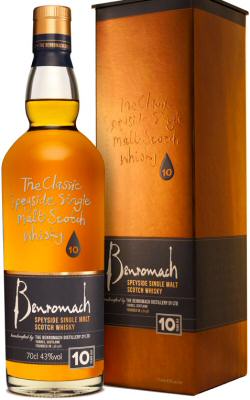
Benromach 10 Year Old

Benromach is a tiny speyside distillery that makes an older style of single malt with a bit of peat smoke in it.  This style is coming back into vogue now – I’m noticing a number of the established distilleries in this region (who don’t normally use peat) are starting to introduce new peated whisky lines.

Owned by the large independent bottler Gordon & MacPhail, Benromach is their attempt at becoming an official bottler. The Benromach10 yo (which was specifically engineered to replicate the lightly-peated speyside profile of pre-1960 era) has garnered a lot of attention from enthusiasts.

This review is of the standard 10 year old bottling, at 43% ABV.  There is a different higher “100 proof” bottling out there (57% ABV, based on the Imperial proof system).  My sample of the Benromach 10 came from the Redditor wuhantang. Here are how the various Benromachs compare to each other, and the competition:

Benromach Organic: 8.50 ± 0.51 on 12 reviews ($$$$)
Benromach Peat Smoke: 8.45 ± 0.25 on 12 reviews ($$$$)
Benromach Traditional: 8.38 ± 0.47 on 11 reviews ($$)
Benromach 5yo: 8.79 ± 0.20 on 4 reviews ($$)
Benromach 10yo: 8.69 ± 0.26 on 20 reviews ($$$)
Benromach 10yo Cask Strength (100 proof): 9.05 ± 0.13 on 9 reviews ($$$$)
Benromach 15yo: 8.62 ± 0.50 on 8 reviews ($$$$)

Arran Machrie Moor Peated: 7.91 ± 0.60 on 11 reviews ($$$$)
BenRiach Birnie Moss: 8.26 ± 0.37 on 10 reviews ($$$)
BenRiach 10yo Curiositas: 8.58 ± 0.30 on 17 reviews ($$$)
Bowmore 12yo: 8.39 ± 0.28 on 17 reviews ($$$)
Bruichladdich Islay Barley: 8.54 ± 0.23 on 12 reviews ($$$$)
Bruichladdich Port Charlotte Scottish Barley Heavily Peated: 8.78 ± 0.28 on 14 reviews ($$$$)
Caol Ila 12yo: 8.70 ± 0.19 on 19 reviews ($$$$)
GlenDronach Peated: 8.53 ± 0.27 on 6 reviews ($$$)
Highland Park 10yo: 8.47 ± 0.28 on 14 reviews ($$$)
Highland Park 12yo (reviews post-mid 2014): 8.38 ± 0.36 on 12 reviews ($$$)
Jura Superstition: 8.25 ± 0.48 on 19 reviews ($$$)
Jura 10yo Origin: 8.00 ± 0.39 on 16 reviews ($$$)
Oban 14yo: 8.43 ± 0.40 on 15 reviews ($$$$)
Springbank 10yo: 8.68 ± 0.24 on 19 reviews ($$$$)
Talisker 10yo: 8.91 ± 0.17 on 21 reviews ($$$$)

As you can see, the standard Benromach 10 yo compares favourably with most of the other well-established names in this space (e.g., scores on par with the Springbank 10 yo and Caol Ila 12 yo).  That’s an impressive showing, especially given the lower price of the Benromach 10 yo.

Here’s what I find in the glass:

Nose: A strong malted barley backbone. Sweet, with barley sugar and some hay notes. Light fruit in the background, pear, peach and citrus mainly. Lightly peated, at around the Highland Park-level (but without the overt sherry influence, despite the finishing).  A bit of oak coming through. Also some mild notes of dish soap and a touch of sweatsocks. Better than it sounds, this is actually quite pleasant.

Palate: Pear/peach again, orange, and some sweetness with golden raisins. Simple sugar and some butterscotch. Barley malt remains the main characteristic. Still has that hay note, but more grassy now. Some light spice picks up – more along the lines of pepper and Indian spices, not the typical baking ones. The off-notes from the nose are turning more toward glue now, but still not offensive. Smoke lingers nicely at the end, with some sweetness returning (first hint of that sherry finishing). As expected for the low ABV, somewhat light mouthfeel (i.e., a bit watery). Not bad, but not really a stand-out either.

Finish: Medium length. Smoke lingers on a Juicy Fruit gum base. A bit of dried ginger, which adds just the right note of bitterness to offset the lingering sweetness.

benromach-10I would say the Benromach 10 yo is very good value for what it is: a solid single malt in this lightly-peated flavour cluster I. Personally, I would probably still give both the Springbank 10yo and Caol Ila 12yo a slight nod over this one, but I agree it is better than the entry-level Highland Parks.

It terms of other reviews, one reviewer who really helped put this whisky on the map is Ralfy. He gave it a moderately positive review, but then subsequently named it his “whisky of the year for 2014“.  Ruben of Whisky Notes and Jan of Best Shot Whisky are very positive.  My own assessment is more in-line with the moderately positive reviews by Nathan the ScotchNoob, Josh the Whiskey Jug and the guys at Quebec Whisky. There are no real negative reviews out there among my stable of reviewers (which is in itself quite positive).

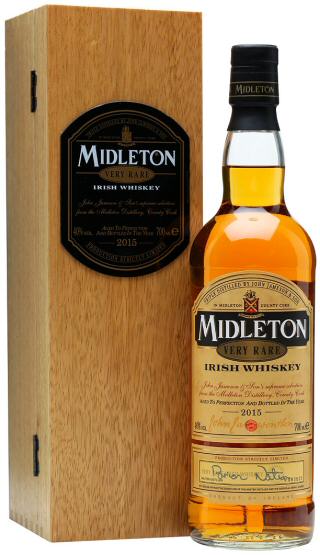
Midleton Very Rare 2015

Midleton Very Rare is a premium blended Irish whiskey, produced by Irish Distillers at the New Midleton Distillery (located in the East Cork town of Midleton, not surprisingly). Midleton is a storied named in Irish whiskey production, and this whisky is distilled at the same location as the well-known Jameson’s family (among many others).

As the name suggests, Midleton Very Rare is produced in limited batches, and in a vintage year manner. It is a blend consisting of some single pot still whisky and some grain whisky, all triple-distilled. Only 50 hand-picked casks are used for each year’s release, making this relatively rare indeed. Although this is a no-age-statement (NAS) whisky, all casks are reported to be aged between 12 and 25 years, matured in either ex-Bourbon or ex-Sherry casks.

Since each year is a new defined vintage, each differs slightly and has its own character (within the overall profile range). Consistently bottled at 40% ABV, each bottle has a unique identifier and is presented in a nice wooden case. It is currently available at the LCBO for $215 CAD.  So something to consider as a higher-end gift for the Irish whiskey drinker this holiday season!

Given its limited availability, I have integrated all vintages into one general category (to provide a meaningful reviewer number). Here is how it compares to some higher-end Irish whiskeys:

Bushmills 16yo Single Malt: 8.48 ± 0.50 on 16 reviews ($$$$)
Bushmills 21yo Single Malt: 8.92 ± 0.35 on 11 reviews ($$$$$)
Green Spot: 8.45 ± 0.41 on 15 reviews ($$$)
Green Spot Château Léoville Barton: 8.73 ± 0.40 on 5 reviews ($$$$)
Jameson 12yo Special Reserve: 8.36 ± 0.27 on 10 reviews ($$$$)
Jameson Gold Reserve: 8.43 ± 0.43 on 9 reviews ($$$$)
Midleton Dair Ghaelach: 9.10 ± 0.32 on 6 reviews ($$$$$)
Midleton Very Rare (all vintages): 8.82 ± 0.45 on 11 reviews ($$$$$)
Powers 12yo Reserve: 8.60 ± 0.26 on 6 reviews ($$$)
Powers 12yo John’s Lane: 8.79 ± 0.41 on 13 reviews ($$$$)
Redbreast 12yo: 8.75 ± 0.42 on 21 reviews ($$$)
Redbreast 15yo: 8.72 ± 0.27 on 13 reviews ($$$$)
Redbreast 21yo: 9.18± 0.36 on 11 reviews ($$$$$)
Tullamore Dew Blended 12yo: 8.09 ± 0.27 on 8 reviews ($$$)
Writers Tears Pot Still: 8.47 ± 0.37 on 14 reviews ($$)
Yellow Spot: 8.76 ± 0.27 on 14 reviews ($$$$)

Middleton Very Rare gets a good score for an Irish whiskey – but it is also fairly expensive for this class, and there are cheaper options available for roughly equivalent ratings.

I recently sampled this from a friend’s bottle, brought back directly from Ireland (newly opened for the evening).

Nose: Starts with classic light honey sweetness, as is common to many Irish whiskies, supplemented with whipped cream. Noticeable caramel. Apple and pear fruits dominate, but there are also hints of sherry aging, with red plums and dark berries. Classic “Juicy Fruit” gum sensation. Vanilla and some of the lighter cooking spices (nutmeg especially). Faint whiff of acetone, but much less than what I normally detect for Irish whiskies (and Canadian whiskies for that matter). Great nose for sure.

Palate: Similar fruits as the nose, but with sweet cereal characteristics coming to the fore now. Creamed wheat sensation. The caramel and vanilla from the nose are here, accentuated with some additional light chocolate notes. Hay and a generally floral characteristic (that I can’t quite identify). Silky mouthfeel, extremely “smooth” to drink (given the low 40% ABV). Absolutely no alcohol burn. More character than your typical blended Irish whisky, but still easy drinking.

midleton-very-rare-2015Finish: Medium. The Juicy Fruit gum and woody/spicy notes persist the longest. My only regret here is that it isn’t longer!

Profile-wise, the Midleton Very Rare is exactly what I like to see in an Irish blend. It is a virtually flawless presentation of this style, with more complexity than usual. Tasty, with few off notes. Unfortunately, it is pretty pricey – and is only bottled at the industry standard of 40% ABV.

For reviews of this whisky, please keep in mind that different vintages are being considered below. Among the most positive reviews I’ve seen are Jonny of Whisky Advocate, Kurt of Whiskey Reviewer, Thomas of Whisky Saga, and Josh the Whiskey Jug. More moderate praise comes from Serge of Whisky Fun, with the lowest scores from the guys at Quebec Whisky. and Jim Murray (although the latter is variable, depending on vintage). Price seems to be an issue for many reviewers.

1 14 15 16 17 18 26