

Author Archives: selfbuilt

Holiday Whisky Gift Guide 2016 – Ontario, Canada

Welcome to my new recommendation list for 2016!

As with last year, I am breaking this up by price point, style and flavour cluster.  I will again focus on highly-ranked but relatively affordable bottles – and ones currently in stock at the LCBO. I am also going to focus on whiskies that are not necessarily available all year round – some of these only show up for a limited time around the holidays, so grab them while you can. Links to full reviews given, when available.

Hopefully this list is also relevant to those outside of Ontario, as it is based on high-ranking whiskies. As always, the Meta-Critic Whisky Database is here to help you sort through whatever possible options are open to you.

Budget Gifts < $50 CAD – American Bourbon and Canadian Rye Whiskies

You won’t find single malts in this price range (although there are some very nice Scotch-style and Irish blends, profiled below).  But let’s consider the economical American bourbon and Canadian whiskies options here first.

While Ontario is not a good place to find higher-end American bourbons, we actually do have very decent prices on what we do get in. And we have at least a reasonable selection of the more entry-level and lower mid-range stuff.

Eagle.Rare.10It’s worth breaking bourbons down into different mashbill classes. The first is low-rye bourbons (i.e., a relatively low proportion of rye grain in the predominantly corn-based mashbill). Unfortunately, one of my favourites in this class – Eagle Rare 10 Year Old – is not currently available (although you might still find a few bottles at the some of the larger LCBO stores). So the closest thing is the more widely available Buffalo Trace at $43 CAD, getting a decent 8.56 ± 0.42 on 19 reviews. This is basically the same juice, though not quite the full 10 years of age.
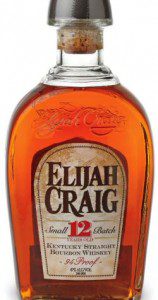
Elijah.Craig.12A great choice that Ontario still carries is the Elijah Craig 12 Year Old at $48 (8.68 ± 0.29 on 20 reviews). This has been replaced by a younger no-age-statement “small batch” version in U.S. Note the 12yo version has a fairly pronounced “oaky” character.

Rated even higher is Knob Creek Single Barrel Reserve ($57, 8.79 ± 0.27 on 10 reviews) – a popular cask-strength (60%) option.

For high-rye bourbons (which typically are more “spicy” tasting), you can’t go wrong with Four Roses Single Barrel at $46 CAD (8.72 ± 0.34 on 18 reviews).  It’s worth the premium over the otherwise decent Four Roses Small Batch at $40 CAD (8.49 ± 0.44 on 19 reviews).  Unfortunately, most of the other high-ryes I would recommend are currently out of stock (and unlikely to come back this year).

But why not try a quality Canadian choice? These are typically widely available all year round.

Lot 40 canadian rye whisky bottleSure, you could go for Jim Murray’s “World Whisky of the Year” for 2015 – Crown Royal Northern Harvest Rye – for $35 CAD. It gets a decent Meta-Critic score of 8.59 ± 0.42 on 13 reviews. But like many, I consider it to be only an “average” Canadian rye.Albera Premium Dark Horse bottle
As with last year, my top pick as the king of Canadian straight rye whisky is Corby’s Lot 40. Getting an excellent 8.90 ± 0.41 on 18 reviews, it is quite affordable at $40 CAD. One of the best aromas you will find in the rye selection at the LCBO.

Wiser’s Legacy is another solid choice, with an even higher 9.01 ± 0.35 on 15 reviews. Regularly-priced at $50 CAD, it has a spicy rye flavour (and is said to consist of Lot 40 in part).

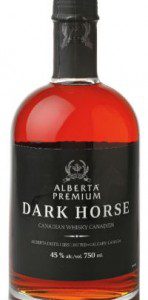
As always, Alberta Premium Dark Horse at $32 CAD is a great buy – if you like a little sherry flavour in your rye. 8.62 ± 0.34 on 15 reviews.


Budget Gifts < $60 CAD – Scotch and Irish Blends

I don’t typically break down Scotch-style blends by flavour profile (as I do for for the more complex single malts below). But you can generally think of blends in two categories: those with some smokey/peaty flavours and those without.

Te.BheagFor those who like a bit of smoke, Johnnie Walker Black at $57 (8.27 ± 0.49 on 21 reviews) remains a staple – and for good reason.  It is higher ranked than most of the other smokey blends – but it is also priced higher.  So if you want try something a little different on a budget, the LCBO also carries the higher-ranked but lower-priced Té Bheag for only $39 (8.47 ± 0.31 on 14 reviews). Pronounced chey-vek, this whisky has a more fruity character than JW Black, and even more smoke (if you think the recipient would like that).  Another great choice is Great King St Glasgow Blend for $57 (8.57 ± 0.25 on 11 reviews) – one of the highest-ranked smokey blends I’ve seen.

writers-tearsFor non-smokey blends, these are often imbibed as mixed drinks, or the classic scotch-and-soda. There are a lot very good blends out that you may not have heard of – unfortunately, the LCBO is not carrying many at the moment. For example, they are currently out of stock of Great King St Artist’s Blend for $55 (8.58 ± 0.38 on 18 reviews), which would have been a top pick. So why not try a great Irish blend instead: Writer’s Tears for $50 (8.47 ± 0.37 on 14 reviews). Unusual for an Irish whiskey, this is a blend of single malt whisky and classic Irish pot still whisky (which is a mix of malted and unmalted barley in a single copper pot still).  Very flavourful, and a good value.suntory-toki
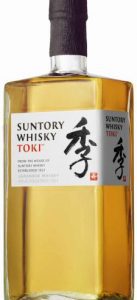
A personal favourite of mine in this group is Suntory Toki at $60 CAD (8.24 ± 0.63 on 5 reviews). I feel the quality here is higher than the Meta-Critic score indicates (which is based on only a limited number of reviews so far). It is delightfully fresh and clean, easy to sip neat, and is highly recommended in the classic Japanese “highball” (scotch-and-soda for the rest of us ;).  Here is a chance for you to experience an authentic Japanese whisky, without the usual high cost. It’s a great introduction to the lighter Japanese style.

There is a lot more to consider here – especially for those on a tighter budget – so I suggest you explore the Whisky Database in more detail.


Premium Gifts up ~$100 CAD – Single Malt Scotch and Hibiki Harmony NASInternational Whiskies

Single malts come in a wide range of flavours – much more so than any other class of whisky. As usual, it is worth recommending single malt whiskies by flavour “super-cluster”, as described on my Flavour Map page. I’m going to start with the more delicate examples below, followed by the more “winey” and “smokey” examples.

BTW, If you are interested in checking out another Japaenese whisky, consider the Hibiki Harmony at $100 (8.40 ± 0.61 on 14 reviews). It comes in a fancy decanter-style bottle, and has a richer yet still delicate flavour profile. Again, I think the Meta-Critic Score is unfairly harsh here – this is a lovely blend, and is a more flavourful expression than the Suntory Toki described previously.

Now onto the single malts …

Super-cluster G-H : Light and sweet, apéritif-style – with honey, floral, fruity and malty notes, sometimes spicy, but rarely smokey.
Classic examples: Glenmorangie 10yo, Glenfiddich 12yo, Arran Malt 10yo/14yo, Cardhu 12yo
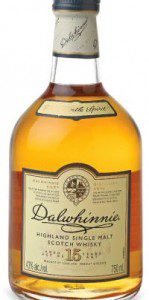
Dalwhinnie 15yo bottleAt $95 CAD, the Dalwhinnie 15 Year Old is my top pick in this category (8.68 ± 0.35 on 18 reviews). That is a phenomenal score for this flavour supercluster (i.e., delicate whiskies always score lower than winey/smokey ones). The Dalwhinnnie is a fairly delicate whisky, but there is a surprising amount of subtlety here. It has a lovely honey sweetness to it (but is not too sweet), and has just the slightest hint of smoke in the background. Well worth a try – a staple of my liquor cabinet.

Backup choices you may want to consider are The Arran Malt 10 Year Old at $70 CAD (8.55 ± 0.33 on 20 reviews), and the An Cnoc 12 Year Old at $80 CAD (8.62 ± 0.35 on 17 reviews). The Dalwhinnie is worth the slight extra though, in my opinion.


Super-cluster E-F : Medium-bodied, medium sweet – with fruity, honey, malty and winey notes, with some smoky and spicy notes on occasion
Classic examples: Old Pulteney 12yo, Auchentoshan 12yo, Glenlivet 12yo, Macallan 10yo Fine Oak

Amrut.FusionIt is actually on border of Super-cluster E-F and cluster I (due to the moderate smoke), but my top pick here is Amrut Fusion, from India. At only $86 CAD, and scoring an amazing 8.90 ± 0.24 on 22 reviews, this is certainly an excellent choice. It’s also an opportunity for those looking to explore some extra “tropical” fruit flavours in their whisky – check out my full review above for more info on this whisky. Note that this one is very popular, and so stock levels are already starting to drop across the LCBO.

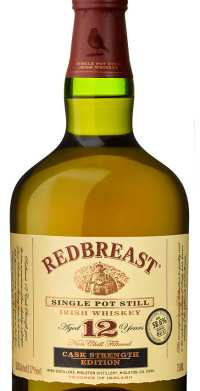
OtMiddleton Redbreast 12yo bottleherwise, my top mid-range choice in this category is an Irish whiskey, the $80 CAD Redbreast 12 Year Old. Redbreast is a single pot still whiskey. As mentioned earlier, this is a traditional Irish style, where both unmalted and malted barley are distilled together in single copper pot still. The end result is thus closer to a Scottish single malt than a blend. It gets a very good 8.75 ± 0.42 on 21 reviews.
If you are looking for a budget option in this class, check out the Auchentoshan 12 Year Old. At $65 CAD and scoring 8.27 ± 0.26 on 21 reviews, this is a step up from your typical ubiquitous Glenfiddich/Glenlivet 12yo.


Super-cluster A-B-C : Strong winey flavours, full-bodied, very sweet, pronounced sherry – with fruity, floral, nutty, honey and spicy notes, as well as malty and sometimes smokey notes
Classic examples: Aberlour A’Bunadh, Highland Park 18, Glenfarclas 105, GlenDronach 12yo, Auchentoshan Three WoodAberlour.ABunadh.49

My top pick here remains the Aberlour A’Bunadh. I don’t understand how this has remained at $100 CAD, given the quality of the various batches.  It gets an impressive 8.95 ± 0.17 on 22 reviews overall. While there is some variability between batches, this is not usually significant. Note however that this is a cask-strength whisky, so it packs a higher concentration of alcohol than typical. And inventory tends to disappear fast around this time of year – it’s a popular one.

My budget choice, at $73 CAD, remains the GlenDronach 12 Year Old. It gets a very respectable 8.57 ± 0.22 on 20 reviews. It packs a lot of flavour.

Now, let’s dial back down the winey flavours, and instead bring up the smokey complexity.


Cluster I : Medium-bodied, medium-sweet, smoky – with some medicinal notes and spicy, fruity and nutty notes
Classic examples: Talisker 10yo, Highland Park 12yo, Benromach 10yo, Springbank 10yo, Bowmore 10yo
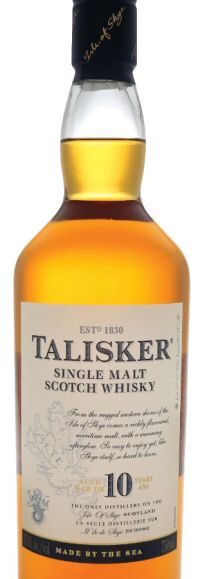
Talisker 10yo bottleIn addition to the Amrut Fusion already mentioned above, you would do well to stick with a classic member of this class: the Talisker 10 Year Old. At $100, it gets an excellent 8.91 ± 0.17 on 21 reviews. I don’t think you can go wrong with this choice. Also very nice, but with low availability is Longrow Peated ($101, scoring 8.79 ± 0.27 on 13 reviews). It is right on the border with the smokier Cluster J, though.

Highland Park 12 year oldA reasonable budget choice – especially if you like a little sherry in your smoky malt – is the Highland Park 10 Year Old ($65, 8.47 ± 0.28 on 14 reviews) or 12 Year Old ($80, 8.38 ± 0.36 on 12 reviews). Unfortunately, quality seems to have dropped in recent batches of the 12yo, otherwise this one would have been a a top pick (i.e., it used to score higher).


Cluster J : Full-bodied, dry, very smoky, pungent – with medicinal notes and some spicy, malty and fruity notes possible
Classic examples: Lagavulin 16yo, Laphroaig 10yo and Quarter Cask, Ardbeg 10y and Uigeadail

Laphroaig Quarter Cask whisky bottleFor the smoke/peat fan, you really can’t top the value proposition of the Laphroaig Quarter Cask – only $73 CAD, yet garnering a very high meta-critic score of 9.02 ± 0.27 on 21 reviews. That’s a remarkable score for the price, if you are into these peat bombs.

Surprisingly, it’s even cheaper than the standard Laphroaig 10 Year Old expression ($84 CAD, 8.92 ± 0.29 on 14 reviews). The Ardbeg 10 Year Old is another consideration for an entry-level expression ($100 CAD, 8.95 ± 0.34 on 21 reviews). If you like a wine-finish, for a very limited time you can order a bottle of this year’s Laphroaig Cairdeas for $100 (2016 Madeira edition, 8.82 ± 0.48 on 8 reviews) through LCBO online.

Of course, there is a lot more to consider if you are willing to go a bit higher. Stretching the budget a bit to $123 CAD, a very popular favourite is the Lagavulin 16 Year Old. It gets an incredible meta-critic score of 9.23 ± 0.23 on 25 reviews. Full of a wide array of rich flavours, I find it a lot more interesting than the younger peat-bombs above. Just be prepared to smell like a talking ash-tray for the rest of the evening!


Again, whatever you choose to get, I strongly suggest you use the Whisky Database to see how it compares to other options in its respective flavour class or style.

Slainte, and happy holidays!

W.L. Weller 12 Year Old Bourbon

Among enthusiasts, W.L. Weller 12 Years has long been considered the “poor man’s Pappy”.  That is, until the general public also started seeing it that way.  Here’s a recent depressing chart from Diving for Pearls, showing how the U.S. after-market price of W.L. Weller 12 has increased almost 10-fold in the last two years.

It’s pretty wild to see a $26 USD bourbon climb into the stratosphere so quickly.  But keep in mind, the after-market price of Van Winkle 12 Year Lot B is more than 3 times higher than W.L. Weller 12 yo, at current levels.

As discussed in my Old Rip Van Winkle 10 year old review, the Weller and Van Winkle brands share the same basic DNA. They are produced by the same distiller, share the exact same “wheated” mashbill, are aged in the same manner in the same warehouses, and are diluted to the same final proof.  And in this particular case, they are also aged the same amount of time – to a minimum of 12 years.

So the difference here comes down to just barrel selection – the premium barrels from the best parts of the warehouse get blended into Van Winkle 12 Year Lot B each year, and the rest becomes Weller 12.  You would therefore naturally assume that these are not very different (and hence, the incredible run-up in Weller 12 prices in recent years  given the current Pappy craze).

But keep in mind barrel selection can make quite a difference – just look at how single cask offerings compare to standard vatted products. Removing all those premium barrels could in theory impoverish the remaining “failed Pappy” vatting of Weller 12 significantly.  Does it?  Let’s take a look at the current Meta-Critic average scores for these whiskies in my Whisky Database:

Old Weller Antique 107: 8.66 ± 0.45 on 9 reviews ($$)
W.L. Weller 12yo: 8.86 ± 0.25 on 12 reviews ($$$$$)
William Larue Weller: 9.19 ± 0.26 on 10 reviews ($$$$$+)

Old Rip Van Winkle 10yo: 9.05 ± 0.20 on 7 reviews ($$$$$+)
Van Winkle Special Reserve 12yo Lot B: 8.76 ± 0.18 on 4 reviews ($$$$$+)
Pappy Van Winkle Family Reserve 15yo: 9.28 ± 0.22 on 9 reviews ($$$$$+)
Pappy Van Winkle Family Reserve 20yo: 9.20 ± 0.34 on 11 reviews ($$$$$+)

Unlike the Old Rip 10 and OWA comparison (where the Van Winkle expression gets a higher average score), there doesn’t seem to be much of a score difference between W.L. Weller 12 yo and Van Winkle 12 yo. Indeed, the Weller 12 is actually scoring higher on average. But keep in mind there are still relatively few reviews of the hard-to-find Van Winkle 12 (and so, these numbers could change as more reviews come in).

Having recently reviewed the Old Weller Antique 107 Proof (OWA), I thought it would be useful to frame my Weller 12 tasting notes in that context.  Again, while all these products share a common mashbill, OWA is much younger (estimated to be 6-7 years old), and bottled at 53.5% ABV – compared to Weller 12 yo at 45% ABV. As Weller 12 has spent about twice as long in oak barrels, it should pack a different flavour profile.

My sample was supplied Reddit member Lasidar. Let’s see what I find in the glass:

Nose: Not as sweet as Old Weller Antique 107 (OWA), with more caramel and less vanilla. More dark fruits, like cherry but also blackberry. Not quite as creamy, but it does have more wood spice and some definite leather now (which I like). These presumably reflect its extended time in contact with the oak.  I’m not getting any solvent notes – that extra time in the barrel must also have helped those blow off.

Palate: Caramel of course, but more refined than the OWA (with less ethanol burn, naturally). Strong fruit presence coming through, along with wood spices and baking spices, plus a bit of pepper. Seems less like a dessert whisky now, with a richer range of woody flavours.  A bit drying as well. Weller 12 definitely tastes its age – a sipper to ponder over.

Finish: Medium-Long. First up are the wood spices, then returning to the caramel, and finally the different fruit flavours (like above, but I’m also getting some pear now). These seem to come and go with time, often returning to the caramel backbone. Dryer than I would have expected (i.e., more astringent).

weller-12Definitely a more complex whisky than the Old Weller Antique 107. The Weller 12 is more drying than I expected, and with less sweetness than typical for a wheater.  It is also a lot more oaky (as expected).

W.L. Weller 12 seems like a whisky for slow contemplation, compared to the instant gratification of the higher proof and younger OWA. I recommend you try the Weller 12 neat, and take your time to let it open up in the glass. Assuming you can still find it at a reasonable price somewhere, that is.

Interestingly, due to the differing profiles, some people like to blend Weller 12 and Old Weller Antique for the ultimate “poor man’s Pappy”.  Specifically, a 60:40 blend of OWA:Weller 12 has been proposed online.  Here’s what I find when I blended a portion of my samples at this ratio (left to marry in the bottle for several weeks before trying):

Nose: Closer to the OWA profile, but with only the faintest hint of the solvent.  Seems like a good balance in-between the two, but I wish more of the Weller 12’s spicey notes would show through. Some extra brown sugar.

Palate: Sweet, with lots of honey and caramel. A bit hot, it seems more like the OWA initially. The Weller 12 helps bring up the spiciness at the mid-point (but without the astringency). If you are not a fan of the dry, oaky palate of the Weller 12, this may be your best choice of the three.

Finish: Not to sound like a broken record, but again this fits in-between. Doesn’t seem to have quite as much variety or complexity as the straight-up Weller 12, but it lacks its drying finish.

So, is the sum of the parts really greater than the individual components?  The answer depends on how you feel about OWA compared to Weller 12.

For OWA fans who find Weller 12 too dry and oaky, this blend does indeed outperform each member individually.  You get to keep a lot of the brasher in-your-face characteristics of OWA, but complimented with additional spicy flavour elements from the Weller 12 (especially mid-palate). I can see those who rate OWA higher than Weller 12 could well prefer this blend above either alone.

But for those who prefer the more complex Weller 12 over the youthful exuberance of OWA, the blend is likely to be seen as diluting the best aspects of Weller 12.  As my tasting notes above show, the blend really is intermediate between the two.  If (like me), you would rank Weller 12 above OWA, then the blend falls somewhere in-between.

I recommend you check out my OWA review for additional commentary.  For the Weller 12, the highest-ranked review I’ve seen comes from Josh the Whiskey Jug.  More typical reviews come from Nathan the Scotch Noob, Jason of In Search of Elegance/Whisky Won, and Jim Murray. The lowest score I’ve seen is probably from Michael of Diving for Pearls.

Redbreast 21 Year Old

The oldest member of the Redbreast family, this 21 year old expression is currently the highest ranking Irish whisky in my Meta-Critic database.

As I previously introduced in my review of the popular Redbreast 12 year old, the classic Irish pot still style involves a mix of malted and unmalted barley that is triple-distilled in single large copper pot stills. This method introduces a distinctive sticky mouthfeel in the whisky (sometimes referred to as “greasiness”), while still producing great malt complexity.

Like others of the line, Redbreast 21 yo is matured in a mixture of ex-bourbon barrels and first-fill oloroso casks, resulting in a complex whiskey. Jim Murray has just declared the 21yo his Irish whiskey of the year in the 2017 edition of his popular “whisky bible”.

So I thought it was time to crack open my bottle and give it a proper review here. It retails for $250 CAD at the LCBO, and is bottled at 46% ABV.

Here is how it compares to other highly-ranked Irish whiskies in my Meta-Critic Whisky Database:

Bushmills 16yo Single Malt: 8.48 ± 0.49 on 16 reviews ($$$$)
Bushmills 21yo Single Malt: 8.92 ± 0.35 on 11 reviews ($$$$$)
Knappogue Castle 16yo Twin Wood: 8.77 ± 0.47 on 5 reviews ($$$$)
Midleton Dair Ghaelach: 9.10 ± 0.32 on 6 reviews ($$$$$)
Midleton Very Rare Irish Whiskey: 8.78 ± 0.50 on 11 reviews ($$$$$)
Powers 12yo John’s Lane: 8.82 ± 0.41 on 12 reviews ($$$$)
Redbreast 12yo: 8.77 ± 0.42 on 21 reviews ($$$)
Redbreast 12yo Cask Strength: 9.01 ± 0.32 on 15 reviews ($$$$)
Redbreast 15yo: 8.72 ± 0.26 on 13 reviews ($$$$)
Redbreast 21yo: 9.20 ± 0.35 on 10 reviews ($$$$$)
Teeling Silver Reserve 21yo Sauternes Finish: 8.89 ± 0.36 on 9 reviews ($$$$$)

While I discourage directly comparing scores across different classes of whiskies, the Redbreast 21 yo does rank in the top 20 of the >900 whiskies tracked on my site.

Let’s see what I find in the glass:

Nose: Sweet, with tropical fruits (pineapple, mango, and guava) and lighter fruits (pear, golden delicious apple). Faint hints of concentrated fruits, like prunes and sultanas.  More tropical than I remember the 12yo being. Fair amount of honey. Wood spice and a bit of vanilla (but surprisingly not overly oaky). Peanuts. A touch of eucalyptus and some heather.  More alcohol singe than expected for the low ABV, but no real solvent smells.

Palate: Rich fruits, tending more towards plums and prunes now. Brown sugar joins the vanilla, and gives it a fudge-like taste and mouth feel (very rich and creamy). Eucalyptus even more noticeable now, as are the spices, with black pepper joining the wood spices (cinnamon and cloves in particular). Some crushed coconut adds to the nutty effect. The woodiness is also enhanced now, but still not overwhelming. The heather notes pick up as well. There’s relatively little burn here, although the spicy kick can linger.

Finish: Long. Juicy fruits linger the longest, with a cola taste and some sweet honey. Spiciness contributes to a mild burn (which is pleasurable).  No real bitterness from the wood, which is very impressive for the age. Leaves a sticky residue on the lips and gums (which is a classic single pot still characteristic).

rebreast-21As expected, this is an amped-up experience from the 12 yo – although it hits many of the same notes.  The extra time in wood has helped mellow some of the harsher characteristics still present in the 12 yo, and enhances the “tropical” and sweet notes. The slow burn of spices at the end of the finish is also in keeping with its ripe old age, but surprisingly it has avoided being “over-oaked” and bitter.

I agree with the critics – this is a top-notch Irish pot still whisky. Aside from Jim Murray’s top score, Josh of the Whiskey Jug and Dominic of Whisky Advocate both rave about this whisky. Similarly, Oliver of Dramming/Pour Me Another One and Serge of Whisky Fun both give this one top marks. André and Patrick of Quebec Whisky give it the lowest scores I’ve seen.

Pike Creek 10 Year Old Rum Finish

As mentioned in my previous review, Pike Creek 10 year old is part of a popular series of higher-end whiskies from Corby distillers. Along with Lot 40 and Gooderham & Worts, they are meant to hearken back to earlier styles of Canadian whisky production.

Continuously available since late 2012, Pike Creek is an example of a rye whisky that has been finished in a fortified wine barrel (port pipes, in this case). I see Pike Creek as a member of the new style of wine-finished (or flavoured) Canadian whiskies, including the popular Alberta Premium Dark Horse, 66 Gilead Crimson Rye and the recently released Gretzky Red Cask.

However, starting with batches released in September 2016, Corby has apparently switched to finishing Pike Creek in “rum barrels” instead of “vintage port barrels” (see the label image above, and in my previous review). Otherwise, the packaging is unchanged.

Personally, I’m a little surprised that Corby has made this drastic a change without drawing more attention to it. As I explain on my Source of Whisky Flavour page, the type of barrel used for aging has a significant effect on the final flavour of the whisky.

From the discussion thread I started on Reddit, it seems that Corby has made this shift due to some difficulty in getting European labeling approval for this whisky in its previous port-finished form.  The switch to rum barrels thus appears to be a permanent substitution.

Personally, I find a rum finish can be interesting in an aged whisky (e.g., the Glenfiddich 21 yo Gran Reserva). More commonly though, you see it in younger whiskies where it is used to provide some additional sweetness (e.g., Teeling Small Batch).

This rum-finished version of Pike Creek is too new to have any other dedicated reviews yet, but let’s see how the old port-finished Pike Creek compared in my Meta-Critic Whisky Database:

66 Gilead Crimson Rye: 8.30 ± 0.47 on 6 reviews ($$)
Alberta Premium Dark Horse: 8.63 ± 0.34 on 15 reviews ($)
Canadian Club 100% Rye: 8.38 ± 0.41 on 13 reviews ($)
Collingwood 21yo: 8.60 ± 0.42 on 10 reviews ($$$)
Forty Creek Evolution: 8.85 ± 0.64 on 7 reviews ($$$)
Forty Creek Port Wood Reserve: 8.80 ± 0.28 on 9 reviews ($$$$)
Forty Creek Three Grain Harmony: 8.25 ± 0.59 on 5 reviews ($$$)
Gooderham & Worts Four Grain: 8.68 ± 0.34 on 9 reviews ($$)
J.P. Wiser’s Double Still Rye: 8.34 ± 0.40 on 6 reviews ($)
J.P. Wiser’s Last Barrels: 8.76 ± 0.39 on 7 reviews ($$$)
J.P. Wiser’s Legacy: 9.02 ± 0.35 on 15 reviews ($$)
Lot 40: 8.91 ± 0.40 on 18 reviews ($$)
Pike Creek 10yo Port-finished: 8.27 ± 0.51 on 12 reviews ($$)
Stalk & Barrel 100% Rye: 8.66 ± 0.22 on 5 reviews ($$$)

As I mentioned in my earlier review, I think the Meta-Critic score is a little low for the classic port-finished Pike Creek.  I would personally score it more in the middle of the range above, say around ~8.6.

I bought my bottle at the initial sale price of $34.95 CAD at the LCBO. Note that the LCBO has created a new entry for this rum-finished version of Pike Creek. And although the title, description and price hasn’t changed, it does show the correct new bottle label – and the increase to 42% ABV.

Let’s see what I find in the glass, compared to the original port-finished Pike Creek.

Colour: Identical to the earlier port-finished version, further indicating caramel colorant is added.

Nose: Vaguely similar to the old Pike Creek, but lighter and, well, duller. There is still a clear rye presence, but it is not as fruity as before – Just some light plums, apricots and pears now. Gone are the classic darker/red fruits of the port (i.e., the raisins and prunes), although I am detecting a whiff of cola here. The brown sugar notes are still there, but a bit lighter now, and supplemented with honey and an almost artificial sweetness. Some dry oak still (contributing to that consistent Pike Creek-ness). And again, no real off notes, but a fair amount of alcohol singe. Makes me think of a slightly aged Hiram Walker Special Old – pleasant enough, but not particularly complex.

Palate: Still not much in the way of fruit, although citrus is showing up now (just as I found on the old Pike Cree, and some other Hiram Walker whiskies). Sweetened apple juice now, which is novel (and not particularly welcomed, IMO). Vanilla and caramel throughout. Good rye kick initially, with some extra pepper supplementing the lighter rye spices (nutmeg in particular), with a touch of cardamon.  If anything, the initial intensity of the rye seems to have increased from before (which I like) – unfortunately, it still fades rather quickly. Light and watery mouthfeel, as before. A touch of bitterness comes in at the end.

Finish: As disappointingly quick as the previous port-finished version. Nutmeg added to apple juice is the predominant effect. There is definite bitterness on this one that I wasn’t really getting on the previous port-finished batch. Like most rum-finished whiskies I’ve tried, it just seems to quickly fade away.

pike-creek-rumThis new rum-finished Pike Creek seems like a good quality entry-level Canadian light rye – but sweeter than typical. In comparison to the old Pike Creek, I can’t help but feel it is a bit lacking here (those darker winey fruits in particular are gone). On the plus side, I don’t know if it is the 42% ABV or if they added more rye to compensate, but it does have a slightly elevated kick (at least initially – still fades quickly).

While the rum barrels are accentuating the sweetness factor, they really aren’t matching the fruitiness of the old vintage port barrels. I don’t know if this is enough to make people run out and bunker the old Pike Creek before it is gone. But I suspect a regular Pike Creek drinker would notice the less fruity and sweeter taste here.

Taken together, I would personally have to score this rum-finished Pike Creek a couple of points lower than the original port-finished one (i.e., ~8.4). This would put it just up from the overall average Canadian whisky score in my Meta-Critic Database, which I think is fair.

Please see my old port-finished Pike Creek review for links to external reviews. I will update this review once reviews of this new rum-finished version come out.

Pike Creek 10 Year Old Port Finish

Like Lot 40 and Gooderham & Worts, Pike Creek was part of the original short-lived Canadian Whisky Guild series of the late 1990s. Hearkening back to an earlier era of whisky production, these were created at Corby’s Hiram Walker facility to simulate previous production styles.

While the market wasn’t sufficiently receptive at the time, these higher-end offerings have made a strong resurgence in recent years.  This started with Lot 40, which was re-released in 2012 and remains the darling of Canadian straight rye whisky. More recently was the late 2015’s re-release of the multi-grain Gooderham & Worts.

Often overlooked in this series is Pike Creek, similarly re-launched in late 2012. Pike Creek is double-distilled in small copper column stills to a low ABV. The spirit is initially matured in first-fill bourbon barrels and then finished in vintage port pipes. A 10 year age statement is included on the domestic version (which is bottled at the industry standard 40% ABV).

Pike Creek is clearly formulated to appeal to those who like their fortified wine-finished Scotch whiskies.  Indeed, you could argue Pike Creek was a forerunner to the highly popular Alberta Premium Dark Horse – where a small amount of sherry is directly added to rye whisky. 66 Gilead Crimson Rye and the recently released Gretzky Red Cask are further examples of this wine barrel-finished style.

For reasons not clear to me, Pike Creek seems to be relegated to second-tier status among these recent offerings, with relatively little buzz and promotion.  Let’s see how it compares in my Meta-Critic Whisky Database to other modern Canadian whiskies:

66 Gilead Crimson Rye: 8.30 ± 0.47 on 6 reviews ($$)
Alberta Premium Dark Horse: 8.63 ± 0.34 on 15 reviews ($)
Canadian Club 100% Rye: 8.38 ± 0.41 on 13 reviews ($)
Collingwood 21yo: 8.60 ± 0.42 on 10 reviews ($$$)
Forty Creek Evolution: 8.85 ± 0.64 on 7 reviews ($$$)
Forty Creek Port Wood Reserve: 8.80 ± 0.28 on 9 reviews ($$$$)
Forty Creek Three Grain Harmony: 8.25 ± 0.59 on 5 reviews ($$$)
Gooderham & Worts Four Grain: 8.68 ± 0.34 on 9 reviews ($$)
J.P. Wiser’s Double Still Rye: 8.34 ± 0.40 on 6 reviews ($)
J.P. Wiser’s Last Barrels: 8.76 ± 0.39 on 7 reviews ($$$)
J.P. Wiser’s Legacy: 9.02 ± 0.35 on 15 reviews ($$)
Lot 40: 8.91 ± 0.40 on 18 reviews ($$)
Pike Creek 10yo Port-finished: 8.27 ± 0.51 on 12 reviews ($$)
Stalk & Barrel 100% Rye: 8.66 ± 0.22 on 5 reviews ($$$)

Pike Creek is definitely at the low end of overall scores, although the variance is high here (indicating that some reviewers seem to really like it, some really don’t). Note that the overall average for Canadian whiskies in my database is currently ~8.35.

Let’s see what I find in the glass. 🙂  My bottle is a late model batch, recently bought at the LCBO ($39.95 CAD).

Colour:  Medium orange-brown. Pretty confident this has been artificially colored with caramel, for a consistent look.

Nose: Definitely getting the rye, softened with sweet fruit – most especially currants, red grapes, prunes and raisins. I also get strawberries and blueberries. A bit of red wine, followed by vanilla and a dry oakiness. Classic light rye spices, quite a nice mix overall. No real solvent smell – except perhaps for a faint hint of glue (and I can almost imagine smoke). There is a fair amount of alcohol singe for 40% ABV. It’s a nice nose, and a good start to the tasting.

Palate: The rye notes dominate, but with a surprising amount of caramel and brown sugar throughout.  Lighter than I was expecting, and not as fruity as the nose suggests (mainly berries left, but a bit of citrus shows up now). Pepper and some ginger add to the spice. A bit nutty. Watery mouthfeel overall, consistent with the low ABV – I suspect it could be quite stunning if it were bottled at higher proof. Decent, but I was personally hoping for more rye kick.

Finish: Surprisingly short. The rye and fruit seem to exit first, with a slow lingering brown sugar finish. A slight sourness, but well balanced to the sweetness (reminds me of cherry blasters candy). Nothing wrong with this finish per se, but it sure would be nice if it lasted longer.

pike-creek-portThis is definitely one for folks who like their ryes light and sweet. Personally, I was hoping for more overt port flavours and a stronger rye presence (given the reported distillation method). But it doesn’t have the flaws of most light (and young) Canadian rye whiskies. I could see this one serving as a nice daily sipper.
As such, I don’t get the low scores overall.  While not as complex as Lot 40 or Gooderham & Worts, I would still have expected this to do above-average for a Canadian whisky. Based on the other Canadian whisky examples listed above, I would personally give Pike Creek something like a ~8.6.

For positive reviews of this whisky, check out Davin of Canadian Whisky, Jason of In Search of Elegance, and headlessparrot and TOModera on reddit. The most negative reviews I’ve seen come from Lasidar on reddit and André and Martin of Quebec Whisky (although Patrick there gives it an about average score).

If you are curious to try it, you might want to hurry to pick this one up: Corby has just replaced it with a rum barrel-finished version (as of October 2016). Stocks of the original port-finished Pike Creek are dwindling fast.


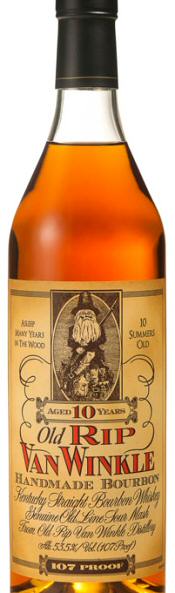
Old Rip Van Winkle 10 Year Old Bourbon

Finding any of the Van Winkle bourbons in the wild these days is almost like spotting a unicorn. But given my recent review of the Old Weller Antique (OWA), I thought I should give you a direct comparison to what is essentially the same whisky – the Old Rip Van Winkle 10 Year old.

As I pointed out in that earlier OWA review, these two Buffalo Trace brands share the same basic DNA – the only real difference is the age and barrel selection. Otherwise, they are produced by the same distiller, share the same mashbill, are aged in the same manner in the same warehouses, and are diluted to the same final proof.

It is commonly believed that distillers know the “sweet spot” (or “honey holes”) in their rickhouses, where conditions are believed to be ideal to produce the best whiskies (i.e., not too hot, not too cold, etc.). So the suggestion is that they let these selected barrels age for a full 10 years for each year’s batch of the Old Rip Van Winkle – while blending the rest at a younger age (estimated to be ~6-7 years) for OWA.

While this means the Old Rip Van Winkle should be a higher quality product, the difference is not likely to be so great as to justify the huge price mark-up on Van Winkles (due to the insane demand).

Let’s see how the main Weller and Van Winkle bourbon lines compare in the Meta-Critic Whisky Database:

Old Weller Antique 107: 8.67 ± 0.45 on 9 reviews ($$)
W.L. Weller 12yo: 8.87 ± 0.24 on 12 reviews ($$$$)
William Larue Weller: 9.18 ± 0.26 on 10 reviews ($$$$$+)

Old Rip Van Winkle 10yo: 9.06 ± 0.20 on 7 reviews ($$$$$+)
Van Winkle Special Reserve 12yo Lot B: 8.77 ± 0.17 on 4 reviews ($$$$$+)
Pappy Van Winkle Family Reserve 15yo: 9.28 ± 0.22 on 9 reviews ($$$$$+)
Pappy Van Winkle Family Reserve 20yo: 9.21 ± 0.35 on 11 reviews ($$$$$+)

Ok, OWA vs ORVW is the one case where the critics consistently seem to prefer the Van Winkle product to the Weller, by a noticeable margin. Let’s see if I find the same thing. 😉

My Old Rip Van Winkle 10 yo sample was provided by the Redditor Jolarbear.  For my tasting notes below, I am also comparing this bourbon to the W.L. Weller 12 Year Old (which I will describe in an upcoming review).

Colour: The ORVW seems a touch darker than my bottle of OWA, or my sample of Weller 12.

Nose: As expected, ORVW is closer overall to the OWA than the Weller 12, with more up-front honey and caramel sweetness. But it also has some dark fruits too – I’m getting dark plums, raisins and cherries. A bit of tartness (Sweet Tart candies come to mind) and red licorice as well. Baking spices and a hint of chocolate. Unfortunately, a faint hint of solvent too, which is disappointing. But more complex than I was expecting, based on OWA.

Palate: I would say that this is closer to the Weller 12 here, but with an extra touch of sweetness – and with more vanilla than caramel. A good amount of character and spice, with lots of leather, wood spice, baking spices, and pepper – much more than exhibited by any of the Wellers (which is odd). Tons of cinnamon in particular, which I am a fan of. Good juicy mouthfeel. It doesn’t seem like a 53.5% ABV whisky, as there is relatively little alcohol burn here. This is a nice palate – definitely my favourite of the three going down the hatch.

old-rip-van-winkle-10Finish: Long and lingering, with that cinnamon spice continuing right until the end. It is like slowly melting cinnamon red-hots (or more accurately, those hard Swedish fish-shaped cinnamon candies I remember from my childhood).

There is no contest here – I greatly prefer the Old Rip Van Winkle 10 over my bottle of Old Weller Antique (or my sample of the W.L. Weller 12). The sweet and spicy kick of the ORVW is right up my alley.  I think the average Meta-Critic score for this whisky is spot on, and the lower score for the OWA is, if anything, actually a bit generous. Of course, since Old Rip Van Winkle is virtually impossible to find, you may need to settle for the otherwise decent Old Weller Antique.

For similarly positive reviews of Old Rip Van Winkle 10 yo, I suggest you check out Josh the Whiskey Jug and André of Quebec Whisky. Jim Murray gives it a very decent score, as do most of the reviewers on Reddit – check out for example LetThereBeR0ck and Texacer. Slightly more moderate reviews would include those from t8ke and HawkI84.

Amrut Spectrum

Amrut Spectrum is a unique whisky science experiment.

Whisky is aged in wood containers (typically called barrels, casks, or butts), usually made from some type of oak. As I explain in my Source of Whisky Flavour, the complex interaction with wood over time imparts a lot of the main characteristics to the final product.

But there is more than just time involved. The barrels can be made of different types of oak, which affects the final flavour. And they may be virgin wood (with the internal surface potentially charred to varying levels), or used barrels having previously contained other spirits (e.g. various types of fortified wine, other whiskies, etc.). The whisky can be transferred from one type of cask into another during aging, to introduce additional flavours (referred to as “finishing”). In the end, it can be bottled from a single cask – but more commonly, it is from a vatting of multiple casks (often including different cask styles).

Amrut Spectrum is something unique – a true single cask, yet reflecting multiple sources of wood. The base spirit spent 3 years in traditional ex-Bourbon oak barrels before being transferred into a single custom barrel for another 3.5 years.  This unique custom barrel was built using the staves of 5 different kinds of barrels: new American Oak with moderate charring, new French Oak with light toasting, new Spanish Oak with light toasting, ex-Oloroso Sherry staves, and ex-Pedro Ximenez (PX) Sherry staves.

In case you are wondering about the young age, the hot and humid climate of India results in accelerated aging compared to cool climes (at least for many of the characteristics of wood aging). See my Amrut Fusion review for a discussion.

Diluted to 50% ABV, only 1000 bottles of Amrut Spectrum were produced from this single barrel. I managed to pick one of these up in my travels.

Here is how it compares to other Amruts in my Meta-Critic Whisky Database:

Amrut Bourbon Single Cask: 8.75 ± 0.33 on 12 reviews ($$$$)
Amrut Fusion: 8.90 ± 0.24 on 22 reviews ($$$$)
Amrut Greedy Angels: 9.29 ± 0.30 on 5 reviews ($$$$$+)
Amrut Intermediate Sherry: 8.93 ± 0.42 on 14 reviews ($$$$)
Amrut Kadhambam: 8.98 ± 0.25 on 11 reviews ($$$$)
Amrut Naarangi: 8.61 ± 0.38 on 7 reviews ($$$$$)
Amrut Portpipe Peated Single Cask: 8.80 ± 0.37 on 8 reviews ($$$$)
Amrut Portonova: 8.99 ± 0.30 on 16 reviews ($$$$)
Amrut PX Sherry Single Cask: 8.80 ± 0.51 on 7 reviews ($$$$)
Amrut Spectrum: 9.12 ± 0.18 on 7 reviews ($$$$$)
Amrut Two Continents: 8.80 ± 0.46 on 12 reviews ($$$$)

As you can see, Spectrum gets the second highest score for an Amrut whisky, second only to Greedy Angels.

Here is how it compares to some other single malts in flavour cluster C (i.e., complex whiskies that are not heavily winey or peaty):

Amrut Spectrum: 9.12 ± 0.18 on 7 reviews ($$$$$)
Balvenie 17yo Doublewood: 8.72 ± 0.25 on 11 reviews ($$$$$)
Bunnahabhain 18yo: 8.99 ± 0.16 on 14 reviews ($$$$$)
Dalmore Cigar Malt Reserve: 8.26 ± 0.66 on 11 reviews ($$$$$)
Glengoyne 18yo: 8.56 ± 0.41 on 11 reviews ($$$$$)
Glenlivet Nadurra 16yo: 8.86 ± 0.19 on 21 reviews ($$$$)
Glenmorangie Companta: 8.85 ± 0.57 on 12 reviews ($$$$$)
Highland Park 18yo: 9.12 ± 0.24 on 22 reviews ($$$$$)
Tomatin 18yo: 8.66 ± 0.22 on 9 reviews ($$$$)
Yamazaki 18yo: 9.16 ± 0.21 on 20 reviews ($$$$$)

Spectrum is holding pretty close to the Highland Park 18 yo and Yamazaki 18 yo, which are among the top whiskies in this class.

Let’s see what I found in the glass. To start, the colour is more rosewood than the typical mahogany of sherry cask-aged tropical whiskies.

Nose: Incredibly complex, and a study in contrasts – dry at times, yet also juicy, with a lot going on. On the fruit side, mainly plums, figs, raisins and oranges (plus a few mixed berries, including strawberry). Milk chocolate and cocoa powder. Earthy, with dry tobacco and fresh leather. Woody without being “oaky” – more like polished hardwood. Soft wood spice, coffee and bit of pepper. A faint hint of glue (but this is not objectionable).

Palate: Getting it all here. The sweet sherried fruitness of the nose kicks in first (plus some apple and pear now), but then quickly transitions to a more dry oaky mix. The oak definitely seems more prominent on the palate than the nose. Some sweet tropical fruits show up. Cinnamon sticks and nutmeg add to the spice and cocoa powder. Then on to moist earth and a bit of anise. Finally, and some mixed nuts – and that classic fortified wine rancio taste. What a ride! Thick and rich mouthfeel – luxurious, you just want to hold it in your mouth. No bitterness, but a slight sourness comes in at the end.

Finish: Long and lingering.  A good mix of dried fruit and wood spice, with a bit of chocolate orange. More sourness than bitterness. Slightly drying. A touch of cola comes up at the end. Very nice.

amrut-spectrumThis is genuinely hard to describe – so much is going on here. The closest comparison I can think of is a blend of the various Kavalan Solist single casks – but the Spectrum isn’t as drying, and is a bit sweeter than most. I suppose you could also think of it as a cross between an aged single cask Glendronach and one of their cask-strength vattings (but less sherried overall).

In essence, what you are getting here is the quality of a top-pick single cask AND the wide variety of flavours that can come from multiple types of wood finishing or selected vatting. In my experience, vattings of multiple wood finishes tend to lose some distinctiveness. But the Spectrum keeps each of these individual components, in good measure. The flavours truly come in waves, making this a unique and quality experience.

But don’t take my word for it. Thomas of Whisky Saga and Serge of Whisky Fun are both very positive for this whisky.  There are a couple of good reviews on Reddit, by Devoz and shane_il.  A bit more tempered (but still very positive) are Jason of In Search of Elegance and Oliver of Dramming/PourMeAnotherOne. Hopefully Amrut repeats this experiment so that more can try a bottle.


Old Weller Antique Original 107 Bourbon

The Weller line of wheated bourbons are extremely popular these days, thanks in part to their close relation to the infamous Van Winkle family of bourbons.

Bourbon is mandated by law to be at least 51% corn in the mashbill. Rye grain is the most common secondary ingredient in most bourbons, for flavouring. But Weller and the Van Winkles are examples of “wheaters”, where wheat is used as the main flavouring component. This tends to bring in a softer, more creamy sweetness and fruitness, compared to the “spicier” rye flavours.

Both the Weller and Van Winkle brands were originally owned by Stitzel-Weller, and both are currently owned Sazerac (produced by Buffalo Trace Distillery). There are four varieties of Weller: Special Reserve, Antique 107, 12 Year Old, and William Larue Weller. I’ll talk more about the Van Winkles in an upcoming review, but I thought I would start off this series with a review of Old Weller Antique Original 107 Proof.

Old Weller Antique (OWA) is essentially the same thing as their entry-level Special Reserve – except that it is bottled at a higher proof (107, or 53.5% ABV). Both of these bourbons used to carry an age statement – they no longer do, but they are still believed to be ~6-7 years old. OWA is not quite as widely available as Special Reserve, but it is not as hard to find as the rest of the line (a discussion for another review).

While on the topic, OWA should be pretty comparable in style to the Old Rip Van Winkle 10 yo. The only difference is the age and barrel selection – otherwise, it is the same mashbill, distilled and aged in the same manner (and location), and cut to the same 107 proof. I’ll be reviewing that Van Winkle in an upcoming review.

Let’s see how OWA compares to other Wellers (and younger Van Winkles) in my Meta-Critic Whisky Database:

W.L. Weller Special Reserve: 8.49 0.36 10 reviews ($)
Old Weller Antique 107: 8.67 ± 0.45 on 9 reviews ($$)
W.L. Weller 12yo: 8.87 ± 0.25 on 11 reviews ($$$$)
William Larue Weller: 9.18 ± 0.26 on 10 reviews ($$$$$+)
Old Rip Van Winkle 10yo: 9.04 ± 0.21 on 6 reviews ($$$$$+)
Van Winkle Special Reserve 12yo Lot B: 8.77 ± 0.16 on 4 reviews ($$$$$+)

It gets a respectable score for this family, intermediate to the Weller Special Reserve and 12 yo, as you might expect.

Now, let’s see how OWA compares to other entry-level bourbons:

Ancient Age: 7.64 ± 0.64 on 6 reviews ($)
Buffalo Trace: 8.57 ± 0.42 on 19 reviews ($$)
Bulleit Bourbon: 8.37 ± 0.40 on 18 reviews ($$)
Evan Williams (Black Label): 8.15 ± 0.44 on 14 reviews ($)
Four Roses (Yellow Label): 8.21 ± 0.35 on 10 reviews ($)
Four Roses Small Batch: 8.49 ± 0.45 on 13 reviews ($$)
Jim Beam Black Label: 8.22 ± 0.43 on 15 reviews ($)
Jim Beam White Label: 7.62 ± 0.51 on 17 reviews ($)
Knob Creek Small Batch 9yo: 8.60 ± 0.41 on 20 reviews ($$)
Maker’s Mark: 8.24 ± 0.43 on 22 reviews ($$)
Old Weller Antique 107: 8.67 ± 0.45 on 9 reviews ($$)
Rebel Yell: 7.44 ± 0.47 on 9 reviews ($)
Very Old Barton: 8.44 ± 0.40 on 6 reviews ($)
Wild Turkey 81: 8.12 ± 0.40 on 13 reviews ($)
Wild Turkey 101: 8.48 ± 0.39 on 16 reviews ($$)
Wild Turkey Rare Breed: 8.74 ± 0.34 on 15 reviews ($$)

OWA gets one of the best scores for its price class. If you can find it at the standard price, it would seem to be an excellent choice.

Let’s see what I find in the glass:

Nose: Sweet, like vanilla icing on a caramel cake.  Light honey with hints of marzipan and whipped cream. Cherry. A bit of nutmeg. Unfortunately, it also has a general solvent smell which detracts for me. This likely reflects its young age.

Palate: Caramel comes first, followed by an extreme honey sweetness, which then fades back to that caramel after a few seconds. Fruits come next, mainly dark berries and some prunes and plums. Oak is in the background here. Has a silky texture (I’d say almost velvety). This is a hot one (ethanol heat), consistent with its 53.5% ABV – although it can still be drunk neat easily enough.

Finish: Medium. Oak comes through now, as well as some slow, lingering fruit. Brown sugar sweetness shows up now too.

owa-107Consistent with its reported 6-7 years, this is not a particularly complex bourbon. You are not getting a lot of oak here (beyond the usual caramel/vanilla), nor are you getting much in the way of the typical rye baking spices (as expected).

But for a fairly standard profile, it is done well. I often find wheaters a bit too sweet for me, with an almost artificial tinge. But there is at least none of that here – the sweetness is like all-natural honey, sprinkled with brown sugar.

It seems like an excellent value for the price. And given the higher proof, would likely be great in mixed drinks. For me personally, the solvent aromas bring it down a peg, and so I would score it just a bit lower than the Meta-Critic average.

For reviews of this bourbon, Josh of the Whiskey Jug is a big fan, as is Jim Murray. Most of the bourbon reviewers on the Reddit Whisky Network are similarly very positive (see for example Texacer and LetThereBeR0ck). There is also Eric of Breaking Bourbon. You don’t come across many negative reviews of this bourbon, but guys at Quebec Whisky are bit more moderate than those above.

Suntory Toki

Suntory Toki is an unusual release. With the overwhelming demand for Japanese whisky in recent years, all the major Japanese distillers have moved the bulk of their core lines to new no-age-statement (NAS) expressions. As a result, it is rare to see classic age-statement expressions outside of Asia. See for example my review of Hibiki Harmony from late last year.

But Toki is something a bit different. Rather than a NAS of an established line, this is a brand new entry-level blended whisky – and one that is specific for the North American market.

As usual, this blend contains whiskies from Suntory’s two malt distilleries – Hakushu and Yamazaki – and its “heavy grain” Chita distillery. While most blends have historically been weighed toward Yamazaki malt, Suntory confirms that Hakushu malt (aged in American white oak) is the first “pillar” supporting this whisky. The second is grain whisky from Chita.  Yamazaki malt is only a minor component, and is coming from both American white oak and Spanish oak. So, no classic Japanese Mizunara oak is in here.

As expected from that sort of mix, this is a light-tasting whisky, suitable for drinking neat and for those who enjoy highballs or scotch-and-sodas. It is interesting to me that they have chosen to release a highball-style light whisky exclusively to North America – although all is welcomed, given how Japanese whisky has gotten exceedingly scarce here.

Here is how it compares to some other entry-level Japanese blends and grain whiskies:

Hibiki Harmony: 8.40 ± 0.61 on 14 reviews ($$$$)
Kakubin (Suntory Whisky): 8.14 ± 0.86 on 4 reviews ($$)
Kirin 50% Blend (Fuji Gotemba): 8.35 ± 0.49 on 3 reviews ($$$$)
Nikka Coffey Grain: 8.57 ± 0.50 on 15 reviews ($$$$)
Nikka From the Barrel: 8.81 ± 0.39 on 21 reviews ($$$)
Nikka Gold & Gold: 8.16 ± 0.34 on 7 reviews ($$$)
Nikka Super: 7.98 ± 0.49 on 7 reviews ($$$)
Suntory Old Whisky: 8.29 ± 0.32 on 7 reviews ($$$)
Suntory Toki: 8.24 ± 0.63 on 5 reviews ($$$)
White Oak Akashi Blended: 8.01 ± 0.43 on 5 reviews ($$$)

Given its restricted geography, there are not a lot of reviews for this whisky yet. But as you can see from above, the current 8.24 on 5 reviews puts it about typical for this class of blended Japanese whisky. But it shows higher than usual variance, suggesting a wide range of reviewer opinions on Toki.

Now available at the LCBO for $60 CAD, Suntory Toki is lightly coloured, and bottled at 43% ABV. It comes in an unusual brick-shaped glass bottle (with screw cap).

Nose: Honey is the predominant characteristic, followed by green grapes, green apples and a touch of coconut. Gummy bears. Slightly floral, with fresh hay and a bit of oaky vanilla. A slight hint of old sweat socks detracts, but it is very mild. No alcohol burn.

Palate: Similar fruits to the above, but some added pear and lychee fruit. Definite ginger now. A bit perfumy, but with a good oaky core. Has a classic blended whisky mouthfeel, with the grain whisky spreading over the tongue. Also a bit of tongue tingle, which is unusual. Feels like a predominantly grain blend (but a quality one).

suntory-tokiFinish: Short to medium. Some lingering sweetness, like slightly flat ginger ale. A bit citrusy. No bitterness or off-putting after-tastes, crisp and clean.

As usual, I only checked the official notes and production history for this whisky after compiling my own tasting notes above. I was pleasantly surprised to see such a close concordance (and this is the first time I’ve ever detected green grapes :). I would also have predicted largely Hakushu malt and Chita grain as the principle components of this whisky, consistent with what Suntory reports.

While not as complex as other Suntory offerings, it has some interesting notes and is pretty flawless for this type of blended scotch-style whisky. I would consider it a mid-range blend, similar to some of the Compass Box offerings (and higher quality than the current Meta-Critic score indicates). Certainly an easy recommendation for a “light” whisky at this price point at the LCBO. But do try the Hibiki Harmony if you are interested in a more typical Japanese blended profile, with more flavour.

Nathan the ScotchNoob has a positive review of Suntory Toki.  André and Patrick at Quebec Whisky are both negative on this whisky.  While waiting for further reviews, you could check out some of the ones on the Reddit whisky review network – I recommend the ones posted by Tarquin_Underspoon and Lasidar.  Again, early reviews are very variable on this whisky.  I’m sure there will be more to come.


Amrut Intermediate Sherry

Amrut Intermediate Sherry is not particularly well-known – which is a shame, given the quality of this distinctive single malt.

Amrut Distilleries is the first Indian single malt whisky-maker.  A number of their recent expressions have won major International awards. As a result – and like Japan and Taiwan before them – they have now become quite popular with Scotch malt whisky aficionados.

I have previously reviewed one of their more entry level malts, the lightly-peated Amrut Fusion. Please see that review for more background information on Amrut, and on the challenges of maturing whisky in a hot and humid environment.

For Amrut Intermediate Sherry, the distilled spirit starts off in a mix of ex-bourbon and virgin oak casks. It then gets transferred into sherry casks before going back into bourbon casks to complete its final maturation (hence the “intermediate sherry” name). Note that while there is not a lot of information about this distinctive process online, the product label inside my box specifically states that the whisky is transferred into “Spanish ex-Oloroso sherry butts” for one year. I will come back to this point later at the end of my review.

Amrut Intermediate Sherry is bottled at cask-strength, 57.1% ABV in this case. It is obviously not chill-filtered, and I believe no artificial colouring is used. My bottle is from batch 20 (2015).

Here is how it compares to other similar cask-strength single malts in my Meta-Critic Database:

Amrut Fusion: 8.90 ± 0.24 on 22 reviews ($$$$)
Amrut Kadhambam: 8.98 ± 0.25 on 11 reviews ($$$$)
Amrut Intermediate Sherry: 8.93 ± 0.42 on 14 reviews ($$$$)
Amrut Portonova: 8.99 ± 0.30 on 16 reviews ($$$$)
Amrut PX Sherry Single Cask: 8.80 ± 0.51 on 7 reviews ($$$$)
BenRiach Cask Strength: 8.85 ± 0.11 on 4 reviews ($$$$)
GlenDronach Cask Strength (batch 4): 8.91 ± 0.31 on 9 reviews ($$$$)
GlenDronach Cask Strength (batch 5): 8.87 ± 0.11 on 6 reviews ($$$$)
Glengoyne Cask Strength (all batches): 8.59 ± 0.55 on 9 reviews ($$$$)
Kavalan Solist Fino Sherry Cask: 9.02 ± 0.32 on 10 reviews ($$$$$+)
Kavalan Solist Sherry Cask: 9.14 ± 0.35 on 14 reviews ($$$$$)
Kavalan Solist Vinho Barrique: 8.97 ± 0.34 on 13 reviews ($$$$$)
Macallan Cask Strength: 8.89 ± 0.40 on 12 reviews ($$$$$+)
Yamazaki Sherry Cask (all vintages): 9.07 ± 0.30 on 11 reviews ($$$$$+)

Here is what I find in the glass:

Color: Rich golden/orangey brown. You can see the effect of ex-bourbon and sherry cask aging.

Nose: Rich nose, bringing in both moist earth and dried tobacco. Very sweet, with heavy raisin and grape overtones, along with blueberries and tropical fruits like banana and kiwis. Chocolate fudge and vanilla cake. This is not your typical Oloroso sherry-finished single malt. Surprisingly, not much ethanol singe despite the high ABV.

Palate: The berry notes from the nose are accentuated, with blackberry and red currants joining the strong blueberry presence. I get a definite impression of blueberry-banana pancakes with maple syrup! Surprising kick of rye spices, particularly cinnamon and all-spice, plus a bit of anise (black licorice) and pepper. Very spicy overall – I’m guessing most of this must be coming from the oak casks. Creamy mouthfeel, but with a drying effect over time. This moist earth/syrupy/astringent combo reminds me of some of the Kavalan fortified wine-finished casks. Water brings up the sweeter port-like grape flavours.

Finish:  Medium long. Sweet wood notes, like hickory (but not as smokey). Lingering fruit, like left-over blueberry pie crust. There is a drying astringency, and a bit of bitterness creeps in over time (but it is not excessive, and water helps here too). A touch of that classic nutty rancio aroma from fortified wines shines through.

amrut-intermediate-sherryThe blueberry experience is really wild here – I can’t say I’ve ever come across this much of it before. But this is definitely not your typical dry Oloroso sherry-finished expression.  Indeed, I’d say it tastes more like a mix of various fortified wines – including both sherry and port – went into finishing this one.

Trusting my taste buds, I decided to look into its background a little further. I eventually found this Business Standard article where the Amrut VP of production specified that they used “400-litre sherry ‘butts’ imported from Spain and Portugal” (emphasis mine).  If this quote is accurate, it would suggest that they mean “sherry” in only a very loose sense – and are in fact incorporating some port casks in the intermediate step.  That would certainly help to explain the classic Portuguese port-like flavours that I am getting here, along with the classic Oloroso sherry and ex-bourbon cask finishing.

Personally, I slightly prefer the Amrut Intermediate Sherry over the Amrut Portonova – which is a classic cask-strength, pure port-finished single malt (and one that I plan to review soon). The Intermediate Sherry probably handles water a bit better as well – it helps bring out some additional flavours, without taking anything away.

For other reviews, Serge of Whisky Fun and Jim Murray both really loved this one (how often does that happen?), as did Thomas of Whisky Saga. Ruben of Whisky Notes, John of Whisky Advocate and Nathan the ScotchNoob both gave moderately positive reviews. The boys of Quebec Whisky were very variable on this one, with Patrick giving it quite a low score.


1 15 16 17 18 19 26