

Author Archives: selfbuilt

Springbank 10 Year Old

Springbank distillers are based in Campbeltown, one of the traditional whisky making regions  of Scotland.  As explained on the various background pages of this site, historical designations don’t matter much for Scotch (if they ever did). Individual distilleries now use a variety of distilling processes and barreling/blending approaches, and so geographical location is largely a red herring when it comes to understanding whisky flavour (see my Source of whisky’s flavour page for more info).

Springbank is distinctive for one reason though – it is one of the few whisky-makers in Scotland that still performs the entire production process, from beginning to end, on site.  Starting with malting (using its own floor maltings), through distillation, barreling and bottling (using its private bottling plant), Springbank is truly a self-sufficient distillery. It would probably surprise most Scotch drinkers to learn how often barrels are stored and blended offsite (not to mention diluted and bottled).

The standard offerings from Springbank (under their eponymous label) are typically lightly peated. But they also produce a heavily-peated malt whisky under the Longrow name, and peat-free malt whisky under Hazelburn.  For my inaugural Springbank review, I thought I’d start with the common (and popular) Springbank 10 year old. The 10 yo is a mixture of both bourbon and sherry matured malt whisky.

Here is how it compares to the other Springbank offerings in my Meta-Critic Whisky Database:

Hazelburn 8yo: 8.40 ± 0.36 on 11 reviews ($$$$)
Hazelburn 12yo: 8.63 ± 0.21 on 12 reviews ($$$$)
Longrow Peated: 8.82 ± 0.19 on 12 reviews ($$$)
Longrow 10yo: 8.57 ± 0.43 on 11 reviews ($$$$)
Longrow 18yo: 9.18 ± 0.23 on 7 reviews ($$$$$)
Springbank 10yo: 8.69 ± 0.25 on 19 reviews ($$$$)
Springbank 12yo Cask Strength: 8.86 ± 0.28 on 16 reviews ($$$$)
Springbank 18yo: 8.96 ± 0.19 on 16 reviews ($$$$$)

And here is how it compares to some other whiskies of in the same flavour cluster I class (i.e., lightly peated):

BenRiach 10yo Curiositas: 8.59 ± 0.30 on 17 reviews ($$$)
Benromach 10yo: 8.70 ± 0.27 on 19 reviews ($$$)
Bowmore 12yo: 8.37 ± 0.24 on 15 reviews ($$$)
Bruichladdich Laddie Ten: 8.82 ± 0.33 on 14 reviews ($$$)
Caol Ila 12yo: 8.71 ± 0.19 on 18 reviews ($$$$)
Highland Park 10yo: 8.49 ± 0.30 on 12 reviews ($$$)
Highland Park 12yo: 8.39 ± 0.38 on 11 reviews ($$$)
Jura 10yo Origin: 8.01 ± 0.38 on 16 reviews ($$$)
Ledaig 10yo: 8.22 ± 0.36 on 16 reviews ($$$)
Oban 14yo: 8.44 ± 0.40 on 15 reviews ($$$$)
Springbank 10yo: 8.69 ± 0.25 on 19 reviews ($$$$)
Talisker 10yo: 8.90 ± 0.21 on 21 reviews ($$$$)

It holds its own pretty well, getting comparably high scores to Benromach 10 and Caol Ila 12.

Bottled at a refreshing 46% ABV, Springbank doesn’t use coloring (or chill-filtering). My sample comes the Redditor tsefly. Note there is also a 50% ABV 10 yo bottle out there, but I haven’t tried it.

Here is what I find in the glass for the standard Springbank 10:

Nose: Peatier than I expected, with a moist earth quality (and very little smoke per se). Main fruits are apple, lemon, and to a lesser extent peach (which is distinctive). Somewhat briny, with a hint of flower blossoms below the surface.  A touch of spice as well, but nothing I can identify. Similar profile to Longrow, as you might expect. Some nose-hair singe.

Palate: Cereal sweetness up front, followed by spicy peat (although less peaty than the nose suggested). Salted caramel. Very nice entry, with just the right amount of tongue tingle. Light apple juice on the way out, with just a bit of smoke. Somewhat oily mouthfeel, reminds a bit of an Irish pot still whisky. Definitely savoury, with less bitterness than I expected. Seems a keeper so far!
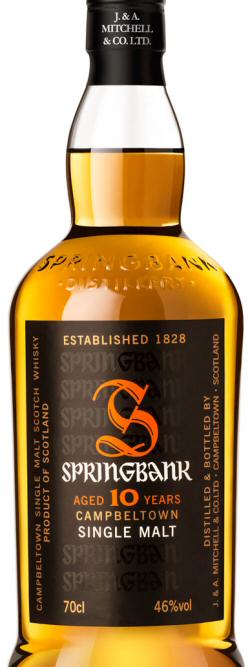
Spingbank.10Finish: Medium length.  The briny sea air returns, with a touch of bitterness, and more spice. Unfortunately, some artificial sweetness also creeps in, which I am not a fan of.  Very light smoke residue.  Not bad, but not quite at the level promised by the palate.

I can certainly see why this whisky is so popular with Scotch drinkers. It is a quality dram, with a surprising amount of light fruit and peaty flavours. Although my own preference for a daily dram runs more toward lightly smokey than peaty (and less overtly sweet), I can see why some would favour this malt.

The highest praise I’ve seen for this whisky is from Serge of Whisky Fun. More typical positive reviews can be found from Nathan the Scotchnoob, Oliver of Dramming, and Ruben of Whisky Notes. Ralfy and the boys at Quebec Whisky are a bit less impressed, although still give it reasonable scores.


Stagg Jr Bourbon

Stagg Jr is the name given to a younger version of the infamous George T. Stagg, a high-end offering of the Buffalo Trace distillery. George T. Stagg is part of the annual Buffalo Trace Antique Collection (BTAC) release, and very hard to come by in the wild. Stagg Jr was apparently developed to increase the availability of this amped-up style of cask-strength bourbon.

Sharing a common mashbill with its big brother, Stagg Jr does not have an official age statement – although it believed to be aged for ~8-9 years (instead of the >15 years of George T. Stagg). Unfiltered and bottled at cask strength, Stagg Jr is released in small batches with some variability in final proof (so far, all within ~128-135 proof, or ~64-67.5% ABV). Typically, there have been two releases a year since its launch in the Fall of 2013.

My sample is from batch 3, released in the Fall of 2014, and is bottled at 66.05% ABV. This batch is often pointed to as the start of the better batches – the initial two releases were widely panned by reviewers, and dismissed as being too “alcohol forward.” See the the recent community review on Reddit for a range of opinions on how the various batches measure up (now up to batch 6).

While I track all batches on my Meta-Critic Database, I don’t report on them individually due to insufficient data on most releases. But since reviewer scores turned decidedly more positive on batch 3 (and have remained so), I have grouped them into batches 1-2 and batches 3-6 for the database. Here’s how Stagg Jr compares to some of the other Buffalo Trace offerings:

Buffalo Trace: 8.56 ± 0.42 on 19 reviews ($$)
Eagle Rare Single Barrel 10yo: 8.55 ± 0.34 on 18 reviews ($$)
Eagle Rare 17yo: 8.81 ± 0.38 on 11 reviews ($$$$$+)
George T Stagg: 9.21 ± 0.27 on 18 reviews ($$$$$+)
Stagg Jr (batches 1-2): 8.44 ± 0.39 on 13 reviews ($$$$)
Stagg Jr (batches 3-6): 8.85 ± 0.20 on 6 reviews ($$$$)

An interesting finding here is that the original batches of Stagg Jr actually got lower scores than the standard Eagle Rare 10 or entry-level Buffalo Trace. Ouch!  The later batches are more in line with Eagle Rare 17 yo (which is a premium BTAC release, like George T. Stagg), although keep in mind there are relatively few reviews.  Unfortunately, it seems like the early batches so turned off reviewers that few of them have come back to sample newer batches produced in the last two years.

Here is how the Stagg Jr batches compare to other similarly priced bourbons, including other cask-strength offerings:

Baker’s 7yo: 8.79 ± 0.31 on 15 reviews ($$$)
Booker’s Small Batch: 8.92 ± 0.25 on 14 reviews ($$$)
Colonel EH Taylor Barrel Proof: 8.80 ± 0.24 on 6 reviews ($$$$)
Elijah Craig 12yo Barrel Proof: 8.86 ± 0.26 on 9 reviews ($$$$)
Four Roses Single Barrel: 8.72 ± 0.36 on 18 reviews ($$$)
Knob Creek Single Barrel Reserve: 8.80 ± 0.35 on 10 reviews ($$$)
Maker’s Mark Cask Strength: 8.71 ± 0.39 on 9 reviews ($$$$)
Russell’s Reserve Single Barrel: 8.77 ± 0.47 on 8 reviews ($$$$)
Stagg Jr (batches 1-2): 8.44 ± 0.39 on 13 reviews ($$$$)
Stagg Jr (batches 3-6): 8.85 ± 0.20 on 6 reviews ($$$$)

The average scores for recent batches of Stagg Jr are certainly well in keeping with other cask-strength bourbons of comparable price.

My batch 3 sample of Stagg Jr was obtained from the Redditor Jolarbear.  When these bottles show up at the LCBO (a rarity), they currently go for ~$85 CAN.

Here is what I find in the glass:

Nose: Sweet with dark fruits, like raisins and prunes. Woodsy and earthy, think rich and moist black earth. Herbal quality (pine? cedar?), that turns into black licorice over time. Chocolatey. Reminds me of amped-up Eagle Rare/Buffalo Trace juice (which of course, it is). Singes the nose hairs a bit, consistent with the high ABV. Water just dampens everything though – I prefer to sniff it neat (best to let it sit in the glass for awhile first, though).

Palate: The dark earth and fruit odyssey leads off, with leather, tobacco, prunes, raisins, cherries and chocolate. Also vanilla and a bit of caramel. The cinnamon and allspice soon kick in, along with a bit of pepper and some woody bitterness – but it is not that spicy overall. Somewhat syrupy in texture, I recommend you hold it awhile in you mouth (to let it mix with your saliva before swallowing). You really feel the burn of the ~66% ABV here. Frankly, a bit too hot to drink neat, even with small sips, as there is a lingering ethanol burn.  A bit of water really helps tame the burn, and brings up a touch more fruitiness. But don’t go crazy with the water – very quickly, it can start to feel dulled.

Stagg.JrFinish: Very long, with lots of oaky bitterness and vanilla carrying you through. Hints of the dark fruits persist, along with that cinnamon. Small amounts of water have no effect here that I can discern. This a powerful finish – much more so than the regular Buffalo Trace/Eagle Rare.

Although I am not a big bourbon guy, I do like the relative composition of the Buffalo Trace Juice. If I were to have a “table bourbon”, it would be Eagle Rare 10 yo.  So I quite enjoyed my batch 3 of Stagg Jr, with its amped set of familiar flavours.  I don’t have a lot of experience of cask-strength bourbons, but I’m looking forward to trying more out after this one.

For generally unfavourable (or at least, lukewarm) reviews of batch 1, check out John of Whisky Advocate, Serge of Whisky Fun, and Ruben of Whisky Notes. For examples of the more positive reviews of batch 3, please see Josh of the Whiskey Jug and Jason of In Search of Elegance. And of course, there is the community review on Reddit for a wide range of batches.

Royal Brackla 16 Year Old

Royal Brackla is one of five Scotch whisky distilleries controlled by John Dewar & Sons, a Bacardi subsidiary. Brackla – located in the Scottish Highlands – has been in operation for a long time, with a few brief periods of shuttered production (like many other Scottish distilleries over the centuries). It is one of only a handful of distilleries to ever earn a Royal Warrant from the King/Queen, thus allowing it to use the official “Royal” prefix.

Its current capacity is fairly large, but it is not well known among enthusiasts, as the vast majority of its production has typically found its way into Dewar’s blended products. Official bottlings have been rare over the years, and even independent bottlings are not common (usually small batches developed for specific events or groups).

Late in 2015, as part of their “last great malts” campaign, Bacardi announced they were diverting significant Brackla production into a new range of official bottlings – 12, 16 and 21 years old. Along with their recent Deveron re-branding, I suspect they are trying to capitalize on their successes with the dedicated Aultmore, Aberfeldy and Craigellachie OBs.

Initially, these Royal Brackla offerings are only being offered in established Scotch whisky markets – specifically, the US, UK, Canada, France, Germany, Japan, Russia, Sweden, and Taiwan. But they are also available through Global Travel Retail, which is how I managed to pick up a bottle of the Royal Brackla 16 year old earlier this year, while passing through an European duty-free. They have just recently arrived at the LCBO here in Ontario, Canada.

According to Dewar & Sons promotional material, Brackla whiskies produce above-average complexity and fruitiness, due to extended fermentation and distillation time. I could see how this would appeal to the blend-making Dewars.

The new OBs are bottled at the (unfortunately) minimum standard of 40% ABV. I don’t normally comment on colour, but my 16 yo looks slightly unnatural, making me think caramel colorant has been added (i.e., a little too medium gold). The bottles have an old-fashioned appearance (very “regal”, especially the labels), and come with an unusually large punt.

There are not a lot of reviews out there yet, but here is how they compare to each other, and some similar Scotch whiskies:

Aberfeldy 12yo: 8.16 ± 0.32 on 17 reviews ($$$)
Aberfeldy 18yo: 8.60 ± 0.18 on 4 reviews ($$$$)
Aberfeldy 21yo: 8.78 ± 0.22 on 10 reviews ($$$$$)
AnCnoc 12yo: 8.63 ± 0.34 on 17 reviews ($$$)
AnCnoc 18yo: 8.61 ± 0.48 on 5 reviews ($$$$)
AnCnoc 22yo: 8.73 ± 0.31 on 9 reviews ($$$$$)
Auchentoshan 12yo: 8.28 ± 0.26 on 21 reviews ($$$)
Auchentoshan 18yo: 8.44 ± 0.29 on 11 reviews ($$$$$)
Auchentoshan Three Wood: 8.25 ± 0.41 on 21 reviews ($$$$)
Aultmore 12yo: 8.41 ± 0.27 on 7 reviews ($$$$)
Aultmore 25yo: 8.91 ± 0.26 on 3 reviews ($$$$$+)
Dalmore 12yo: 8.44 ± 0.27 on 16 reviews ($$$)
Dalmore 15yo: 8.37 ± 0.52 on 15 reviews ($$$$)
Craigellachie 13yo: 8.43 ± 0.40 on 12 reviews ($$$)
Craigellachie 14yo: 8.30 ± 0.27 on 5 reviews ($$$$$+)
Craigellachie 17yo: 8.61 ± 0.32 on 7 reviews ($$$$$)
Royal Brackla 12yo: 8.24 ± 0.59 on 8 reviews ($$$$)
Royal Brackla 16yo: 8.85 ± 0.17 on 4 reviews ($$$$$)
Royal Brackla 21yo: 8.82 ± 0.23 on 3 reviews ($$$$$)

Again, take the numbers on the 16 and 21 yo expressions with a grain of doubt, as there are relatively few reviews so far.

Here is what I find in the glass:

Nose: Sweet, with obvious sherry influence (although more along the lines of light berries and sultanas than the typical dark, earthy fruits). Very fruity overall, with lots of apple, pear, and apricot. Pronounced vanilla. It’s a bit spicy too, with some cinnamon. Strong herbal component, but again mingled with sweetness (more woody and grassy than floral). No off notes. Surprisingly complex, but in a subtle way – actually a bit elusive. Well done, it is a pleasure to come back to the nose between sips, trying to tease out additional notes.

Palate: Very soft body, sweet, with confectionery sugar, vanilla and caramel. Less fruity than the nose, although I’m getting some citrus now (especially orange). The baking spices – cinnamon and nutmeg – are more prominent, especially after a few sips. I’m getting milled grains coming through. Reminds me of some sort of light dessert cake (orange-glazed sponge cake?). Some light chocolate shavings too. Consistent with the low ABV, there is not much burn. Relatively light, even a bit watery – I wish they had bottled this at higher proof. Adding further water lightens the body, and brings up even more sweetness – don’t do it.

Royal.Brackla.16Finish: Medium length, although longer than I expected honestly, given the light body. Lingers, with a somewhat indistinct, light sweet dessert cake taste. A bit like the younger An Cnocs, nothing specific really leaps out here. Certainly inoffensive, with no bitterness. Cinnamon continues to the end, which I like.

The nose is the most impressive thing about this dram – it displays great subtlety, and it is fun to try and tease out all the components. The mouthfeel is understandably light, given the 40% ABV, but with more baking/confectionery notes than I expected.  In the end, this really seems to me like the classic dessert whisky – something to be savoured and gently contemplated at the end of a satisfying meal.

There are not a lot of reviews for this relatively new expression yet. For consistently positive ones, I suggest you check out Serge of Whisky Fun and Ruben of Whisky Notes, and Gavin of Whisky Advocate.

Glen Breton Rare 10 Year Old

Now here’s something you don’t get to say every day: welcome to my review of a Canadian single malt whisky.

Produced by Glenora distillery in Nova Scotia, Glen Breton is the first example of a true single malt whisky made in Canada.  Although a few others have now joined the fray, Glenora is to be commended for bringing this classic Scottish style of whisky-making to Canada.

Many outside of Canada (or within for that matter) may not realize that early Canadian whisky traditions stem as much from Dutch and German settlers as they do from Scottish ones. Although more American and Irish processes eventually worked their way in, the common use of rye as a flavouring element is a tip-off to the typically different growing conditions in Canada. But what better place in Canada to start a single malt distillery than in Nova Scotia (i.e., “New Scotland”), where the largest single ethnic group comprises those of Scottish decent.

Interestingly, Glenora also has a long history in fighting for its right to call this whisky Glen Breton.  The Scotch Whisky Association (SWA) – a trade organization that protects the interests of the scotch whisky industry both within Scotland and around the world – tried to bar the use of the name. Apparently, they felt that only scotch whisky could be called a “glen” and so took Glenora to court. After moving through various boards and courts, the Supreme Court of Canada eventually dismissed SWA’s claim with costs awarded to Glenora.  Score one for the little guy – Glen Breton (with its proud Canadian maple leaf on every bottle) could now get back to actually focusing on its whisky.

Here is how the various common Glen Breton expressions fare in my Meta-Critic whisky database, along with the other available Canadian single malt:

Glen Breton 21yo: 8.28 ± 0.46 on 3 reviews ($$$$)
Glen Breton Battle of the Glen 15yo: 8.55 ± 0.30 on 6 reviews ($$$$$)
Glen Breton Ice 10yo: 8.24 ± 0.64 on 7 reviews ($$$$)
Glen Breton 14yo: 8.06 ± 0.66 on 6 reviews ($$$$)
Glen Breton Rare 10yo: 8.06 ± 0.42 on 13 reviews ($$$$)
Stalk & Barrel Single Malt (All Casks): 8.25 ± 0.39 on 12 reviews ($$$)

And here is a comparison to well-known scotch whiskies of similar flavour profile and age to the Glen Breton Rare 10 yo:

AnCnoc 12yo: 8.63 ± 0.34 on 17 reviews ($$$)
Arran Malt 10yo: 8.56 ± 0.32 on 20 reviews ($$$)
Auchentoshan 10yo: 7.86 ± 0.32 on 10 reviews ($$$)
BenRiach 10yo: 8.55 ± 0.13 on 7 reviews ($$$)
Cardhu 12yo: 8.12 ± 0.45 on 19 reviews ($$$)
Dalwhinnie 15yo: 8.67 ± 0.35 on 17 reviews ($$$$)
Deanston Virgin Oak: 8.18 ± 0.46 on 11 reviews ($$)
Glen Garioch Founder’s Reserve: 8.33 ± 0.41 on 16 reviews ($$$)
Glen Moray Classic: 7.95 ± 0.23 on 5 reviews ($)
Glenfiddich 12yo: 8.08 ± 0.25 on 23 reviews ($$$)
Glengoyne 10yo: 8.22 ± 0.33 on 12 reviews ($$$)
Glenmorangie 10yo: 8.48 ± 0.46 on 23 reviews ($$$)
Hazelburn 8yo: 8.40 ± 0.36 on 11 reviews ($$$$)
Loch Lomond: 7.37 ± 0.47 on 7 reviews ($)
Tamdhu 10yo: 8.18 ± 0.65 on 13 reviews ($$$$)
Tamnavulin 12yo: 7.63 ± 0.89 on 4 reviews ($$)

As previously noted, these lighter flavour malts get lower scores than richer tasting whiskies.  For the range, Glen Breton Rare 10 yo falls into the lower end (although does better than some above). Unfortunately, it is also among the most expensive of the whiskies listed above, likely due to the significant setup costs for Glenora.

I recently sample this whisky at a bar in Nova Scotia, with a pour from a recently opened bottle. Here is what I found in the glass for this entry-level Rare 10 yo:

Nose: Light sweet honey. Citrus and the lighter fruits, including apple. Fruit blossoms, hay, and a light floral scent (can’t really identify specific flowers though). Some maltiness and cereal coming through. There is a detectable solvent smell, and some dry alcohol heat, unfortunately. Reminds me a lot of the base Glenmorangie spirit (i.e., the Glenmo 10 year old). Pretty decent overall, but it would be excellent if they could trim the solvent/alcohol fumes a bit.

Palate: Initially, the same light sweet honey note as the nose. I quickly get a bit of tongue tingle, and an unusually hot sensation. Odd that, since it has a somewhat thin and watery mouthfeel otherwise. The floral feature is there, with heather in particular, and something else aromatic that I can’t quite place. A bit of mild spice, especially nutmeg. Unfortunately, I’m getting a strong solvent taste (glue), which reminds me of some of the cheaper scotch blends. Combined with the alcohol burn, I suspect this will give me heartburn later tonight.

Finish: Not much of one, I’m afraid. A mix of artificial sweetener and oaky bitterness mainly, like a young Crown Royal. Too hot as well.

Glen.Breton.Rare.10Given the off-notes I’m detecting, I believe this whisky needs more time in the barrel to age into an interesting product. Compared to other scotch whiskies I’ve had, this tastes much younger than its stated 10 year age. It has potential though, as there is something interestingly floral about it.

I note from the reviews out there that the longer-aged Glen Breton products seem to be better. Hopefully I will get a chance to try one of the higher-end products soon.

For some reviews of this whisky, the most positive ones I’ve seen come from Jason of In Search of Elegance and Ralfy. More typical are Davin of Whisky Advocate and the boys of Quebec Whisky. The least positive review is probably Serge of Whisky Fun (which is most in line with my thinking).


Highland Park 18 Year Old

Located on the Orkney islands, Highland Park is distinctive for being the most northerly whisky distillery in Scotland. But what truly makes it stand out is the taste – all Highland Park expressions show an unusual combination of native peat and sherry cask aging.

Referring back to my modern Flavour Map page, you will see that the highly complex whiskies (“rich” tasting” bifurcate into either heavily “winey” or heavily “smokey” flavours.  Highland Park is distinctive as it is actually somewhat in the middle of the winey-smokey scale, but still with a rich range of flavours (i.e., top of cluster C on the chart).

Support for this distillery among Scotch single malt drinkers is very high. When asked what would you choose if you could only have one bottle of Scotch, I have heard a couple of people answer immediately: Highland Park 18. One enthusiast even told me she married her husband because this was the one scotch he stocked in his liquor cabinet (presumably this wasn’t the only reason). 😉

It is not exactly cheap, mind you – the standard 750mL, 43% ABV bottle goes for $200 CAD at the LCBO.  Here is how it compares to some similarly aged expressions in my Meta-Critic whisky database:

Bowmore 18yo: 8.51 ± 0.54 on 16 reviews ($$$$)
Bunnahabhain 18yo: 9.01 ± 0.17 on 14 reviews ($$$$$)
Caol Ila 18yo: 8.67 ± 0.51 on 14 reviews ($$$$$)
Glenlivet 18yo: 8.58 ± 0.19 on 19 reviews ($$$$$)
Highland Park 18yo: 9.12 ± 0.24 on 22 reviews ($$$$$)
Lagavulin 16yo: 9.25 ± 0.23 on 25 reviews ($$$$)
Longrow 18yo: 9.18 ± 0.23 on 7 reviews ($$$$$)
Oban 18yo: 8.71 ± 0.21 on 12 reviews ($$$$$)
Springbank 18yo: 8.96 ± 0.19 on 16 reviews ($$$$$)
Talisker 18yo: 9.20 ± 0.20 on 15 reviews ($$$$$)

A very respectable ranking, coming in just below the smokier Longrow 18, Talisker 18 and Lagavulin 16.

Here is how it compares to some of the other common HP expressions:

Highland Park 10yo: 8.49 ± 0.30 on 12 reviews ($$$)
Highland Park 12yo: 8.66 ± 0.22 on 21 reviews ($$$)
Highland Park 17yo Ice: 8.87 ± 0.21 on 4 reviews ($$$$$+)
Highland Park 18yo: 9.12 ± 0.24 on 22 reviews ($$$$$)
Highland Park 21yo: 8.86 ± 0.39 on 14 reviews ($$$$$+)
Highland Park 25yo: 9.17 ± 0.25 on 13 reviews ($$$$$+)
Highland Park 30yo: 9.02 ± 0.40 on 9 reviews ($$$$$+)
Highland Park Dark Origins 8.49: ± 0.47 on 16 reviews ($$$$)

The HP 18 gets the second highest score I’ve seen for this distillery – despite being a lot less expensive than the higher-end line of Highland Parks.

I have had this scotch on a number of occasions. For this review, I sampled it from my brother’s bottle. Here is what I find in the glass:

Nose: Moist earthy peat. A fair amount of fruit, with lighter summer fruits like peaches and plums plus the typical sherry raisins and figs. Citrusy, with definite lemon. A touch of brine. Doughy bread being baked on a campfire. Very nice.

Palate: The smoke asserts itself now, but the sherried sweetness still takes you home. Same lighter fruits as the nose, but also sweet sultanas now. Some darker berries too, like raspberry and blackberry. Salted caramel, with brown sugar and a touch of nutmeg. Sweet black licorice. Has a decent mouthfeel for a 43% ABV scotch (I would normally find this strength to be watery). Great experience – none of the bitterness I noticed on the 12yo.

Finish: Very long, and smokey to the end. Pleasant light sweetness initially, but not very fruity. Has a clarity about it, with great balance. Leaves you with some mouth puckering astringency.

Highland.Park.18

I can understand why some would see this as the quintessential scotch for your liquor cabinet – there is something for everyone here.  There’s really no negative that I can find, it all just works well together. That said, I can see why some would prefer more of the extremes (i.e., a sherry bomb or a smoke monster). But for those wanting to walk the line in-between, it doesn’t get much better than this.

Among the highest ratings I’ve seen for this whisky are Gavin of Whisky Advocate, Jason of Whisky Won, Oliver of Dramming, and Ralfy. Also quite positive (but more typical of the average score) are Serge of Whisky Fun, My Annoying Opinions, and Nathan the Scotchnoob. What can I say, it is very highly recommend by all.


Aberlour 12 Year Old – Double Cask Matured

While not necessarily a house-hold name, Aberlour is widely perceived among scotch enthusiasts as a consistently good choice – and one of the best value plays among highland/speyside single malts. Indeed, I have sometimes seen Aberlour referred to as the poor man’s Macallan, due to the similar composition and flavour profile for many of their expressions.

The double cask matured version of the Aberlour 12 year old is made from a mix of traditional oak and sherry casks, and is bottled at the standard 40% ABV. It retails for $65 CAD at LCBO, making it one of the most affordable single malts available here.  Note that there is a separate non-chillfiltered (NCF) version of the 12yo, but that is not available in Ontario.

The Aberlour 12yo Double Cask has recently garnered a fair bit of publicity in Canada, as it was recently selected by the Speaker of the House of Commons as his “selection scotch” for use at official functions. Many in the Canadian whisky community complained that a scotch whisky was selected over a Canadian whisky for this official role.

Here is what the Meta-Critic database has to say for this whisky, relative to others of similar style.

Aberlour 12yo Double Cask Matured: 8.38 ± 0.15 on 13 reviews ($$$)
Aberlour 12yo Non-Chill-Filtered: 8.80 ± 0.24 on 11 reviews ($$$)
Auchentoshan Three Wood: 8.26 ± 0.41 on 21 reviews ($$$$)
Balvenie 12yo Doublewood: 8.45 ± 0.34 on 19 reviews ($$$$)
BenRiach 12yo Matured in Sherry Wood: 8.68 ± 0.23 on 11 reviews ($$$)
Bunnahabhain 12yo: 8.57 ± 0.31 on 16 reviews ($$$)
Dalmore 12yo: 8.45 ± 0.27 on 16 reviews ($$$)
GlenDronach 12yo Original: 8.58 ± 0.22 on 20 reviews ($$$)
Glenfarclas 12yo: 8.63 ± 0.35 on 16 reviews ($$$)
Glenkinchie Distiller’s Edition: 8.38 ± 0.30 on 12 reviews ($$$$)
Glenmorangie Lasanta: 8.40 ± 0.36 on 18 reviews ($$$)
Macallan 12yo Fine Oak: 8.47 ± 0.40 on 14 reviews ($$$$)

Although towards the lower end of the range of average Meta-Critic scores, it is also the cheapest of all the above whiskies – and so does seem to represent good value for money.

I was given a bottle of this malt for Father’s Day recently, so I thought I would share my tasting experiences here.

Nose: Sweet pear apple (red delicious) and lighter sherry fruits, like plums and maybe a touch of raisins. Has a mouthwatering “juicy fruit” aroma. Light body otherwise, and not as malty as I expected (more cake-like, if anything). Very slight nose hair burning sensation if you inhale too deeply.

Palate: Same fruits as the nose, but they seem a bit diluted here. A faint touch of spice coming in now (mainly cloves). Still getting the cake and fruit sensation throughout. Light body overall, with a somewhat watery mouthfeel. Would probably have benefited by a higher ABV, as there isn’t all that much going on at this low proof. A touch of bitterness creeps in at the very end. Certainly on the delicate side for sherry matured.

Finish: Medium length. Not overly sweet – reminds me of exhausted juicy fruit gum once the sweetness has given out (and you are left with just the subtle, spent fruitiness). A touch of cloves persists to the end.

Aberlour.12.DoubleThe Aberlour 12yo Double Cask Matured reminds me a bit of Auchentoshan Three Wood or the BenRiach 12yo Matured in Sherry Wood – in all these cases, there is a fairly gentle underlying base spirit. If anything, I suspect the Aberlour 12 spent less time in sherry casks than the others, but it is still a good introduction to the Aberlour house style.  A good place to start, and something of the opposite extreme from the “sherry bomb” A’bunadh.

Reviews of this whisky are very consistent, as indicated by the low standard deviation above.  Probably the most positive review I’ve seen is from Serge of Whisky Fun, and the least positive from Michael of Diving for Pearls. Otherwise, you can check out Whisky Advocate, the guys at Quebec Whisky, or Richard at the Whiskey Reviewer for typical rankings.

Redbreast 12 Year Old

Redbreast gets a lot of attention from whisky enthusiasts – especially those who typically specialize in single malts.  It is an example of the Irish pure pot still style (aka single pot still), which is the traditional method for Irish whisky production.

This process involves a mix of malted and unmalted barley that has been combined and triple-distilled in a large, single copper pot stills. This method introduces a distinctive “greasiness” in the mouthfeel of the whisky, while still maintaining a lot of classic malt whisky flavours.

You may not have noticed this before in Irish whiskies, since most are actually blends of single pot still whisky and lighter grain whisky (e.g. Jameson’s, Powers, etc.). In this sense, a single pot still whisky (like Redbreast 12 Year Old) is closer to a classic single malt, while the more common entry-level Irish whiskies are closer to scotch blends.

Indeed, many enthusiasts are comfortable describing the flavour of pure pot still whiskies in the same terms as single malts (in this case, cluster E on my flavour map). That would place it in the same category as a number of the traditional vatted speyside/highland single malts that have some proportion of wine cask-aged whiskies in their mix.

Produced by Middleton, Redbreast 12 year old is a very affordable whisky – by comparable quality single malt standards. It currently sells for $75 CAD for a 750mL bottle at the LCBO. While bottled at the standard 40% ABV, there is a cask-strength version of the 12yo (57.4%) that you can pick up here for $110.

Here is how it compares to a number of whiskies of similar flavour and price in my Meta-Critic Database:

Aberfeldy 12yo: 8.16 ± 0.32 on 17 reviews ($$$)
Auchentoshan 12yo: 8.29 ± 0.25 on 21 reviews ($$$)
Balvenie 12yo Doublewood: 8.45 ± 0.34 on 19 reviews ($$$$)
Balvenie 12yo Single Barrel: 8.61 ± 0.37 on 10 reviews ($$$$)
Dalmore 12yo: 8.45 ± 0.26 on 16 reviews ($$$)
Dalmore Valour: 8.04 ± 0.37 on 7 reviews ($$$$)
Glenfiddich 14yo Rich Oak: 8.59 ± 0.33 on 9 reviews ($$$)
Monkey Shoulder: 8.27 ± 0.38 on 15 reviews ($$)
Redbreast 12yo: 8.78 ± 0.41 on 21 reviews ($$$)
Redbreast 12yo Cask Strength: 9.05 ± 0.32 on 13 reviews ($$$$)
Redbreast 15yo: 8.71 ± 0.26 on 12 reviews ($$$$)
The Irishman Founder’s Reserve: 8.38 ± 0.30 on 6 reviews ($$)
Tullamore Dew 10yo Single Malt: 8.00 ± 0.79 on 6 reviews ($$$)
Writers Tears Pot Still: 8.48 ± 0.38 on 14 reviews ($$)

Again, for the price and flavour cluster, you can see the Redbreast 12yo does very well. Indeed, it is the Meta-Critic score leader for this cluster in the <$75 group ($$$).

Here is what I find in the glass for the standard 12 yo Redbreast:

Nose: Nutty and slightly malty (the latter fades with a bit of time in the glass). Spicy, with pepper and a bit of black licorice (anise). While not overly sherried, I suspect some proportion of this whisky spent time in a sherry cask – I get hints of light berries and milk chocolate raisonettes. A touch of solvent smell, but I can’t place it.

Palate: Rich up-front hit of brown sugar, vanilla and honey. Slightly flat cola too. Light fruits again, with tart citrus kicking in now. Very oily and juicy, giving it a chewy mouthfeel that is quite distinctive. Much more substantial than most Irish whiskies I’ve tried. Just a touch of bitterness comes in at the end, which some may find harsh if used to the lighter Irish whiskies.

Finish: Moderately long, with persistent spice – and that cola effect is back.  Not a lot of variety, just a consistent fade out. The bitterness persists as well, encouraging you to take another sip. Not particularly complex, but longer lasting than most Irish whiskies.

Redbreast.12The Redbreast 12 yo is a solid performer, with more substantial character than most commonly available Irish whiskies.  But it still carries through the typical Irish sweetness, just mixed with a single malt-like balance of flavours. This makes Redbreast 12 yo somewhat unique in my experience – sort of a hybrid of a typical Irish whisky and a sherry cask-matured speyside single malt.
Ideally, I think it best suited for those wanting to take their Irish whisky experience up to the next level. Or those who find some of the stronger sherry-finished highland/speysides to be a bit much (i.e., think of it as a sweeter Glendronach 12 yo). Indeed, I would personally rate it much closer to the Glendronach 12 yo (which gets a Meta-Critic score of 8.58 ± 0.22 on 20 reviews). But that still makes Redbreast 12yo a great value.

For a range of opinions on this whisky, the lowest scores I’ve seen come from André and Patrick at Quebec Whisky and Ralfy. Most seem to be of comparable opinion to Serge of Whisky Fun or Jim Murray. The highest scores I’ve seen come from John Hansel of Whisky Advocate and Michael of Diving for Pearls.

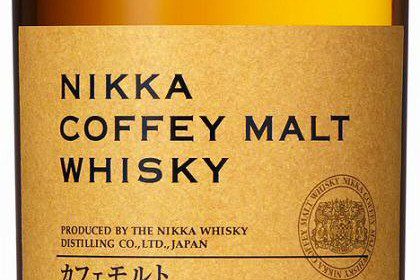
Nikka Coffey Malt

Following on my review of the popular Nikka Coffey Grain – a single-grain corn whisky from Japan – I recently picked up a bottle of their Coffey Malt to directly compare.

As with the Coffey Grain, this whisky is made at the Miyagikyo distillery operated by Nikka. It is produced in a continuous Coffey still – one of two in operation by Nikka for over 50 years now. This is different from most malt whisky, which is produced in small batches in copper pot stills.

Typically, this NAS bottling of Coffey Malt doesn’t get as much attention as the Coffey Grain – but I think that may be because it hasn’t been around as long.  Here is how some similar whiskies compare in my Meta-Critic Database:

Bain’s Cape Mountain Whisky: 8.19 ± 0.51 on 7 reviews ($$)
Hibiki Harmony NAS: 8.36 ± 0.70 on 11 reviews ($$$$)
Nikka Coffey Grain: 8.64 ± 0.46 on 15 reviews ($$$$)
Nikka Coffey Malt: 8.89 ± 0.45 on 7 reviews ($$$$)
Nikka Coffey Malt 12yo Single Cask: 9.10 ± 0.48 on 9 reviews ($$$$$)
Nikka From the Barrel: 8.82 ± 0.41 on 21 reviews ($$$)
Nikka Pure Malt Red: 8.53 ± 0.34 on 9 reviews ($$$)
Nikka Pure Malt Black: 8.78 ± 0.23 on 13 reviews ($$$)
Nikka Taketsuru NAS: 8.17 ± 0.53 on 3 reviews ($$$$)
Redbreast 12yo: 8.77 ± 0.42 on 21 reviews ($$$)
Writers Tears Pot Still: 8.49 ± 0.37 on 14 reviews ($$)
Yellow Spot: 8.79 ± 0.31 on 13 reviews ($$$$)

Despite the lower number of scores, the Coffey Malt is clearly fairly popular overall with reviewers. Unfortunately, none of the Nikka whiskies are currently available in Ontario. But the Coffey Grain, Coffey Malt, Black and From the Barrel are available in BC. At the moment, it will cost you ~$110 CAD (tax in) for the 700mL bottles of either the Coffey Grain or Coffey Malt. Bottled at 45% ABV.

Let’s see what I found in the glass.

Colour: I don’t usually comment on this, but the Coffey Malt is a slightly darker color than the Coffey Grain – closer to the Nikka Black.

Nose: Very different from the Coffey Grain, with a greater initial impression. Not as corn syrupy sweet, there are a lot tropical fruits here – with peaches, papayas and bananas most prominent. There are also a lot more malt aroma now (duh!). Reminds me of a cross between warm banana bread and those dry Scottish oatmeal cakes. Still has the faint caramel/vanilla notes from its time in oak – although if anything, the overall woodiness is increased. Very rich nose, and very appealing. The only negative for me is the slight solvent smell (vaguely pulp and paper plant like).

Palate: Even sweeter upfront than expected, with honey on top of those lighter tropical fruits from the nose (plus some additional dark fruits, like berries and plums). Very fruity overall. Surprising amount of chocolate, adding to that caramel sweetness from the nose. Faint dusting of some of the lighter rye spices (like nutmeg). Silky texture, very chewy – this is definitely a whisky you will want to swirl around the gums. Makes you want to go right back and try another sip! Surprisingly rich and tasty. While not overly complex, there are still a lot of flavours to dissect here.

Finish: Medium-short. Some of the sweet and chocolate notes linger, along with a slight creamy bitterness (i.e., think of the after effects of a latte). Other than that, it just fades out, with maybe a touch of sweet fruit hanging on until the end. Pleasant enough, but somewhat light.

Nikka.Coffey.MaltWow, a lot more going on here than the Coffey Grain. It reminds me of some of the more flavourful Irish Pot Still whiskies, with its creamy sweetness. Easy to drink, but still reasonably complex.

I would definitely give this a higher score than the Coffey Grain – although I agree the Coffey Grain deserves decent marks for its very good presentation of the light-and-sweet grain style.  All told, the Meta-Critic averages are pretty much about where I would place them for these two whiskies.

The most positive reviews I’ve seen for this whisky come from André and Patrick of Quebec Whisky – they really rave about it. Dave Broom of Whisky Advocate gives it a fairly positive score and review. Serge of Whisky Fun is fairly positive in his comments, but somewhat lower scoring. The lowest score I’ve seen for this whisky comes from Michio of Japanese Whisky Reviews.


Bunnahabhain 18 Year Old

As mentioned in my recent Bunnahabhain 12 year old review, this Islay distillery is distinctive for not using peat in its core line of whiskies. The age-statement expressions of Bunnahabhain are thus more easily comparable to many of the whiskies from the classic mainland regions of Scotland.

Impressively, all these single malt expressions lack artificial caramel colouring, are non-chill-filtered, and are bottled at a relatively high 46.3% ABV. These choices speak well to the quality focus of the distillery.  As with the 12 yo, this expression is matured in a mix of ex-bourbon and ex-Oloroso sherry casks (although the exact proportions are again unknown).

Here is how the Bunna 18 yo compares to similarly-aged expressions in my Meta-Critic database:

Aberlour 18yo: 8.74 ± 0.27 on 11 reviews ($$$$)
Bunnahabhain 12yo: 8.57 ± 0.33 on 15 reviews ($$$)
Bunnahabhain 18yo: 9.01 ± 0.17 on 14 reviews ($$$$$)
Bunnahabhain 25yo: ± 8.85 0.38 on 13 reviews ($$$$$+)
Caol Ila 18yo: 8.67 ± 0.51 on 14 reviews ($$$$$)
GlenDronach 18yo Allardice: 8.71 ± 0.40 on 15 reviews ($$$$$)
Glenfiddich 18yo: 8.57 ± 0.41 on 15 reviews ($$$$$)
Glenlivet 18yo: 8.58 ± 0.19 on 19 reviews ($$$$$)
Glengoyne 18yo: 8.56 ± 0.41 on 11 reviews ($$$$$)
Highland Park 18yo: 9.12 ± 0.25 on 22 reviews ($$$$$)
Oban 18yo: 8.71 ± 0.21 on 11 reviews ($$$$$)
Macallan 18yo Fine Oak: 8.80 ± 0.32 on 11 reviews ($$$$$)
Springbank 18yo: 8.96 ± 0.19 on 16 reviews ($$$$$)
Tomatin 18yo: 8.64 ± 0.21 on 8 reviews ($$$$)

As you can see above, it receives the highest score for an unpeated single malt of this age. The 18 yo even scores higher than the 25 yo “bunny”.

I was so impressed on sampling this expression that I quickly went out and bought a full bottle for myself (despite the rather steep $180 CAD price tag at the LCBO).  Here is what I notice in the glass:

Colour: while I don’t normally comment on this (since it can be manipulated), I note that the 18yo is a much richer reddish/brown colour than the 12 yo expression. It clearly shows some extend time in sherry casks (or a higher proportion of sherry casks in the mix).

Nose: Classic sherry notes, with chocolate, raisins, figs and grapes. Has a honeyed sweetness, with some additional plum and apple. Salted caramel, a bit nutty, and with a faint hint of glue (which is oddly not objectionable). All in all, this whisky produces a mouth-watering effect that I typically associate with lightly smokey whiskies that were well-aged in sherry casks. This one is particularly nice, as it seems very rich and creamy (if that is possible to tell by smell).

Palate: All the aromas from the nose are found again on the palate. While not a sherry-bomb, there are a clearly lot of quality casks blended in here – I get rich, creamy cocoa, and a surprising amount of dark fruit. More caramel now too. Malted nuts. Something intriguing, in the way of a light coastal whisky, but with no real smoke or peat (more spicy?). Certainly, a touch of sweet baking spices, like nutmeg and allspice.  Happily, it has none of the bitterness that marred the 12 yo for me somewhat.  An oily and slightly syrupy mouthfeel, very pleasant to swish around the gums. Doesn’t really need any water – very drinkable at its native 46.3% ABV.

Finish: Fairly long, with dried fruits leading the way. A faint, warming allspice contributes as well. There is a slightly salty/briny residue in the end (which pairs well).

Bunnahabhain.18No trouble draining a glass here – a very pleasant whisky, with nothing significant to criticize. Certainly better than most unpreated malts of comparable age that I’ve tried. This one is very close to my favourite “relaxing for the evening” profile, with a hint of salty spice below a bed of fruit and chocolate.
Personally, the 18 yo is well worth the upgrade from the 12 yo expression for me. While many of the core flavours are similar, the quality proposition is high enough here to justify the price bump (again, for me). There is likely more than just extended aging going on – I’m fairly confident they are using a higher quality cask mix here (especially for the sherried component). I’m looking forward to serving this to fans of comparably-aged Glenlivet and Glenfiddich – I’m sure it it will surprise them.

As you can tell from the high average Meta-Critic score – and low standard deviation – reviewers are consistently positive for this expression. For representative reviews, I recommend you check out the guys at Quebec Whisky, Ruben of Whisky Notes, Ralfy, and My Annoying Opinions.


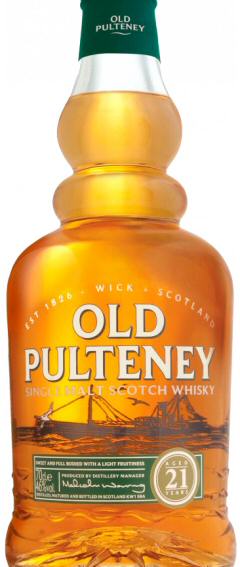
Old Pulteney 21 Year Old

The Pulteney (PULT-nay) distillery is the most northerly mainland distillery in Scotland, and they certainly make great use of sea imagery on all their products. Indeed, a general “maritime air” is believe to infuse their whisky, with subtle notes of sea salt/brine.

The 21 yo expression of Old Pulteney is a mix of whisky from Fino sherry and refill bourbon casks. It sits at the top of their core expression range, above the 12 yo and 17 yo expressions (which I have yet to review).

Of note, Jim Murray is a big fan of this whisky – he once rated it whisky of the year in his annual Whisky Bible (2012).  But let’s see how it fares among all critics in my Meta-Critic database, relative to other similarly aged expressions.

Aberfeldy 21yo: 8.77 ± 0.22 on 10 reviews ($$$$$)
Balvenie 21yo Port Wood: 8.75 ± 0.40 on 13 reviews ($$$$$)
Glenfiddich 18yo: 8.57 ± 0.41 on 15 reviews ($$$$$)
Glenfiddich 21yo Gran Reserva: 8.68 ± 0.33 on 12 reviews ($$$$$)
Glenlivet 18yo: 8.58 ± 0.19 on 19 reviews ($$$$$)
Glenlivet 21yo Archive: 8.83 ± 0.31 on 12 reviews ($$$$$)
Glenmorangie 18yo Extremely Rare: 8.69 ± 0.23 on 12 reviews ($$$$$)
Highland Park 18yo: 9.12 ± 0.25 on 22 reviews ($$$$$)
Highland Park 21yo: 8.86 ± 0.39 on 14 reviews ($$$$$+)
Old Pulteney 17yo: 8.85 ± 0.28 on 16 reviews ($$$$$)
Old Pulteney 21yo: 8.77 ± 0.50 on 15 reviews ($$$$$)

The overall average score is in keeping with many in this age class, but there is an unusually high degree of variance for this whisky. This indicates significant discordance among reviewers.

Let’s see what I find in the glass. This was sampled recently at Bar le Grincheux in Strasbourg, for 21€. It is bottled at 46% ABV.

Nose: Sherry influence is unmistakable, with definite chocolate notes. The fruit is secondary, and pretty much all apple, pear and a bit of banana – I am not getting any of the typical dark sherry fruits. Their is a sweet and salty maritime air, like salted caramel. No real alcohol burn or any off notes. This is a nice nose, with a fair amount of complexity under the surface. A pleasure to return to.

Palate: Sweet and lightly smokey is the initial impression.  The salted caramel and chocolate notes continue (especially creamy milk chocolate), joined by some oak vanilla. A hint of pralines and nougat. Effect reminds me of some of those higher-end Belgian chocolatiers (but not too sweet). Not very fruity, but the light fruits from the nose persist (especially apple), with again no dark fruits. There is some alcohol burn now, definitely feels like 46% ABV. Mouthfeel is a bit syrupy, and some soft spices enter the picture eventually. A touch of bitterness comes in at the very end.

Old.Pulteney.21Finish: Not particularly sweet, more slightly savoury – like the lingering finish of some south asian dishes. Astringent mouthfeel (with that “maritime air” again). Moderate finish, could be longer.

Certainly a very drinkable expression. Overall impression is that that of hidden spice and salt, having been muted by the more extensive barrel aging.  While I enjoyed the initial presentation, this one looses some marks from me on the way out – it just sort of fizzles, when you would expect a more substantial exit. As such, I think the overall Meta-Critic score is fair here.

For additional reviews of this whisky, generally positive ones can be found from Thomas of Whisky Saga and most of the members of Quebec Whisky (although André is quite negative). Another relatively negative review comes for John Hansell of Whisky Advocate (although that is an older bottling). For a more middle-of-the-pack review, you could see Ruben of Whisky Notes. And of course, there is Jim Murray for the most positive review of this whisky I’ve ever seen.

1 17 18 19 20 21 26