

Bain’s Cape Mountain Whisky
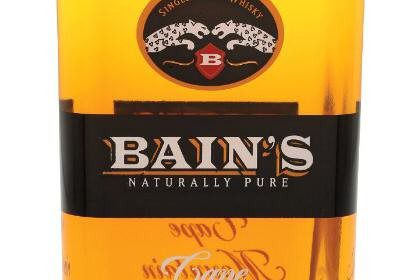
Bain’s Cape Mountain whisky is a South African whisky, from the James Sedgwick Distillery in Wellington. It is a pure “single grain” whisky (in this case, made exclusively from corn). It is produced in column stills, and matured in first-fill bourbon casks for a period of five years.
Until recently, it was relatively uncommon to find pure single grain whiskies bottled and sold to consumers. While column distillation is commonly used for both American bourbon and Canadian whisky, this tends to involve a mix of multiple grains (either at the time of distillation, during barreling, or at final blending). For scotch drinkers, most grain whiskies are used in “blends” – to provide a consistent sweetness and mouthfeel, and to help stretch out the smaller amount of the more distinctive (and expensive) malt whisky. See my single malt vs blend discussion here for more info on the typical processes.
Of course, one advantage to column-still whiskies is that they are a lot easier to produce (and can therefore can be sold a lot more cheaply). And as Japanese whisky makers have shown, careful barreling and aging practices can introduce some distinctive characteristics into these whiskies. That said, I find most single grain whiskies are fairly light. They thus compare most closely to some Irish whiskeys (which are traditionally pot distilled from both malted and unmalted barley), and some Canadian blended whiskies.
My recent positive experience with the Nikka Coffey Grain and Crown Royal Monarch (which uses a high proportion of Coffey still rye) encouraged me to seek out other column-still whiskies. Bain’s Cape is available locally at the LCBO for ~$48 CAD. My review sample was provided by Reddit user Jolarbear.
Here is how Bain’s Cape compares to some similar grain and Irish whiskies in my Meta-Critic Whisky Database:
Bain’s Cape Mountain Whisky: 8.19 ± 0.54 on 7 reviews ($$)
Bushmills Original Blended: 7.73 ± 0.46 on 12 reviews ($$)
Forty Creek Three Grain Harmony: 8.29 ± 0.72 on 4 reviews ($$$)
Gooderham & Worts Four Grain: 8.70 ± 0.36 on 7 reviews ($$)
Jameson Irish Whiskey: 7.82 ± 0.58 on 17 reviews ($$)
Jameson Select Reserve: 8.33 ± 0.42 on 14 reviews ($$)
Nikka Coffey Grain: 8.66 ± 0.50 on 14 reviews ($$$$)
Teeling Single Grain (Wine Cask Finish): 8.53 ± 0.36 on 9 reviews ($$$)
Teeling Whiskey Small Batch (Rum Cask Finish): 8.30 ± 0.37 on 16 reviews ($$)
Three Ships 5yo: 7.97 ± 0.50 on 8 reviews ($)
Tullamore Dew Blended: 7.76 ± 0.41 on 14 reviews ($$)
Writers Tears: 8.50 ± 0.41 on 12 reviews ($$)
As you can see from the high standard deviation above for Bain’s, there are a wide range of views on this whisky. Here is what I find in the glass:
Nose: Very sweet, you can definitely smell the corn. In fact, it is hard to notice much else at first. A bit of light fruit, mainly apple and pear. Just a touch floral (i.e. perfumy). There are no real spices to speak of, but I do get a faint impression of cereal/baked pastries, with maybe some custard. Frankly, the overall impression is pleasant, but somewhat thin. There is a slight solvent aroma (acetone), but it is mild – which is impressive for a young grain whisky (i.e., some really suffer heavily with this).
Palate: Buttered-corn sweetness is the main initial characteristic, followed by some vanilla and caramel. The same apple and pear notes from the nose are here, albeit faintly. Slightly warming, but not really spicy. A bit more alcohol burn than I would have expected, even for a 43% ABV whisky. The creamy butteriness, when combined with that baked pastry note, brings to mind the strong image of shortbread cookies. A touch of bitterness creeps in at the end.
Finish: The finish is fairly short and thin – a common feature I find to most grain whiskies. The slight grapefruitty bitterness continues for some time, very reminiscent of some Canadian whiskies (i.e., standard Crown Royal). A gentle, simple sweetness is the main characteristic.
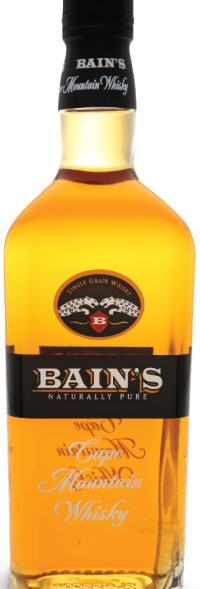 Note that a few drops of water completely destroys the nose, and dulls the taste without helping tame the alcohol burn at all. And if anything, it makes the finish even more bitter (and introduces a somewhat artificial sweetener note to boot). Simply put, don’t do it!
Overall, I find Bain’s Cape Mountain Whisky to be a lightly flavoured grain whisky, with no major flaws beyond being a bit hot in its approach. The most interesting characteristic to me is the creamy shortbread taste. But frankly, I find it a little one-dimensional overall – even for a single grain whisky. Given these characteristics, Bain’s Cape Mountain Whisky might appeal to drinkers of the lighter Canadian or Irish whiskeys, or as a basis for cocktails.
Note that the Meta-Critic assessment of this whisky is fairly variable (i.e., a high standard deviation) on a low number of reviews. As such, you may want to consider the average score to be provisional until more reviews come in. Personally though, I think the current average Meta-Critic score is reasonable for this whisky.
Bain’s Cape has received moderately positive reviews from Jim Murray and Dave Broom of Whisky Advocate, and one extremely positive review from Ralfy. André of Quebec Whisky and Serge of Whisky Fun both rank it considerably lower (for the lack of interest/complexity, more than anything else).

 Finish: Moderately long. Like many peated whiskies, the smoke is the longest-lasting characteristic, but it is balanced by a persistent sweetness. I wasn’t getting much in the way of fruits on the nose or palate, but there does seem to be a light fruit vibe on the way out (maybe pear?).
 I would think this one is fine as is (i.e., neat). A splash of water helps dampen the acetone on the nose slightly, and further accentuates the creamy butterscotch/caramel in the mouth. Also seems to soften the “earthiness” in the finish, without affecting the grassiness.
 Finish: Medium long. This is what I imagine the lingering effects of caramel-coated cinnamon red-hots would feel like (if such a thing existed). The corn sweetness is there, and it persists through the finish, along with the cinnamon rye notes.
 The nose is misleading on this one, with its pure white sugar sweetness. Once you actually take a sip, this seems more like a decent light Irish whiskey – but with some significant alcohol kick.
 I suggested in my
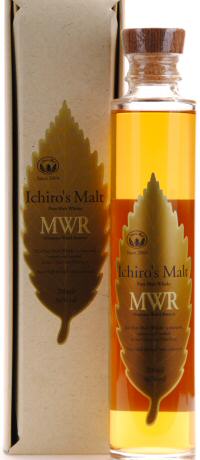 The MWR has a lot of promise on the nose, but it quickly turns bitter in the mouth, with a disappointing finish. It seems very young overall. Frankly, despite the initial distinctiveness, it is a whisky that makes you want to drink less as time goes by in the glass.
 This has always been one of my favourite flavour profiles – a fairly gentle base spirit, bridging standard ex-Bourbon barrels with just the right amount of ex-Sherry barrels. The Glenkinchie Distiller’s Edition is another example of this style (although typically younger, with a little more sherry fruitiness in that case).

 Again, the above is just a way to help you calibrate yourself against the “typical” reviewer (as expressed by the Meta-Critic score). Nothing is stopping you from going your own way.
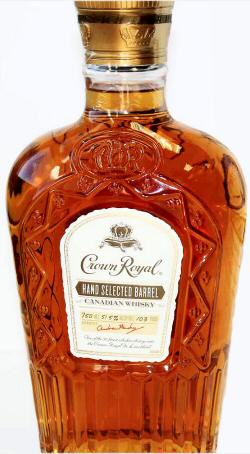 Overall, I would rate this sample of the Hand Selected Barrel as very close to the Northern Harvest Rye in overall quality. There are certainly differences though – NHR is more of a traditional Canadian Rye, without the thick and rich woodiness of the bourbon-like Hand Selected Barrel. This HSB has a more robust palate, but the NHR has a sharper and cleaner nose and finish. And I still consider my batch of Monarch to be a whole other league – an example of how Crown Royal can make a high quality and elegant blended whisky.