Author Archives: selfbuilt

J.P. Wiser’s Alumni Series Larry Robinson 6 Year Old

This is my second review of the 2019-2020 Edition of J.P. Wiser’s NHL Alumni series of whiskies. Following up on the inaugural release of the 2018-2019 Edition, a second offering was released in the spring of 2019. This 2019-2020 Edition features whiskies named after Larry Robinson, Darryl Sittler, and Paul Coffey. As before, each of these players was involved in helping select component whiskies for their namesake blends. The profits from the series are shared evenly with NHL Alumni Association, to help support former players in need. As before, these all retail for ~$45 CAD in most jurisdictions.

I was generally impressed with the 2018-2019 Edition, which all featured age statements and more distilling and barreling details than typically found in Canadian whiskies (especially at this price point). All whiskies are designed by Dr Don Livermore, Master Blender of Corby (who owns J.P. Wiser’s). He is the person most directly responsible for all the popular limited/special releases coming out of Corby (i.e., the Rare Cask series and the Northern Border Collection).

At this time (November 2019), all of the original 2019-2020 Edition whiskies are widely available in Ontario at the LCBO. These can even be ordered directly from J.P. Wiser’s website (for delivery in Ontario only).

Let’s check out the composition of this Larry Robinson whisky:

Grain: Mainly corn, with a significant amount of rye (19%)
Age: 6 years old
ABV: 40%
Distillation: column distilled
Oak: six barrel types; standard used Canadian whisky, double charred, ex-Bourbon, rum, Port and French Oak

Larry Robinson, aka “Big Bird”, was my favourite defenceman as a kid (Bobby Orr was a bit ahead of my time ;). Larry played with the Montreal Canadiens during their second heyday in the late 1970s, early 1980s. The hockey nod here is in reference to Larry’s 6 Stanley Cup wins – the whisky is 6 years old, and 6 different barrel types went into the blend. The relatively high amount of rye (19%) reflects his jersey number. The French Oak was apparently included because he played in Quebec (although that one seems a bit tenuous). The relative complexity of the blend supposedly reflects Larry’s “intellectual” and serious attention to detail, both in the game and in the blending process.

This is definitely the most diverse whisky in the series so far. Indeed, I suspect it is also the most expensive to produce, given the costs associated with all those special casks. Certainly a first to see a Canadian whisky at this price point feature French Oak and Port casks.

Here are how this whisky compares in my Meta-Critic Whisky Database, relative to the other Alumni series releases, and some whiskies with similar profiles.

J.P. Wiser’s Alumni Series Darryl Sitter 10yo: 8.31 ± 0.11 on 3 reviews ($$)
J.P. Wiser’s Alumni Series Guy Lafleur 10yo: 8.49 ± 0.09 on 5 reviews ($$)
J.P. Wiser’s Alumni Series Lanny MacDonald 9yo: 8.46 ± 0.22 on 5 reviews ($$)
J.P. Wiser’s Alumni Series Larry Robinson 6yo: 8.52 ± 0.49 on 3 reviews ($$)
J.P. Wiser’s Alumni Series Paul Coffey 7yo: 8.11 ± 0.11 on 2 reviews ($$)
J.P. Wiser’s Alumni Series Wendel Clark 11yo: 9.01 ± 0.09 on 5 reviews ($$)

Alberta Premium Dark Horse: 8.57 ± 0.35 on 17 reviews ($)
Bearface Triple Oak 7yo: 8.39 ± 0.19 on 7 reviews ($$)
Collingwood 21yo: 8.53 ± 0.42 on 13 reviews ($$$)
Crown Royal Noble Collection Cornerstone Blend: 8.30 ± 0.71 on 5 reviews ($$$)
Crown Royal Noble Collection Wine French Oak Cask Finished: 8.25 ± 0.81 on 3 reviews ($$$)
Crown Royal Noble Collection Wine Barrel Finished: 8.65 ± 0.49 on 8 reviews ($$$)
Forty Creek Unity: 8.95 ± 0.29 on 4 reviews ($$$)

Let’s see what I find in the glass:

Nose: A lot going on here, reflecting all the casks that went into it. Winey notes strike me immediately, with grapes and dried fruits. Next up are the sweet rum and bourbon notes, heavy with molasses and brown sugar. Candy floss. The drier oak spices come next, musty and leathery, and then the baking spices. No real off notes. A lot to dissect here, but very sweet and fruity overall. Nice!

Palate: Sweet bourbon notes to start, with caramel, vanilla and cola. Then the winey grape flavours, maybe a bit nutty. But a real hit of rye spice – cinnamon and cloves especially – dominate mid-palate. Dill and a touch of cayenne pepper. Finally, the woody oak notes drift in on the swallow, with dry paper/cardboard. Hotter than I expect for 40% ABV, I think the youthful spirit is asserting itself here.

Finish: The sweet caramel and vanilla notes make a resurgence, as do the drier rye spices. But the bitter oaky notes – and the dry paper taste – dominate. I’m afraid this one loses some points on the finish for me.

This is a very distinctive Canadian whisky – there is a lot more going on than you would normally come across. I find the diverse cask influence works really well on the nose, with a great balance of aromas across classic winey, bourbony and oaky styles. You pick up more and more aromas as you spend your time with it. Tasty enough in the mouth as well, but with a real jolt of spice that I wasn’t expecting from the nose.

Unfortunately, the finish is where this one fizzles out for me. The heavier oak influence asserts itself on the finish, along with a general lack of character that is consistent with the younger spirits that went into this blend. I think it would have benefited from longer aging, and a bit less overt oakiness. But it is still a nice whisky overall, with a very complex nose.

There are relatively few reviews to date. I recommend you check out the ones from the Toronto Whisky Society and Jason of In Search of Elegance. Mark Bylok also covered this whisky in his recent series overview whisky.buzz podcast. I find the Meta-Critic average score to be appropriate. Still widely available in Ontario.

J.P. Wiser’s Alumni Series Darryl Sittler 10 Year Old

Following up on the inaugural 2018-2019 Edition of the J.P. Wiser’s Alumni series, a second offering was released in the spring of 2019. This 2019-2020 Edition features whiskies named after Darryl Sittler, Larry Robinson, and Paul Coffey. As before, each of these players were involved in helping select component whiskies for their namesake blends. The profits from the series are shared evenly with NHL Alumni Association, to help support former players in need. As before, these all retail for ~$45 CAD in most jurisdictions.

I was generally impressed with the 2018-2019 Edition whiskies, which all featured age statements and more distilling and barreling details than typically found in Canadian whiskies (especially at this price point). All whiskies are designed by Dr Don Livermore, Master Blender of Corby (who owns J.P. Wiser’s). He is the person most directly responsible for all the popular limited/special releases coming out of Corby (i.e., the Rare Cask series and the Northern Border Collection).

At this time (November 2019), all of the 2019-2020 Edition whiskies remain widely available in Ontario at the LCBO. These can even be ordered directly from J.P. Wiser’s website (for delivery in Ontario only).

First, let’s check out the composition of this Darryl Sittler namesake whisky:

Grain: mainly corn, followed by rye (6%), wheat (4%) and malted barley (4%)
Age: 10 years old
ABV: 40%
Distillation: all column distilled
Oak: mainly used Canadian whisky barrels, some ex-Bourbon casks

Growing up in Montreal in the 1970s and 80s, I didn’t get to see a lot Toronto Maple Leaf games (as the Leafs and Canadiens were rarely matched up in that period). But I saw enough to know that Darryl Sittler was one of Toronto’s most popular players. A centre for the Leafs, Darryl even captained the Leafs for a period during this era.

The main hockey link here is the age and grain proportions of this whisky, both referring to a famous 10-point night for Darryl in 1976: the rye/wheat-barley mix reflects his number of goals (6) and assists (4) in that game (the record still stands, by the way). The overall whisky style is said to be “well-rounded,” much like his famed playing style.

Here is how this Darryl Sittler whisky compares in my Meta-Critic Whisky Database, relative to other Alumni releases and some similar whiskies:

J.P. Wiser’s Alumni Series Darryl Sitter 10yo: 8.31 ± 0.11 on 3 reviews ($$)
J.P. Wiser’s Alumni Series Guy Lafleur 10yo: 8.49 ± 0.09 on 5 reviews ($$)
J.P. Wiser’s Alumni Series Lanny MacDonald 9yo: 8.46 ± 0.22 on 5 reviews ($$)
J.P. Wiser’s Alumni Series Larry Robinson 6yo: 8.52 ± 0.49 on 3 reviews ($$)
J.P. Wiser’s Alumni Series Paul Coffey 7yo: 8.11 ± 0.11 on 2 reviews ($$)
J.P. Wiser’s Alumni Series Wendel Clark 11yo: 9.01 ± 0.09 on 5 reviews ($$)

Crown Royal: 7.56 ± 0.48 on 20 reviews ($)
Crown Royal Reserve: 8.41 ± 0.63 on 15 reviews ($$$)
Gooderham & Worts Four Grain: 8.59 ± 0.28 on 13 reviews ($$)
J.P. Wiser’s 15yo: 8.39 ± 0.20 on 7 reviews ($$$)
J.P. Wiser’s Deluxe: 7.98 ± 0.53 on 11 reviews ($)
J.P. Wiser’s Triple Barrel Rye: 8.53 ± 0.25 on 9 reviews ($)

Let’s see what I find in the glass:

Nose: Corn forward indeed, I’m getting a lot of sweet corn syrup to start. Candied fruit aromas – including some dark fruits – but also pears, plums and apricots. Orange citrus. Definitely grainy as well, with classic column-distilled notes. Rye spices show up too, with a bit of ginger. Unfortunately, I also get some artificial sweetener notes and a bit of acetone.

Palate: A surprising amount of rye hits me upfront in the initial palate, a lot more than I expected from the nose. The corn syrup is still there, plus maple syrup, very sweet on the swallow. Buttered popcorn. Has a dry, earthy characteristic – like ginger and dried leaves. Mild, with no real burn. Not a whole lot going on in the mouth, seems like a fairly traditional Wiser’s blend.

Finish: The dried earthy notes and light rye spices dominate. The artificial sweetener note lingers the longest, matched with a slightly tannic oaky bitterness.

It has been a while since I’ve had Wiser’s Deluxe, but this seems a like an amped-up version of it to me – just heavier, with drier rye and earthy notes. This style would be very recognizable to Canadian whisky drinkers – it is probably the most representative example of the classic “Canadian Rye” flavour profile that I’ve come across yet for the Alumni series. Well executed, but not very distinctive (except for those earthy notes). J.P. Wiser’s Triple Rye is similar in style, and benefits from a lack some of the artificial sweetener notes. Crown Royal Reserve could be another good comparable. Sippable neat, it would also do very well as a higher-end mixer.

There are relatively few reviews to date. I recommend you check out the ones from the Toronto Whisky Society and Jason of In Search of Elegance. Mark Bylok also covered this whisky in his recent series overview whisky.buzz podcast. I find the Meta-Critic average score to be appropriate.


J.P. Wiser’s Alumni Series Lanny McDonald 9 Year Old

Last up for the inaugural 2018-2019 edition of the NHL Alumni Series whiskies from J.P. Wiser’s is Lanny McDonald – he of the great bushy red handle-bar mustache! Fans of the 1980s-era Calgary Flames will remember Lanny well. A ring-wing forward, he was always a fan favourite (including during his earlier stint with the Toronto Maple Leafs in the 1970s).

The composition of this whisky is interesting – it is mainly corn, followed by pot-distilled wheat (a significant amount), and a touch of column-distilled rye. Aged in a combination of standard refill Canadian whisky barrels for the corn and rye distillates, and virgin oak casks for the wheat.

The relatively heavy use of wheat in this whisky is a nod to Lanny McDonald’s youth, having grown up on a farm in Alberta. Apparently, it was also his personal preference among the whiskies he sampled for consideration in this blend. The whisky is 9 years old, which reflects his retired jersey number. Bottled at the industry standard 40% ABV.

As before, this series is a joint effort where 50% of the profits are provided to the NHL Alumni Association, to support former players in need (i.e., those who didn’t receive the large contracts of the star players). Each bottle retails for a very reasonable ~$45 CAD in most jurisdictions.

I first picked this whisky up in a shop in Calgary, Alberta – as the initial Alumni edition release had a limited geographic distribution to start (reflecting the home province of the dominant team in each player’s career). But the Lanny McDonald whisky is now readily available in Ontario at the LCBO as well, like all the newer releases.

Let’s see how this bottling compares to the rest of the NHL Alumni series whiskies, and other similar wheat-heavy whiskies, in my Meta-Critic Whisky Database:

J.P. Wiser’s Alumni Series Darryl Sitter 10yo: 8.31 ± 0.11 on 3 reviews ($$)
J.P. Wiser’s Alumni Series Guy Lafleur 10yo: 8.49 ± 0.09 on 5 reviews ($$)
J.P. Wiser’s Alumni Series Lanny MacDonald 9yo: 8.46 ± 0.22 on 5 reviews ($$)
J.P. Wiser’s Alumni Series Larry Robinson 6yo: 8.52 ± 0.49 on 3 reviews ($$)
J.P. Wiser’s Alumni Series Paul Coffey 7yo: 8.11 ± 0.11 on 2 reviews ($$)
J.P. Wiser’s Alumni Series Wendel Clark 11yo: 9.01 ± 0.09 on 5 reviews ($$)

Gooderham & Worts Four Grain: 8.59 ± 0.28 on 13 reviews ($$)
Gooderham & Worts 17yo Little Trinity Three Grain (2017): 8.69 ± 0.31 on 13 reviews ($$$$)
Gooderham & Worts Eleven Souls Four Grain (2018): 8.85 ± 0.33 on 11 reviews ($$$$)
Gooderham & Worts 19yo 49 Wellington (2019): 8.85 ± 0.40 on 3 reviews ($$$$)
Masterson’s Straight Wheat 12yo: 8.59 ± 0.27 on 9 reviews ($$$$)

Let’s see what I find in the glass for this Lanny McDonald namesake whisky:

Nose: Very sweet, with caramel and vanilla (from the barrel char). Corn syrup and maple syrup. Dried apricots. Black licorice (anise). Toasted coconut. Slightly rancid nuts. Shredded wheat. Condensed milk. Bit of acetone.

Palate: Lots of sweet anise, a big hit upfront. Caramel and vanilla. Bubblegum. Cream of wheat. Then dry rye spices, cinnamon and nutmeg especially. Tobacco. Saccharine-like sweetness on the swallow. No real heat, very easy to drink.

Finish: Maple sweetness lingers the longest. Caramel too. Some oaky bitterness comes up at the end (coconut and tobacco again) – but not too bad, and reasonably balanced with the sweet anise throughout.

A sweet whisky overall, but also with a lot of character, in a dry and dusty style. Very easy to drink, and with a different flavour profile than typical – with those strong nutty, tobacco and anise flavours (presumably from the wheat).

Wheat whiskies are hard to do well, in my experience. I haven’t been a fan of most Canadian wheat-heavy whiskeys, but I rather like this one. It is “softer” than a wheated bourbon (likely due to pot still), but also brings in some of the same oaky elements (likely thanks to the virgin oak casks). If you are in the mood for black licorice, this would fit the bill nicely!

There aren’t many reviews of this whisky – check out Chip the RumHowler, Jason of In Search of Elegance, or the Toronto Whisky Society. I find the Meta-Critic average score to be reasonable overall, although I would personally go a point or so higher for this one (i.e., ~8.6). Still widely available at the LCBO in Ontario, and various outlets in Alberta.

J.P. Wiser’s Alumni Series Guy Lafleur 10 Year Old

It comes as no surprise to me that the best selling member of the inaugural batch of NHL Alumni Series whiskies was the Guy Lafleur bottling.

Growing up in Montreal in the 1970s, “The Flower” was a true hockey icon. A right-wing forward with the Montreal Canadiens, his flowing blond locks (he never wore a helmet) and incredibly smooth skating style made him a fan favourite – and a sight to see on ice. As an aside, his middle name, Damien, earned him the french nickname “Le Démon Blond” (i.e., the blond demon). His popularity was guaranteed to ensure an interest in this whisky when it was released.

The defining flavour characteristic of this whisky is “smooth” – it is a 100% corn whisky, aged for 10 years in a combination of ex-Speyside barrels, ex-rum barrels or ex-bourbon barrels. Taken together, these features combine to make this whisky quite sweet overall, and thus likely to appeal to consumers. It is bottled at the industry-standard 40% ABV.

As a reminder, the Alumni whisky series is a joint effort for Wiser’s, where 50% of the profits are provided to the NHL Alumni Association to support former players in need (i.e., those who didn’t receive the large contracts of the star players). Each bottle retails for a very reasonable ~$45 CAD in most jurisdictions. I’m afraid this whisky is currently sold-out everywhere (as of November 2019).

This NHL Alumni series is full of “easter eggs”, or nods, to each player’s individual careers. In this case, the 10-year old age statement is a clear nod to Lafleur’s retired jersey number. And apparently, the roughly 1/3 proportion of the three cask types is an homage to his many hat-tricks with the Canadiens.

Let’s see how the Guy Lafleur whisky fares in my Meta-Critic Whisky Database, relative to the rest of the Alumni series and some similar style whiskies:

J.P. Wiser’s Alumni Series Darryl Sitter 10yo: 8.31 ± 0.11 on 3 reviews ($$)
J.P. Wiser’s Alumni Series Guy Lafleur 10yo: 8.49 ± 0.09 on 5 reviews ($$)
J.P. Wiser’s Alumni Series Lanny MacDonald 9yo: 8.46 ± 0.22 on 5 reviews ($$)
J.P. Wiser’s Alumni Series Larry Robinson 6yo: 8.52 ± 0.49 on 3 reviews ($$)
J.P. Wiser’s Alumni Series Paul Coffey 7yo: 8.11 ± 0.11 on 2 reviews ($$)
J.P. Wiser’s Alumni Series Wendel Clark 11yo: 9.01 ± 0.09 on 5 reviews ($$)

Crown Royal Blender’s Select: 8.57 ± 0.10 on 4 reviews ($$)
Crown Royal Bourbon Mash (Blender’s Mash): 8.16 ± 0.63 on 8 reviews ($$)
Pike Creek 10yo Port-finished: 8.33 ± 0.35 on 13 reviews($$&)
Pike Creek 21yo Double Barrel Speyside Cask Finish (2017): 8.64 ± 0.36 on 10 reviews ($$$$)

Let’s see what I find in the glass:

Nose: Sweet rum and popcorn. Maple syrup and baked apples. Peaches. Green grapes. Rum cake. Reminds me of a cross between a rum and older style of light Canadian whisky. Very slight organic smell – almost a saccharine artificial sweetness.

Palate: Sweet rum and light corn syrup. Maple syrup. Tropical fruits. Light, dry spices (cinnamon and nutmeg) pick up mid-palate. More rum comes up on swallow. Very easy to drink, no burn at all.

Finish: Rum (as always), then dry spices again. Dried fruits. Paper. Slightly saccharine at the very end.

Seriously, you could easily mistake this for a lighter rum instead of a whisky – the rum influence is just that great. Slightly less spicy than the current Pike Creek 10yo, but with a lot of similarities due to the rum barrels. A crowd pleaser for sure, it is a little too much on the sweet side for me. That said, this bottle was a big hit with my Dad when I gave it to him for Father’s Day.

There aren’t many reviews of this whisky – check out Chip the RumHowler, Jason of In Search of Elegance, or the Toronto Whisky Society. I find the Meta-Critic average score to be appropriate in this case.

Super Nikka (aka Nikka Super Rare Old)

This blended Japanese whisky has been around since 1962, in a distinctive glass bottle clearly meant to represent a whisky still. Created to commemorate the death of Masataka Taketsuru’s beloved wife Rita, I understand that the early batches were sold in hand-blown bottles.

In Japan, Super Nikka is generally perceived as being a higher-end NAS Nikka blended product – or, if you prefer, it is an entry-level premium blend. According to Nikka, Super Nikka is meant to represent a classic style of easy-to-drink blended whisky (i.e., “smooth and mellow”) with only slight touches of peatiness and sherry. The exact mix is unknown, but Nikka reports that this blend contains a “high proportion” of malt from the Yoichi and Miyagikyo distilleries. I have also seen it stated that Nikka Coffey Malt and Coffey Grain whiskies (from their Coffey column still at Miyagikyo) are also present in the blend.

By the way, the nomenclature for this whisky gets a little confused online. In Japan, most people tend to call it Super Nikka (although Nikka Super is also fairly common). But because the label says (on different lines, in different orders on different batches): Nikka Whisky / Rare Old / Super, many list this whisky as Nikka Super Rare Old, or some similar variant

In Japan, you will commonly find 700 mL bottles of Super Nikka for ~3500-4000 Yen, or $40-45 CAD. This is double or even triple the cost of true entry-level Nikka blends (only found in Japan). But this is still a discount compared to other well-known Nikka offerings like Coffey Grain, Coffey Malt or any of the Nikka single malt NAS bottlings. Again consistent with its premium blend status, Nikka sells miniature 50 mL bottles of Super Nikka – but for the entry-level price of ~350 Yen each, or $4 CAD. I picked up a miniature bottle for that price on a trip to Tokyo last year.

When I first start noticing full-sized bottles it in Canada a couple years ago (only in Alberta and BC), it typically retailed for a reasonable ~$70 CAD, about the same price as the 500 mL bottles of the well-respected Nikka From The Barrel. For some reason though, Super Nikka shot up to more than twice that price at most liquor stores in Calgary last year (with no change in the price of other Japanese whiskies). It has since come back down to its more typical lower Canadian price.

Super Nikka is bottled at 43% ABV. It is clearly coloured, to a classic medium amber whisky colour.

Here is how it compares to other Nikka whiskies in Meta-Critic Whisky Database:

Nikka 12yo Premium Blended: 8.53 ± 0.17 on 6 reviews ($$$$$)
Nikka All Malt: 8.44 ± 0.18 on 8 reviews ($$)
Nikka Coffey Grain: 8.47 ± 0.51 on 18 reviews ($$$$)
Nikka Coffey Malt: 8.75 ± 0.40 on 13 reviews ($$$$)
Nikka From the Barrel: 8.81 ± 0.36 on 25 reviews ($$$)
Nikka Gold & Gold: 8.18 ± 0.27 on 8 reviews ($$$)
Nikka Miyagikyo NAS: 8.56 ± 0.21 on 9 reviews ($$$$)
Nikka Pure Malt Black: 8.75 ± 0.24 on 16 reviews ($$$)
Nikka Pure Malt Red: 8.53 ± 0.31 on 10 reviews ($$$)
Nikka Pure Malt White: 8.69 ± 0.33 on 13 reviews ($$$)
Nikka Super Nikka: 8.13 ± 0.46 on 10 reviews ($$$)
Nikka Yoichi NAS 8.59 ± 0.29 on 13 reviews ($$$$)

And now what I find in the glass:

Nose: Fairly basic, with honey and caramel. The fruit tends toward over-ripe banana and stewed apples. Touch of nuts. Vaguely herbaceous and mildly earthy (dry earth). Unfortunately, there is also a spirity aspect that I typically associate with grain whisky blends, along with some light acetone. Nothing offensive, but nothing very interesting either – mild and pleasant enough.

Palate: Similar to the nose, starts with light honey and caramel, with maybe a touch of chocolate. Apple, pear, and various tropical fruits. Some lemon citrus shows up. Peanuts. Rye spices (cinnamon and cloves). A good mix of malt and grain, aspects of both are clearly present. Mild, but with a bit of heat on the swallow.

Finish: Medium short. Oak asserts itself a bit. Some mouth-puckering astringency creeps in. An artificial aspartame note shows up at the end (and very little else).

As an aside, I purposefully didn’t look up the composition of this blend before sampling – and am thus (pleasantly) surprised that I accurately picked up on the faint peat and sherry notes on the nose and palate.

This is a good example of an easy-drinking, simple blend. Not offensive but not much character beyond the faint hints of peat and nuts. It also fizzles out quickly on the way out. While you could easily drink it neat, I think it is probably more suited for mixers. Not surprisingly, I find the similar-style but more expensive Nikka Premium 12yo, Nikka Pure Malt Black and Nikka Coffey Malt all better quality. Nikka Gold & Gold is probably the best comparable.

I think the Meta-Critic average for this one is very reasonable, and matches my own assessment. Among reviewers, the only truly “super” positive scores I’ve seen come from Jim Murray and Patrick of Quebec Whisky. Most reviewers give it scores comparable to mine, including Oliver of Dramming.com, Serge of Whisky Fun, Michio of Japan Whisky Reviews, and Andre of Quebec Whisky. The lowest score I’ve seen come from Thomas of Whisky Saga and Dramtastic of Japanese Whisky Review.

Ichiro’s Malt & Grain World Blended Whisky

This is an example of something I expect we will see more of: blended world whiskies.

Actually, this has been going on for a long time – but rarely disclosed previously. There are often significant loopholes in various country labeling laws that allow makers to import whiskies from other countries and either bottle it as a local brand without modification, further age it and bottle it, or even blend it with their own distillate and then sell it as if it were their own product.

For example, American producers have long been known to acquire quality Canadian rye whisky on contract, and then brand under their own name (e.g. Masterson’s and Whistlepig both use Alberta rye, etc.). And a lot of cheap Canadian corn whisky finds its way into low cost blends in a number of countries. This might help to explain how Canada is ranked as the world’s third largest whisky producer after Scotland and the USA, despite its much smaller global bottle brand footprint.

With the increasing global conglomeration of drinks producers, we are seeing more and more cases where multiple distillers are now actually owned by the same parent company. This is facilitating the overt blending of expertise, materials, and actual whisky across the world. I’ve begun to notice a definite trend with how often Canadian whisky is now increasingly coming up acknowledged in world blends.

Getting back to the actual whisky at hand, Ichiro’s Malt & Grain whisky is not actually a new release – and it has always been a “world blended” whisky (although that aspect has become more explicitly pronounced on the label in recent years). For those of you who are interested, I will cover the labeling history of this whisky in an addendum at the end of this review.

This whisky is from one of the leading independent Japanese distillers, Ichiro Akuto, founder and master distiller of Chichibu (and heir to the Hanyu family of distillers). He has been making malt whiskies at his Chichibu distillery for a number of years now, sometimes blended with older Hanyu stock. This Ichiro’s Malt & Grain whisky has been around for the better part of a decade, and has always included malt whisky from Chichibu (and potentially Hanyu originally, but not any longer), blended with whiskies from unidentified distilleries in the USA, Canada, Scotland and Ireland.

Note that that there are other variants of this whisky out there – including various Limited Editions, single cask-strength bottlings, and premium Japanese-only blends. But it is the standard “white label” Ichiro’s Malt & Grain World Blended Whisky that is being reviewed here. Again, see my addendum below for how the label and title has changed over time. Online, Ichiro describes this blend rather poetically as consisting of the “heart of Japanese whisky complimented by the major whiskies of the world.”

According to my searches, the foreign whiskies are reportedly aged in casks in their home countries for 3-5 years, and then the whisky is shipped to Japan and aged for another 1-3 years at Chichibu distillery. The proportion of malt to grain in the final blend is unknown, as are the relative country contributions. The final blend is commonly bottled in 700mL bottles at 46% ABV – although some bottles have reported 46.5% ABV, especially the 750mL ones (again, see the addendum below). It is never been chill-filtered, nor coloured.

The current average world-wide price is ~$105-$110 USD per bottle, according to several online sites (which seems rather high for a blended NAS whisky of unidentified distilleries). I was fortunate enough to find this bottle in a little whisky shop in Kyoto for ~$50 CAD earlier this year. It has recently showed up at the LCBO for $115 CAD – which seems very reasonable, by global price standards.

Here is how it compares to other whiskies in my Meta-Critic Whisky Database:

Compass Box Delilah’s: 8.45 ± 0.30 on 8 reviews ($$$$)
Compass Box Hedonism: 8.50 ± 0.60 on 20 reviews ($$$$)
Compass Box Great King St Artist’s Blend: 8.54 ± 0.36 on 23 reviews ($$)
Hibiki Harmony: 8.39 ± 0.49 on 19 reviews ($$$$)
Ichiro’s Malt & Grain World Blended: 8.47 ± 0.35 on 8 reviews ($$$$)
Kirin 50% Blend (Fuji Gotemba): 8.42 ± 0.42 on 3 reviews ($$$$)
Mars Iwai Tradition: 7.75 ± 0.87 on 6 reviews ($$$$)
Nikka 12yo Premium Blended: 8.53 ± 0.17 on 6 reviews ($$$$$)
Nikka Coffey Grain: 8.47 ± 0.51 on 18 reviews ($$$$)
Suntory The Chita Single Grain: 8.22 ± 0.42 on 8 reviews ($$$)
Suntory Toki: 8.07 ± 0.37 on 13 reviews ($$$)

Now for what I find in the glass:

Nose: Very fruity, with peaches, bananas, apples and pears. Also a bit of lemon. Vanilla and a light caramel note. Cereal grain. Also has a spirity mineral quality that I sometime find on grain blends. Touch of acetone at the end. Pleasant enough. Water brings up the fruit and adds rye spices, so I recommend a touch.

Palate: Vanilla and tropical fruits similar to the nose. Light rye spices (cinammon and nutmeg) and caramel come up quickly. Hazelnut and chocolate. Candied ginger (gingerbread?) with some chili powder and black pepper. Tobacco leaf. An aromatic spirity note comes up again, but hard to place. Quite nice, except it is a bit hotter in the mouth than I expected. The graininess shows up in the swallow, as it spreads thinly across the tongue. Water enhances the caramel considerably, without affecting the burn.

Finish: Medium long. Honeyed sweetness at first, but with cinnamon and cayenne pepper building over time. Banana, hazelnut and ginger linger the longest. Puckering astringency on the finish, with lemon pith returning.

More interesting on the palate than the nose suggested, with some hidden depth (I really dig those nutty chocolate and candied ginger notes). It’s a bit like a Nutella-banana sandwich! Spicier than I expected as well, with definite heat.

While the sweetness will appeal to standard blend drinkers, the spiciness here is more in keeping with certain distinctive malt blends. A touch of water enhances the sweetness, but it really doesn’t need much – and water won’t help for the spiciness/heat. I expect the Canadian contribution to this blend was a flavouring rye, as opposed to a weak corn whisky!

This is not exactly an easy-drinking, relaxed blend. While it does have some typical sweetness to it, you have to like your whiskies spicy to really appreciate it.

I would give this an overall average score, which is maybe a point higher than the current Meta-Critic average shown above. That is quite good for a blend, even one in this price range (as you can tell from the other scores above). It has a surprising array of flavour notes on the palate, although it is still a bit spirity. Definitely a good buy for what I paid for it in Japan.

Among reviewers, the highest scores I’ve seen come from Thomas of Whisky Saga and Aaron of Whiskey Wash, who both rated it quite highly. My own average score is about comparable to Susannah of Whisky Advocate. Similar but slightly less positive are TOModera and zSolaris of Reddit. Devoz of Reddit and Dramtastic of Japanese Whisky Review give this white label version lower scores.

Addendum for whisky geeks:

How the Ichiro’s Malt & Grain “white label” has changed over time

I am not sure when this whisky was first released, but I have found images of an early 750mL bottle that had the following label:

Ichiro’s
Malt & Grain
Whisky
This whisky is matured by Ichiro Akuto, founder of the Chichibu Distillery.
He travels to find casks to perfect his product
in addition to his Hanyu single malt and Chichibu single malt.
This is worldwide whisky.
Non Chill-filtered, Non Coloured
750mL                                                                      46.5% ALC by VOL

I don’t have copies of the back label, but later versions certainly indicated Canada, America, Scotland, Ireland and Japan as the source of the “worldwide” whisky.

By 2012, I have several examples of a new revised label for 700mL bottles that show a few differences, highlighted in bold below (my highlights):

Ichiro’s
Malt & Grain
Blended Whisky
This whisky is blended by Ichiro Akuto, founder of the Chichibu Distillery.
He travels to find casks to perfect his blend
in addition to his Hanyu single malt and Chichibu single malt.
This is worldwide blended whisky.
Non Chill-filtered, Non Coloured
700mL                                                                                    46%vol

You can see the words “blend” and “blended” now feature prominently throughout, replacing less clear terms. This is largely semantic however, since any whisky including both malt and grain whiskies is by definition a blend. Note the lower ABV of 46%.

Within a few years (I don’t know the exact date), a subtle change is added to the title:

Ichiro’s
Malt & Grain
Chichibu Blended Whisky
This whisky is blended by Ichiro Akuto, founder of the Chichibu Distillery.
He travels to find casks to perfect his blend
in addition to his Hanyu single malt and Chichibu single malt.
This is worldwide blended whisky.
Non Chill-filtered, Non Coloured
700mL                                                                                    46%vol

This is quickly followed by a more substantial change:

Ichiro’s
Malt & Grain
Chichibu
World Blended Whisky

This whisky is blended by Ichiro Akuto, founder of the Chichibu Distillery.
He travels to find casks to perfect his blend
in addition to his Chichibu single malt.
This is World Blended Whisky.
Non Chill-filtered, Non Coloured
700mL                                                                                    46%vol

As you can see, the “Blended Whisky” title is moved to the a new line, and “World” is added before it. The label also drops any reference to Hanyu single malt, and now refers only to Chichibu single malt. This is hardly surprising, as I can’t imagine much (if any) of the highly-prized Hanyu barrels ever being used for this blend. Finally, the phase “worldwide blended whisky” has now become “World Blended Whisky”

I don’t have an exact date for the changes above, but I know by October 2017 you start seeing the current label:

Ichiro’s
Malt & Grain
World Blended Whisky
This whisky is blended by Ichiro Akuto, founder of the Chichibu Distillery.
He travels to find casks to perfect his blend
in addition to his Chichibu single malt.
This is World Blended Whisky.
Non Chill-filtered, Non Coloured
700mL                                                                                    46%vol

The only different here is that the “Chichibu” line in the title has been dropped, and this is now simply “World Blended Whisky.” The label is otherwise unchanged. Note that the label above is still exactly what is presented on my February 2019 bottle from Kyoto, and on the recent October 2019 release at the LCBO.

Before I close, I have noticed one unusual variant out there, on the version launched in Norway in November 2018:

Ichiro’s
Malt & Grain
World Blended Whisky
This whisky is blended by Ichiro Akuto, founder of the Chichibu Distillery.
He travels to find casks to perfect his blend
in addition to his Chichibu single malt.
This is World Blended Whisky.
Non Chill-filtered, Non Coloured
700mL                                                                                    46.5%vol

The “46.5%vol” was actually a sticker with red text placed over the original “46%vol”. Whether this was done by Chichibu or by Vinmonopolet (the Norway state liquor board) I don’t know. The LCBO here in Ontario does extensive testing of all products before it releases them (including measuring actual alcoholic strength), and I have seen signs of ad hoc label changes here for this reason. So it is possible Vinmonopolet assessed the strength as higher than what Chichibu reported, and forced the add-on sticker change.

Does that mean all versions of this whisky are actually 46.5%, but simply rounded-down and labelled as “46%” ever since the early label change in 2012?  Or was the Norway release atypical in some way, similar to earlier batches?  Your guess is as good as mine.

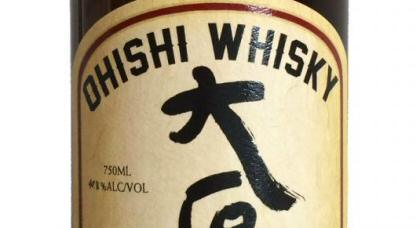
Ohishi Sherry Cask

I always appreciate the opportunity to try something different – and Ohishi is about as different as you can get in the whisky world and still be called “whisky.” Well, in some jurisdictions at least – I’ll get to that in a moment.

The recent boom in Japanese whisky has meant that a lot of Japanese sake and shochu producers have begun to start making Scotch-style whisky. Unfortunately, many of these at the moment are actually examples of “fake” Japanese whisky. While waiting for their whisky stocks to mature, these producers have begun by importing whisky from outside Japan, and then bottling and labeling it as Japanese whisky for resale in Japan. This highly deceptive practice is discussed on my recent Whisky in Japan perspective post.

Ohishi has taken a different approach. Rather than get into the malted barley game, they have stuck with what they know – distilling fermented rice grain, which is the basis of the sake and shochu they have been making for generations. But they have taken to aging this rice-distilled spirit in old world casks, predominantly Sherry, Brandy and whisky casks. In essence, they are making a single grain whisky – but with a very distinctive grain, rice.

However, it gets a little more complicated than that, since the rice starch needs to be broken down into sugar using a mold known as aspergillus oryzae, also called koji, before fermentation by yeast for sake or shochu production. This filamentous fungus has a long tradition of use in Asia (e.g., it is also used in the fermentation of soybeans for miso, etc.). For reasons I am not entirely clear on, Ohishi is not allowed to sell their barrel-aged, rice grain koji-saccharifying fermentation product as a “whisky” in Japan.

However, Japan does allow it to be exported as “Japanese whisky.” As country-level designations typically dominate for all named products of origin (due to reciprocity clauses in trade agreements), this means other countries will recognize it as “Japanese whisky” precisely because Japan allows it to be labelled as such for export. Ohishi is thus serving the export market exclusively with these products (i.e., you can’t buy these in Japan).

So, is it a whisky?  That really depends on your point of view. It certainly meets many of the classic requirements – except for the koji and rice grain. On that front, the Ohishi mash bill is is 30% estate-grown rice grain (various varieties), with the remaining 70% Mochi rice coming from the surrounding Kumamoto prefecture.

Another distinctive feature is that distillation occurs in a pot still made from stainless steel (instead of copper, used almost everywhere else).

I picked this bottle up on sale in Calgary, Alberta last year for $89 CAD. Bottled at 40.8% ABV. Note again that this is the generic “Sherry cask” version – not one of the more expensive single cask editions (that are often bottled at slightly higher strength).

I don’t have any other rice whiskies in my Meta-Critic Database, but here is how Ohishi compares to some other grain/blended Japanese Whiskies:

Ichiro’s Malt & Grain World Blended: 8.55 ± 0.28 on 4 reviews ($$$$)
Ohishi Brandy Cask: 8.27 ± 0.19 on 3 reviews ($$$$)
Ohishi Sherry Cask: 8.42 ± 0.45 on 6 reviews ($$$$)
Ohishi Sherry Single Cask: 8.61 ± 0.46 on 7 reviews ($$$$)
Nikka Coffey Grain: 8.47 ± 0.51 on 18 reviews ($$$$)
Suntory The Chita Single Grain: 8.22 ± 0.42 on 8 reviews ($$$)
White Oak Akashi Blended: 7.58 ± 0.73 on 9 reviews ($$$)

Also for comparison, here are some Canadian grain whiskies that I find similar:

Canadian Rockies 17yo: 8.30 ± 0.53 on 4 reviews ($$$)
Canadian Rockies 21yo (40%): 8.70 ± 0.09 on 3 reviews ($$$)
Canadian Rockies 21yo (46%, old label): 9.12 ± 0.28 on 5 reviews ($$$$)
Canadian Rockies 21yo (all editions): 8.98 ± 0.32 on 7 reviews ($$$$)
Centennial 10yo: 8.32 ± 0.44 on 6 reviews ($)
Century Reserve 21yo: 8.67 ± 0.21 on 11 reviews ($$)
Century Reserve Lot 15/25: 8.05 ± 0.95 on 6 reviews ($)
Highwood Ninety 20yo: 8.73 ± 0.31 on 12 reviews ($$)
Highwood Ninety 5yo: 7.93 ± 0.80 on 8 reviews ($)

As always, the proof is in the pudding – let’s see what I find in the glass:

Colour:  Very golden, with only the slightest hint of Sherry cask influence (see below). Based on colour alone, I would think this was a refill Sherry cask.

Nose: Very perfumy, with heather and honeysuckle notes. Slightly under-ripe earth cherries (gooseberries) and green bananas. Salty rice crackers and soy sauce. Anise (black licorice) and dried ginger. There is a very noticeably strong acetone smell, which detracts for me personally (and overwhelms the initial impression upon pouring a glass).

Palate: Very sweet and syrupy, with fresh fruit cocktail flavours. Reminds me of a generic cough syrup, with that acetone note from the nose turning into saccharine artificial sweetness. But there is also a delicate sake-like sweetness underneath that is more floral in nature (which I like). The classic Sherry nutty notes assert themselves on the swallow, along with some faint anise and a dry earthiness. Cinnamon builds over time with repeated sips, along with some earthy bitterness.

Finish: Artificial sweetener, but it reminds me more of bubble gum now. Rice Krispies. Dried fruits, but with just a hint of that fresh fruit cocktail again at the end (green grapes in particular).

This is a strange one for me – my initial impression on both the nose and the palate are not favourable (with acetone and saccharine leading off, respectively). But it grows on me over time, as the more subtle notes emerge on successive sips. Indeed, this is one you have to spend time with, to coax out the underlying distinctiveness – likely coming from the rice and/or the koji-saccharification (with those rice cracker/Rice Krispies notes). I also recommend some time in the glass to let it open up first.

The closest thing in my experience would be some of the single grain/corn whiskies coming out of the Canadian west (e.g., the various Highwood releases listed above, Canadian Rockies). Perhaps not coincidentally, I also get acetone notes from many of those. I wonder if the stainless steel pot stills may something to do with it, as I know these are in use in some distilleries in Canada (but I don’t know if Highwood is one of them). As an aside, I gave a sample of this to the_muskox of Reddit to review “blind”, and he thought it was a medium-aged Canadian corn whisky.

This is a hard one to score. The off-notes are significant enough for me that I would normally give something like this a below average score. But there are a lot of interesting subtleties under the surface, which make be happy to finish my glass over an extended period of time. As such, I think the current average Meta-Critic score of ~8.4 is reasonable. Definitely worth trying out for the distinctiveness, but you would want to sample it first before investing in a whole bottle.

For other reviews, the most positive I’ve seen for this generic Sherry cask version comes from Jason of In Search of Elegance (which is actually based on a sample from my bottle), and Josh the Whiskey Jug. More in keeping with my average score is Jonny of Whisky Advocate and the_muskox of Reddit (the latter also being a sample from my bottle, but as a blind “mystery” review). A very low score comes from Thomas of Whisky Saga. Note that the individual Single Sherry Cask editions tend to score higher, across all reviewers.

A Primer on Port

One of the great contributors to whisky flavour is the selective aging (or “finishing”) in oak casks that previously held other spirits or wine. One of my favourite types of finishing involves the fortified wine known as Port (or Porto, for the region in comes from).

You don’t need to understand Port varieties to enjoy whisky finished in this way. But I had to chance to visit Portugal recently, and had the privilege to sample some really excellent Port. In researching for my trip, I discovered that classifying Port is actually a fairly complex undertaking, and that a lot of online Port resources are either incomplete, inconsistent, or somewhat confusingly presented. So I thought I would provide a primer to help you understand how Port is made, what the different types of Port represent, and what characteristics this may impart in your whisky.

What is Port?

Port is a fortified wine, which means that additional spirit has been added to a wine, raising its alcohol content.

By European Union Protected Designation of Origin definition, Port is designated as originating only in Portugal. Port has been produced in the Douro Valley region of northern Portugal for centuries. A number of countries produce a similar style of fortified wine, and may use the “port” term more generically – but this primer is specific for Port from Portugal.

Like all wine, Port is naturally fermented – but the fermentation process is halted in Port before the residual fruit sugar is exhausted by adding a neutral grape spirit called aguardente (similar to brandy). As a result, this leaves a relatively sweet dessert wine (although it can come in dryer forms).

Port ranges between 19-21% ABV. It keeps well while sealed in the bottle, but will break down once opened and exposed to air – not as quickly as regular wine, but it is certainly nowhere near as stable as whisky. But it is a little more complicated depending on the type of Port we are talking about. I will give some guidance for storage for the different types of Port below (you may also want to check out my guidance on whisky storage here).

How is Port made?

Port can be made from both white and red grapes (though predominantly red grapes are used for most Ports). There are about a hundred grape varietals that can be found in different blends of Port, but the five key grapes used for the vast majority of Port are Touriga Nacional, Touriga Franca, Tinta Roriz (aka Tempranillo), Tinta Barroca and Tinto Cão.

All Ports commercially available are blends of different grapes, from multiple vineyards under the control of a given producer (known in the biz as a Port “Shipper”). So the distinctiveness comes more in the processes used to prepare and age the Port at the various shippers.

After the grapes are picked, they are either stomped by foot in stone tanks (the traditional method – still sometimes offered to tourists willing to roll up their socks and jump in), or more commonly today, crushed mechanically in large stainless steel tanks. They are left in the tanks for 1-4 days, where the naturally occurring sugars are converted to alcohol through fermentation. When about half of the sugar is used up, neutral grape spirit is added to prematurely stop fermentation (by killing the yeast). It is then transferred to large stainless steel tanks or wooden casks to age for a minimum of two years. After that, the Ports are directed down different paths, depending on their quality, into various types of final Port products – which I will describe below.

How many types of Port are there?

This is where things start to get a little complicated.

If you wanted to classify Port types the same way we do for wine, you could separate Ports into white or red, based on the types of grapes used. Red grapes are dominant here, and used to produce Ruby Port (typically bottled and drunk fairly young) and Tawny Port (similar to Ruby, but aged in wooden casks to accelerate aging and oxidation, and drunk soon or after longer times in the bottle). There is also a rare style, Garrafeira Port, which has characteristics of both – which I got to sample on my recent trip and will explain later in this article.

But most Port enthusiasts differentiate Port a little differently, and segregate Port into two main types based on whether they are wood-aged or “bottle-aged.” Now, that latter category is going to take some explaining for a whisky drinker. Port is not a distilled product like whisky, but behaves more like wine – and so, a different type of reductive “aging” can happen in the closed bottle, and is influenced by how the Port has been prepared and stored, especially whether or not it has not been “fined” or filtered first (I’ll explain these terms in the discussion of Vintage Port, below).

Coming as a whisky drinker, you could also choose to break it down by no-age-statement (NAS), age-stated or single-year vintages. That last category is surprisingly complicated for Port, for the variable “bottled-aged” reasons mention above (e.g. all “Vintage Ports” are a single vintage, but not all single year vintages are Vintage Port). I know, it is confusing. So I’ll cover each of these NAS, age-stated and vintage types in turn, under the general categories of the two main types of red Port, Ruby and Tawny.

Again, it is important to note that Ruby and Tawny are not differentiated by the types of red grapes involved. Instead, it is the type of aging that matters, with the latter receiving a lot more time in wood (spoiler alert: that extra wood aging is what turns a “ruby” coloured red port into a more “tawny” coloured one).

Ruby Port

This is probably the best place to start, as Ruby is the most basic form of Port – and typically the youngest.

After fermentation, Ruby Port is typically stored in large tanks of concrete or stainless steel instead of wood, to minimize oxidative aging and preserve its colour and fruitiness. A standard Ruby Port is a blend of several years, typically averaging 3-5 years old. They are relatively simple and straightforward, very fruit-driven (with bright, fresh fruit notes), and meant to be drunk as soon as they are bottled. The name is derived from the bright red colour of the final Port (think cherry or cranberry juice). Indeed, I find the sharp flavours of fresh cherries, cranberries and raspberries come through most prominently on Ruby Port.

Standard Ruby Port is fined and filtered before bottling (see below for explanation of these terms). Once opened, they last a reasonably long time (i.e., weeks to months before obvious degradation sets in). And even then they are still quite drinkable – so there is no rush to finish the bottle. Indeed, open bottles of Ruby Port are often used for cooking, like inexpensive Sherries.

A “Reserve Ruby” Port is typically a bit older, 5-7 years on average. They are still very fruit-forward Ports, but have a bit more complexity due to the extra aging time. A 10 year old Ruby Port represents a blend of Rubies that are 10 years old on average. A good Reserve or 10 yo would be my preference among basic Ruby Ports.

Specific vintages are where things get a bit more complicated. The main types to differentiate are Late Bottled Vintages (LBVs) and “Vintage Port” (VP) – which are both protected definitions, and both involve some wood cask aging.

Late Bottled Vintage (LBV) Ports

Something you see a lot more of now is “Late Bottled Vintage” Ports (LBVs). These are specific vintages of Port, with the grapes were all picked from a single harvest year. LBVs are bottled between 4-6 years after harvest, and typically spend those years in very large oak barrels, called Tonnels. LBVs may have started their lives intended to be Vintage Ports (see below), but due to reduced demand or over-supply were kept aging longer and directed down the LBV line. They come in two types and can be either filtered and fined (like your typical Ruby Port) or unfiltered (where residual material from the grapes remains in the bottle). Again, I’ll explain all that in the discussion on Vintage Port below.

For now, a simple way to tell the difference is that fined and filtered Ports typically come sealed with a standard T-shaped stopper cork (like whisky bottles), and can be poured and enjoyed straight from the resealable bottle (example pictured on the right). Unfiltered LBVs typically have a driven cork (like wine bottles) and possess considerable sediment – and so will need decanting prior to drinking.

Unfiltered LBVs should ideally be drunk within a few days after opening, but a week will likely be fine. Filtered LBVs are more like aged Rubies and can probably go a few weeks with no obvious change (especially if refrigerated after opening).

FYI, LBVs have largely replaced the so-called “Crusted Ports”, which were blends of at least two or more vintage years that were aged in wood for up to four years, bottled unfiltered, and then aged for a few years before release.

Vintage Port

Along with the aged Tawny Ports (covered below), “Vintage Port” is often seen as the pinnacle of quality Port among aficionados and enthusiasts.

Note that the phrase Vintage Port (VP) has a very specific meaning that is carefully controlled by EU law. VPs start down the path to this designation very early, when the Port shipper petitions for this status for a given harvest. On average, VPs are only produced ~3 times a decade – typically representing the very best harvest years.

Batches of a specific harvest destined for VP status are stored in stainless steel or heavily-used oak barrels – but only for 2-3 years. These two features help limit the impact of any wood aging. Indeed, by law, VPs must be bottled between 2-3 years after harvest.  But they are always bottled unfined and unfiltered, to ensure that the maximum possible amount of “bottle aging” can occur.

I know that concept is going to sound odd to whisky drinkers, as there is no real “aging” going on in a factory-sealed whisky bottle (see my overview of the whisky process here). But that reflects the high-proof and complete air-proof seal of a whisky bottle. Wine is still a living product that continues to evolve in the bottle.

I need to finally explain the role of fining and filtering in Port (or for that matter, any wine). There is a rough analogy to whisky chill-filtering here, but not exactly. Fining involves adding a substance to the wine during production to remove suspended particles that cause haziness or clouding, or form unwanted sediment. This fining agent isn’t bottled with the wine – instead, it is left to adhere to particles in suspension, and then settles as sediment in the bottom of the vat (where it will get filtered out before bottling).

Fining is used mainly to stabilize and clarify wood-aged Ports, to ensure they remain bright and visually attractive to consumers (i.e., like chill-filtering in whiskies). But it also limits reactivity over time, as you are removing a lot of the left-over grape material that can break down and change the flavour with time. Fining is also used to make wines “softer” and less harsh, by removing tannins.

In the case of Vintage Ports (and some LBVs), you are leaving that unfiltered grape material – and the eventual sediment – behind in the bottle. Over time, it will change the flavour of the so-called “bottled aged” Vintage Port. VPs are actually expected to be cellared for many years (e.g., 30+), to ensure maximum maturation. Indeed, much of the character of aged VP comes from the continued slow decomposition of those residual grape solids in the bottle. Given the increasing amount of sediment that will form over time, these VPs must be decanted prior to drinking.

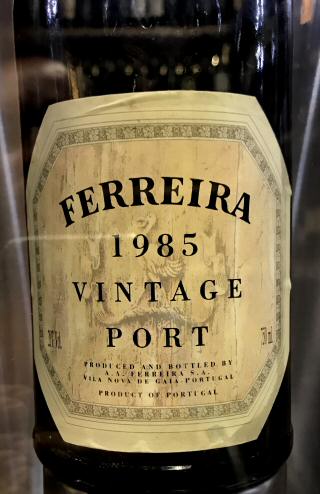
The flavours of VPs are very diverse, and highly dependent on the source harvest, the Port shipper’s processes, and the amount of time spent in bottle – but largely independent of any significant wood influence. I’ve had some >30 yo VPs that still taste relatively “fresh”, with classic Ruby notes – whereas others can seem quite a bit more “seasoned” in comparison (and closer to some wood-aged Tawny Ports, as explained below). Two examples that I sampled on this visit were a Ferreira 1985 VP and a Borges Oporto 1980 VP (shown in the side pictures), which were very, very different beasts.

As mentioned, VPs are always bottled with a driven cork. So for an aged VP, you really should finish the bottle within 2-3 days after opening. Younger VPs (i.e., under 10 years old) should be able to last a couple of days longer before noticeable degradation occurs. But this style of Port is going to have a very short life once the bottle is opened.

There are a few more types of VPs out there, such as Single Quinta Vintage Port (SQVP), where the grapes all come from a single property (similar to a single vineyard wine). But these are actually less distinctive that typical VPs, as the SQVPs can come from any harvest, not just the premium ones declared for VPs.

It is important to note that LBVs, SQVPs and VPs are not the only kind of specific vintage/harvest Ports out there – but they are the main types coming from the Ruby Port pathway.  For other examples, it is time to turn our attention to Tawny Ports.

Tawny Port

This is the form of Port likely most familiar to whisky drinkers – indeed, it is the most popularly consumed type of Port.

Tawny Port actually starts out just like a Ruby Port, but then spends an extended period of time in oak casks. These are the classic, large oak casks known as “Port Pipes” (~550 liter volume). Like Sherry Butts, quality Port Pipes are heavily sought after for finishing whisky. The somewhat porous oak (and significant air headspace) allows for extended air exchange over time, helping to mature and oxidize the Port in the cask.

In keeping with this oxidative process, the colour of the Port wine slowly changes from the bright red of a “ruby” to the reddish-brown “tawny” colour. The more time Port spends in wood, the “tawny-er” it becomes (and the more complex its flavour profile). Indeed, here in Canada, the word “Tawny” is allowed to be used for any Port-style fortified wine aged in wood, not just those originating in Portugal.

I find the fruit notes in Tawny Port move more toward softer blueberry and grapey fruit flavours, while other “woody” notes come in – including commonly nuts, caramel and chocolate, among others.

A standard NAS Tawny Port is likely a couple of years older at the time of bottling than an entry-level NAS Ruby Port. It should last without obvious degradation for several weeks to months once it is opened (especially if refrigerated). A Reserve Tawny is typically aged for at least 7 years, and similarly has a good shelf life.

While there are some vintage-specific Tawny Ports (which I will explain in a moment), it is more common to see age-stated Tawny Ports available out there.

Tawny Port Age Statements

Unlike whisky, where age statements can be any given age, there are only 4 approved age statements in Tawny Port: 10, 20, 30 and 40 years old.

Like whisky, these are blends of many years/harvests, chosen to present a distinct “house style” for that particular Port shipper. The Master Blender of each Port shipper will take great care to produce a style that they can reliably recreate across batches – just as whisky makers try to do for their core age-stated ranges.

Unlike whisky however, the stated age on the Tawny Port bottle is not the minimum age for each Port that went into the blend, but rather the average age of Ports in the bottle. Or more accurately, the minimum average age (i.e., a good Master Blender is likely to aim for a slightly older average than the minimum 10, 20, 30 or 40 years listed on the bottle, to give themselves flexibility in keeping a consistent style over the years).

So that 30 yo Tawny Port could easily have a balance of 5 yo and 50 yo Ports in the bottle (plus all ages in-between). Aged Tawny Ports are really my jam – quite literally, given the more stewed flavours you often find in these Ports.

Younger age-stated Tawny Port should also last without obvious degradation for several weeks to months once opened (especially if refrigerated). As a general rule though, older Tawnies will not last as long as younger ones once opened, so you should try to drink them more quickly.

There is a view out there in some quarters that Tawnies will not last as long as Rubies once opened, given that they have already been extensively aged in the presence of air. But the more common competing view is that they are more resistant to major age degradation effects once opened, due to their already extensive aging. I don’t have enough experience to come down on one side of the issue or the other – and I am not likely to leave an open bottle lying around long enough to find out which breaks down faster anyway!

For Tawny Port fans, age-stated bottlings are probably the best trade-off for quality for price. Around here, 10 yo Tawnies are usually not much more expensive than standard NAS or Reserve Tawny. 20 yo Tawnies are probably the sweet spot in terms of price-performance, going for about twice the price of 10 year olds, but with a lot more character and flavour. In contrast, 30 yo and 40 yo Tawnies are heavily over-priced for the quality, and so likely not worth the extra cost to most. But that leads me to a special class of single harvest Tawnies that you may want to consider instead, known as Colheitas.

Colheita Ports

Colheita (pronounced Col-YATE-a) is basically a single vintage-dated Tawny Port, but one typically aged in small, well-used oak barrels instead of the large Port Pipes of most Tawnies. Colheita Ports must be aged in wood at least 7 years, but can spend quite a bit more time.

Just like Vintage Port (see above), Colheita single harvest years are “declared” after approval by the IVDP (Port and Douro Wine Institute). So, this means you should be getting a particularly good single harvest (although that will depend on the particular Port shipper). But as a result, production volumes are low. These aren’t widely produced, and so are not commonly available outside of Portugal at the moment.

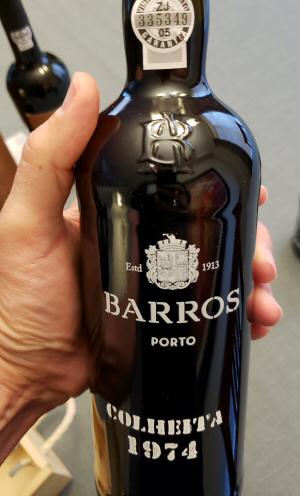
But that is a shame, as they can represent extraordinary value. On my recent trip, I found that the >15 yo vintage Colheitas from the Port shippers who specialize in this style to be particularly nice, and no more expensive that a standard blended 20yo Tawny. In one particularly good deal, I brought back an outstanding 1974 vintage Colheita from the premium Port Shipper Barros, bottled in 2019 (so, ~45 years old) that cost $145 CAD. That is less than half what a typical blended 40yo Tawny costs around here. Not bad for a single harvest vintage!

Labeling can be a bit inconsistent on these, depending on the Port shipper. You will probably find “Colheita” on the front or back label (but not always), along with the harvest year (on the front) and bottling year (typically on the back). Look as well for “matured in wood” or “aged in cask” on the labels, to help differentiate from LBVs or other vintage Ruby Ports.

In terms of how long they last once opened, it is a similar story for other Tawnies of equivalent age – younger ones (i.e. <20 years) should last for several weeks to months without obvious degradation (especially if refrigerated). Heavily aged Colheitas should be drunk quicker, for best results.

And now for the last defined Port type I will consider, the ultra-rare (but very rewarding) Garrafeira Port.

Garrafeira Port

Garrafeira (gah-rah-FAY-ruh) is a very unique and rare style of Port. I have heard it opined that many Port lovers have never even heard of it, much less tasted it!

Garrafeira Port is most closely associated with the Port shipper Niepoort today, although others have made it over the years. It is made from the grapes of a single harvest, like a Colheita, and is therefore given a vintage date. But the aging pattern is unique, with initial aging of 3-6 years in oak casks before being transferred unfined and unfiltered into large glass bottles known as demi-johns (or “bon-bons”), and then aged further, often for many decades, before eventual traditional bottling.

These demi-johns were made from a special dark green German glass which is no longer produced (hence the rarity of this style today). They were typically 8 to 11 liters in volume, and sealed with a cork stopper. The glass is said by some to have introduced a unique character into the Port through reductive aging over extended periods of time (i.e., 30-50 years was not uncommon for this secondary aging period). The shape of the bottle and residual air pockets may also have played a role. Another theory I came across is that the glass of these bottles facilitated certain oils precipitating out of the Port, causing a change in taste with time.

Whatever the mechanism, Garrafeira Ports were said to produce unique flavours – with a distinctive balancing between young and aged Port characteristics, keeping both the fresh fruity notes of Rubies and the extended aging complexity of VPs. After the extended demi-john aging, the Port was transferred into regular bottles for subsequent cellaring (I’m not sure if they typically fined and filtered first, though).

I had the chance to sample a 1908 Ferraira Garrafeira Port in my journeys, at the high-end (and appropriatelty named) Garrafeira Nacional in the Time Out food market in Lisbon. Retailing for ~$1500 CAD a bottle, they had it out for tastings at only ~$60 CAD for a 2 oz pour, which I thought was very reasonable for something over a century old. I had a couple of VP samples on hand as well, so was able to compare them before and after the Garrafeira.

My first thought on the nose was that this was disappointing – it didn’t seem very different from a typical LBV or VP, and there was a slight solvent smell that was off-putting (vaguely ether-like). But in the mouth, it was a different experience – a bright initial palate, with classic Ruby fresh notes, followed by an aged VP mid-palate experience. I can really see what they say about Garrafeira – it did combine both experiences for me.

But the kicker was the finish, which went on for many minutes while continuing to evolve and change. Ports are not generally distinguished by a long finish in my experience, so this was a pleasant surprise. It also had the added benefit of raising up the experience of the two VPs I had on hand – both tasted considerably better after a sip of the Garrafeira, which left a nice tannic coating on my lips and gums.

Garrafeiras don’t show up very often on the market, and according to the Garrafeira Nacional, they don’t last long for tastings when they do open one. The bottle I tried would have been gone in a day or two. But definitely worth seeking out if you are in Lisbon and want the ultimate Port experience (the Time Out food market is also a great place to grab a quality meal on the cheap first).

And that wraps up this primer – I hope you found it helped your appreciation for the effects of Port finishing on whiskies. I always encourage everyone to pick up a Tawny Port bottle to try – if nothing else, to help ensure a steady supply of Port casks for whisky finishing.


Bearface Triple Oak 7 Year Old

Bearface is a rather unique new Canadian whisky. I first noticed in a local LCBO early this year, due to its rather rakish bottle design (a little risque for Canadian whisky). But my interest was piqued by the fact that it won a Gold medal at the annual Canadian Whisky Awards in January 2019 – a competition where the medals are based on blind tasting by experienced Canadian reviewers (including several in my database).

My curiosity was further aroused by Mark Bylok’s interview with Andres Faustinelli, the creator of this whisky and master blender for Mark Anthony Wine and Spirits’ new Bearface brand.  Simply put, the approach to creating this whisky places the emphasis at the opposite end of where most whisky producers do.

To break that down, most new whiskies come from new or established spirit distillers, who focus first on the quality of their distillate (i.e., choice of grains, distillation methods, etc). Type of wood aging comes next (through acquired casks), followed by blending and potential use of special “finishes,” to impart additional flavours and complexity to the final whisky. Typically this involves some period of additional aging in casks that previously held other spirits, often fortified wines like Sherry or Port. See my Source of Whisky Flavour for more information on the general process.

The point is that whisky making is generally driven the whisky producers’ interests and needs, and they source the casks they want to age their whisky in accordance with those needs. As explained in the above interview, the process for this new whisky was reversed, by looking at it from a wine-makers point of view (who typically focus on quality oak, for limited exposure periods with the wine). Here, they chose a fairly neutral corn-based spirit from a distiller on contract (already aged 7 years), and experimented with extensive exposure of the same whisky to multiple types of barrels, as they would do for wine aging.

This intensive finishing approach arose, as Mr. Faustinelli put it, when they chose to “ask the wrong people the right questions” – in other words, looking to see how those involved in making wine would seek to solve problems whisky makers face when try to produce the final flavour profile.

To try and summarize succinctly, high proof whisky produced by a Collingwood distiller (i.e, presumed Canadian Mist) entered into a mix of French Oak and American Oak casks that previously held classic fresh Bordeaux red wines (Cabernet Franc, Cabernet Sauvignon, and Merlot), at a BC winery. Both the different varietals and the different oaks imparted different characteristics to the spirit. After finishing for 3 months, the whisky was transferred to fresh Hungarian Oak casks, where the wood was previously “seasoned” outdoors. The virgin Hungarian Oak barrels were then “toasted” to one of three char levels, and used no more than 3 times for this project (for 2 weeks exposure to the whisky each time). Despite the limited time, this added a lot more overtly oaky notes. The outcome of all these multiple finishing experiments are then separated into flavour “families”, and blended in a specific proportion for this inaugural Triple Oak Canadian whisky. I recommend you listen to the interview for the the full picture, or check out Jason Hambrey’s detailed post on In Search of Elegance for details of the wood.

Let’s see how it currently performs in my Meta-Critic Whisky Database, compared to other relevant Canadian whiskies:

Alberta Premium Dark Horse: 8.58 ± 0.35 on 17 reviews ($)
Bearface Triple Oak 7yo: 8.37 ± 0.13 on 6 reviews ($$)
Canadian Club Sherry Cask: 8.15 ± 0.66 on 8 reviews ($$)
Canadian Mist: 7.57 ± 0.69 on 11 reviews ($)
Canadian Mist Black Diamond: 8.02 ± 0.54 on 6 reviews ($)
Collingwood: 8.02 ± 0.30 on 10 reviews ($$)
Collingwood 21yo: 8.54 ± 0.41 on 13 reviews ($$$)
Crown Royal Black: 8.19 ± 0.48 on 17 reviews ($$)
Crown Royal Noble Collection Wine Barrel Finished: 8.66 ± 0.49 on 8 reviews ($$$)
Forty Creek Unit:y 8.97 ± 0.28 on on 4 reviews ($$$)
Pike Creek 10yo Port-finished: 8.34 ± 0.35 13 reviews ($$)
Wayne Gretzky No. 99 Red Cask: 7.91 ± 0.39 on 9 reviews ($$)

Bottled at 42.5% ABV. I picked it up for $40 CAD at the LCBO earlier this year. Let’s see what I find in the glass.

Nose: Very sweet corn syrup. Buttered popcorn, slightly scorched. Condensed milk. Sweet tarts. Toasted marshmellows. Lots of fruit, but different than you would expect – black and red currants, cranberries. Dried apricot. Perfumy floral, with violets. Light rye spice, cinnamon especially, but also with hint of chilies. The toasted oak really comes through, there is no hiding the complexity here. No real off notes from the distillate, the extra age (longer than most Canadian whiskies) presumably helps with that. Off to a good start.

Palate: Initial corn sweetness hit, gets creamier on the swallow. Definitely a sweet one, not really getting the tartness from the nose any more. Indeed, not really getting any of the subtle notes here – the toasted oak comes on really strong mid-palate, and dominates everything else. More like burnt marshmellows and popcorn now, and scorched wood. Has a silky texture, with good mouthfeel. Rye spices comes up at the later palate, but soft and not at all “hot” or sharp. Fairly mild, consistent with the alcohol level.

Finish: Again, the woody notes definitely dominate initially on the finish, but with the lighter rye spices holding their own. Some of the dried fruit notes return eventually. Coffee grinds. Some astringency, but not the initial tartness from the nose. More going on here than a typical Canadian corn whisky, that’s for sure. Some sticky sweet corn syrup lingers until the end.

I’m at a bit of loss of how to rank this whisky.  On first sampling, I really liked some of the additional flavours that have been introduced by the fresh wine cask aging – despite the heavy corn-syrup base sweetness. But the toasted Hungarian oak is just proving too overwhelming on the palate for me, and I find it falls too flat and over-oaked for my tastes. Probably more of an after-dinner whisky, especially for those of you who like heavy wood influence (I typically don’t). While I appreciate the innovation, I expect this whisky would appeal to a limited audience.

There aren’t many reviews of this whisky out there yet, but the most positive are Davin of Whisky Advocate and Patrick of Quebec Whisky, with above average scores.  This is followed by more average ratings by Jason of In Search of Elegance and Andre and Martin of Quebec Whisky. No reviews on Reddit yet, but kinohead did provide a fairly positive set of impressions here. My own assessment would be at the low end, closer to Andre and Martin. Definitely a unique experience in the Canadian whisky scene, but a bit of a niche product. I am however curious as to what they will come up with next.


Timorous Beastie Blended Malt

Timorous Beastie is another member of the Remarkable Regional Malts series produced by Douglas Laing, an independent bottler of Scottish malt whisky. I previously reviewed the Speyside-derived Scallywag (and was not much of a fan). But when I recently saw a bottle of Timorous Beastie on sale, I picked it up thinking it might be worth a try, based on the reported flavour profile and reviews.

As previously described, Douglas Laing has been around since 1948, and has an extensive range of single malt bottlings. But the company is perhaps best known for this series of blended malts (aka, vatted malts), based on defined regions of Scotland. Produced in small batches, these no-age-statement (NAS) whiskies have creative labels and quirky names, including Scallywag, Timorous Beastie, Rock Oyster, The Epicurean, and Big Peat.

Many have also been released in limited age-stated versions as well. Interestingly, the 10 year old version of Timorous Beastie is typically cheaper than this NAS version in many markets (i.e., at the LCBO, it is $60 CAD for the 10yo vs $70 CAD for the NAS). I’ve seen the standard NAS version run quite a bit higher in other parts of Canada, so when I found it for $56 CAD on clearout at a local store, it seemed worth the gamble.

Timorous Beastie blended malt is sourced from several Highland distilleries, including Blair Athol, Dalmore, Glen Garioch, and Glengoyne. The title is in reference to the Robert Burns poem “To a Mouse,” which describes his thoughts after accidentally upending its nest when plowing a field (which also gave us his famous musings about how “the best laid schemes of Mice and Men” often go awry).

Bottled at 46.8% ABV (for some reason), this whisky is non-chill-filtered, with natural colour – all well appreciated by this reviewer. My bottle is dated from November 2017, with a batch 13 code.

Here is how Timorous Beastie compares to the rest of the Douglas Laing line, and some similar entry-level Highland malts from which it is apparently derived.

Big Peat: 8.72 ± 0.26 on 16 reviews ($$$$)
Scallywag: 8.22 ± 0.55 on 14 reviews ($$$$)
Timorous Beastie: 8.39 ± 0.36 on 8 reviews ($$$)
Timorous Beastie 18yo: 8.62 ± 0.31 on 5 reviews ($$$$)
Timorous Beastie 21yo Sherry Edition: 9.05 ± 0.21 on 3 reviews ($$$$$)
Timorous Beastie 40yo Cask Strength: 8.98 ± 0.28 on 4 reviews ($$$$$+)

Blair Athol 12yo (F&F): 8.43 ± 0.43 on 9 reviews ($$$)
Dalmore 12yo: 8.42 ± 0.28 on 20 reviews ($$$)
Dalmore Valour: 8.05 ± 0.35 on 11 reviews ($$$$)
Glen Garioch 12yo: 8.67 ± 0.30 on 18 reviews ($$$$)
Glen Garioch Founder’s Reserve: 8.38 ± 0.35 on 19 reviews ($$$)
Glengoyne 10yo: 8.26 ± 0.31 on 14 reviews ($$$)
Glengoyne 12yo: 8.54 ± 0.34 on 12 reviews ($$$)

And now what I find in the glass:

Colour: One of the lightest whiskies I’ve come across, very pale apple juice colour

Nose: Very sweet, and candied. Gummy bears and pear drops. Strong fruit notes of pear, apricot, and tangerine. Honey and a little maple syrup. Nutty, with a slightly rancid salty peanut aroma. Hint of smoke, but comes across more as funky, sour and somewhat rancio. Definite sherry influence, despite the light colour. This is very nice, and exactly what I was hoping for.

Palate: Honey and gummy candy sweet initially, followed by an immediate zing of cinnamon redhot candies (plus allspice, cloves and black pepper). Yowza. But the shock of spices doesn’t continue to burn, it just slowly fades. Whatever fruits were present on the nose are lost by the quick spice arrival, but it does have a citrusy cleansing vibe. Also a bit woody, and a touch of anise. The funky smoke note wafts back up at the end, after the swallow.

Finish: Lovely lingering burn. Honey and apple juice come up at the end. Also getting those powdered gelatinous gummy candies you find in Asia – not as sweet as the usual gummies in North America, and with a touch of sourness. Astringent (drying) finish.

A very nice, powerful hit of spice, wrapped in a sweet confectionery coating. Seems like a real misnomer of a name, as this is in no way shy or retiring. I would say Blair Athol and old-style Glen Garioch dominate here. Not overly complex, but a fun sipping experience. I’m curious to try the age-stated versions now.

Among reviewers, the highest score comes from Serge of Whisky Fun, who gives it an above-average score and review (and one I concur with). This would be followed by the generally positive reviews of Thomas of Whisky Saga, Jonny of Whisky Advocate, Shane_IL of Reddit, and Jan of Best Shot Whisky. Lower scores come from Aaron of Whiskey Wash, Strasse007 of Reddit, and Josh the Whiskey Jug.

1 2 3 4 5 26