

Stagg Jr Bourbon

Stagg Jr is the name given to a younger version of the infamous George T. Stagg, a high-end offering of the Buffalo Trace distillery. George T. Stagg is part of the annual Buffalo Trace Antique Collection (BTAC) release, and very hard to come by in the wild. Stagg Jr was apparently developed to increase the availability of this amped-up style of cask-strength bourbon.
Sharing a common mashbill with its big brother, Stagg Jr does not have an official age statement – although it believed to be aged for ~8-9 years (instead of the >15 years of George T. Stagg). Unfiltered and bottled at cask strength, Stagg Jr is released in small batches with some variability in final proof (so far, all within ~128-135 proof, or ~64-67.5% ABV). Typically, there have been two releases a year since its launch in the Fall of 2013.
My sample is from batch 3, released in the Fall of 2014, and is bottled at 66.05% ABV. This batch is often pointed to as the start of the better batches – the initial two releases were widely panned by reviewers, and dismissed as being too “alcohol forward.” See the the recent community review on Reddit for a range of opinions on how the various batches measure up (now up to batch 6).
While I track all batches on my Meta-Critic Database, I don’t report on them individually due to insufficient data on most releases. But since reviewer scores turned decidedly more positive on batch 3 (and have remained so), I have grouped them into batches 1-2 and batches 3-6 for the database. Here’s how Stagg Jr compares to some of the other Buffalo Trace offerings:
Buffalo Trace: 8.56 ± 0.42 on 19 reviews ($$)
Eagle Rare Single Barrel 10yo: 8.55 ± 0.34 on 18 reviews ($$)
Eagle Rare 17yo: 8.81 ± 0.38 on 11 reviews ($$$$$+)
George T Stagg: 9.21 ± 0.27 on 18 reviews ($$$$$+)
Stagg Jr (batches 1-2): 8.44 ± 0.39 on 13 reviews ($$$$)
Stagg Jr (batches 3-6): 8.85 ± 0.20 on 6 reviews ($$$$)
An interesting finding here is that the original batches of Stagg Jr actually got lower scores than the standard Eagle Rare 10 or entry-level Buffalo Trace. Ouch! The later batches are more in line with Eagle Rare 17 yo (which is a premium BTAC release, like George T. Stagg), although keep in mind there are relatively few reviews. Unfortunately, it seems like the early batches so turned off reviewers that few of them have come back to sample newer batches produced in the last two years.
Here is how the Stagg Jr batches compare to other similarly priced bourbons, including other cask-strength offerings:
Baker’s 7yo: 8.79 ± 0.31 on 15 reviews ($$$)
Booker’s Small Batch: 8.92 ± 0.25 on 14 reviews ($$$)
Colonel EH Taylor Barrel Proof: 8.80 ± 0.24 on 6 reviews ($$$$)
Elijah Craig 12yo Barrel Proof: 8.86 ± 0.26 on 9 reviews ($$$$)
Four Roses Single Barrel: 8.72 ± 0.36 on 18 reviews ($$$)
Knob Creek Single Barrel Reserve: 8.80 ± 0.35 on 10 reviews ($$$)
Maker’s Mark Cask Strength: 8.71 ± 0.39 on 9 reviews ($$$$)
Russell’s Reserve Single Barrel: 8.77 ± 0.47 on 8 reviews ($$$$)
Stagg Jr (batches 1-2): 8.44 ± 0.39 on 13 reviews ($$$$)
Stagg Jr (batches 3-6): 8.85 ± 0.20 on 6 reviews ($$$$)
The average scores for recent batches of Stagg Jr are certainly well in keeping with other cask-strength bourbons of comparable price.
My batch 3 sample of Stagg Jr was obtained from the Redditor Jolarbear. When these bottles show up at the LCBO (a rarity), they currently go for ~$85 CAN.
Here is what I find in the glass:
Nose: Sweet with dark fruits, like raisins and prunes. Woodsy and earthy, think rich and moist black earth. Herbal quality (pine? cedar?), that turns into black licorice over time. Chocolatey. Reminds me of amped-up Eagle Rare/Buffalo Trace juice (which of course, it is). Singes the nose hairs a bit, consistent with the high ABV. Water just dampens everything though – I prefer to sniff it neat (best to let it sit in the glass for awhile first, though).
Palate: The dark earth and fruit odyssey leads off, with leather, tobacco, prunes, raisins, cherries and chocolate. Also vanilla and a bit of caramel. The cinnamon and allspice soon kick in, along with a bit of pepper and some woody bitterness – but it is not that spicy overall. Somewhat syrupy in texture, I recommend you hold it awhile in you mouth (to let it mix with your saliva before swallowing). You really feel the burn of the ~66% ABV here. Frankly, a bit too hot to drink neat, even with small sips, as there is a lingering ethanol burn. A bit of water really helps tame the burn, and brings up a touch more fruitiness. But don’t go crazy with the water – very quickly, it can start to feel dulled.
 Finish: Very long, with lots of oaky bitterness and vanilla carrying you through. Hints of the dark fruits persist, along with that cinnamon. Small amounts of water have no effect here that I can discern. This a powerful finish – much more so than the regular Buffalo Trace/Eagle Rare.
Although I am not a big bourbon guy, I do like the relative composition of the Buffalo Trace Juice. If I were to have a “table bourbon”, it would be Eagle Rare 10 yo. So I quite enjoyed my batch 3 of Stagg Jr, with its amped set of familiar flavours. I don’t have a lot of experience of cask-strength bourbons, but I’m looking forward to trying more out after this one.
For generally unfavourable (or at least, lukewarm) reviews of batch 1, check out John of Whisky Advocate, Serge of Whisky Fun, and Ruben of Whisky Notes. For examples of the more positive reviews of batch 3, please see Josh of the Whiskey Jug and Jason of In Search of Elegance. And of course, there is the community review on Reddit for a wide range of batches.
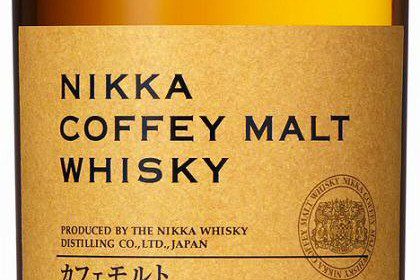
 Wow, a lot more going on here than the Coffey Grain. It reminds me of some of the more flavourful Irish Pot Still whiskies, with its creamy sweetness. Easy to drink, but still reasonably complex.
 Let’s see how they compare on in the Meta-Critic database, relative to other popular entry-level malt whiskies (age and non-age expressions).
 Nose: My core notes read the same – slightly sweet, light fruits like apple, slightly floral. But there is more going on here, with a malty characteristic now. There is an almost maritime air, with hints of salty chocolate (i.e., seems like it could be just a tiny touch sherried). Definitely a more complex nose than the 12 yo. Unfortunately, the solvent characteristic is also more noticeable (a touch of glue in particular).
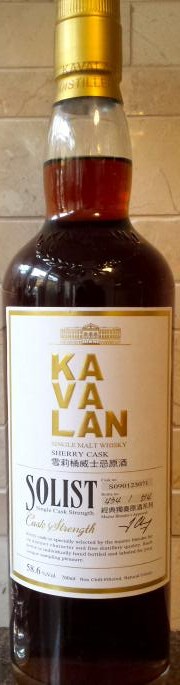 Finish: Long. The sweetness continues for a good long while, and there is no hint of the bitterness that often accompanies sherry bombs on the way out. Water doesn’t change much here, for good or ill. You’ll be enjoying the after-glow of this whisky long after you’ve finished the glass. 😉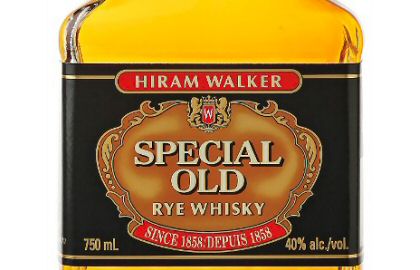
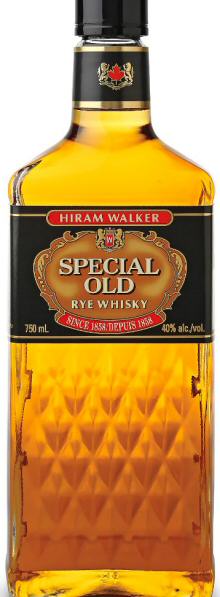 UPDATE JANUARY 2016: Like many bargain Canadian ryes, lot variation can be considerable on these. I recently picked up a second bottle, and find the nose is muted in comparison, especially for the rye spices – and there is a distinct glue-like solvent smell now. The palate is generally similar, but feels “hotter” (i.e., more raw ethanol taste). Finish is comparable, although perhaps a touch less bitter (which would actually be an improvement).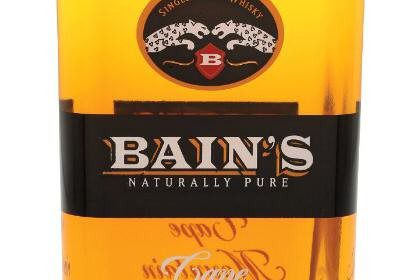
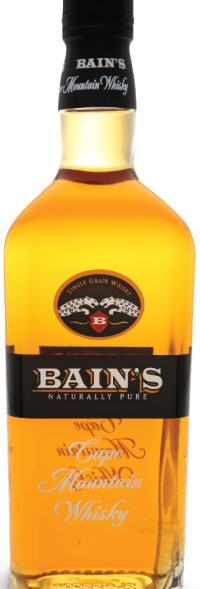 Note that a few drops of water completely destroys the nose, and dulls the taste without helping tame the alcohol burn at all. And if anything, it makes the finish even more bitter (and introduces a somewhat artificial sweetener note to boot). Simply put, don’t do it!
 The nose is misleading on this one, with its pure white sugar sweetness. Once you actually take a sip, this seems more like a decent light Irish whiskey – but with some significant alcohol kick.
 I suggested in my
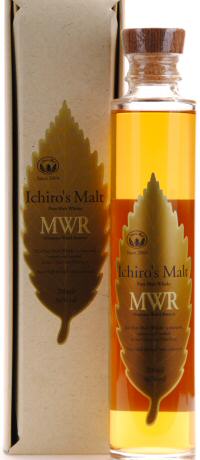 The MWR has a lot of promise on the nose, but it quickly turns bitter in the mouth, with a disappointing finish. It seems very young overall. Frankly, despite the initial distinctiveness, it is a whisky that makes you want to drink less as time goes by in the glass.
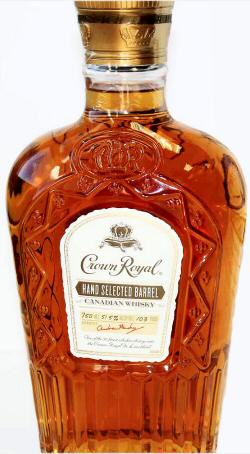 Overall, I would rate this sample of the Hand Selected Barrel as very close to the Northern Harvest Rye in overall quality. There are certainly differences though – NHR is more of a traditional Canadian Rye, without the thick and rich woodiness of the bourbon-like Hand Selected Barrel. This HSB has a more robust palate, but the NHR has a sharper and cleaner nose and finish. And I still consider my batch of Monarch to be a whole other league – an example of how Crown Royal can make a high quality and elegant blended whisky.