Tag Archives: Single Malt

Caol Ila 30 Year Old

This is a review of the official bottling of a vintage 1983 Caol Ila, released by Diageo in 2014. Only 7,638 bottles of this 30yo bottling were produced.

Normally, I only review whiskies where I have a significant sample on hand for tasting (typically sampled at home, in a controlled environment). In this case, I got to enjoy a generous pour from a bottle at a flagship LCBO store, and had a chance to record my notes in a quiet corner.

At $750 CAD, this is the most expensive whisky I’ve reviewed yet.  It is also the oldest, at 30 years of barrel aging. This is thus an interesting opportunity to see what effect extended aging has on the so-called “lightly peated” flavour profile of Caol Ila (see my recent 12yo review for a discussion of the house style).

First, here are the Meta-critic scores for some other popular aged smokey/peaty single malt original bottlings:

Ardbeg 17yo: 9.05 ± 0.29 on 6 reviews ($$$$$+)
Caol Ila 18yo: 8.66 ± 0.54 on 13 reviews ($$$$$)
Caol Ila 30yo: 9.38 ± 0.28 on 7 reviews ($$$$$+)
Highland Park 18yo: 9.18 ± 0.27 on 20 reviews ($$$$$)
Highland Park 21yo :8.89 ± 0.41 on 14 reviews ($$$$$+)
Highland Park 25yo: 9.20 ± 0.25 on 12 reviews ($$$$$+)
Highland Park 30yo: 9.06 ± 0.42 on 9 reviews ($$$$$+)
Highland Park 40yo: 9.07 ± 0.39 on 8 reviews ($$$$$+)
Lagavulin 16yo: 9.30 ± 0.25 on 23 reviews ($$$$)
Laphroaig 18yo: 9.09 ± 0.30 on 16 reviews ($$$$$)
Laphroaig 25yo: 9.21 ± 0.31 on 11 reviews ($$$$$+)
Old Pulteney 21yo: 8.67 ± 0.62 on 12 reviews ($$$$$)
Talisker 18yo: 9.25 ± 0.21 on 14 reviews ($$$$$)
Talisker 25yo: 8.95 ± 0.26 on 13 reviews ($$$$$+)

The 30yo Caol Ila certainly tops the Meta-Critic scores for this class. Note that it is rare to see original bottlings of this age, given the limited availability of stock (i.e., more commonly found as small batches with independent bottlers).

Here’s what I find in the glass:

Nose: Fragrant nose, with a lot going on. I don’t get the wet peat of the younger Caol Ilas, but lots of extinguished smoke and ash (more the latter). Some distinctive medicinal/briny notes, plus well-worn leather. A faint nutty aroma, with a creamy overall feel. There is a fair amount of sweet fruit as well, like honeydew melon, along with a touch of citrus. Complex, yet elegant – you will want to spend a lot of time exploring this nose.

Palate: The salty and medicinal iodine notes come through up front, but they aren’t overwhelming. Same for the smoke/ash notes – present, but not as intense as the younger Coal Ilas. Some moist, earthy peat showing up now. Still getting the melon and some sort of pulpy fruit (papaya?). There is a spiciness as well, like anise – balanced with just the right level of sweetness (i.e., low- to mid-sweet black licorice, as I’ve only found in specialty shops in the UK). Definite oaky elements coming through, with clear vanilla. It is nowhere near as hot as you would expect for a 55.1% ABV whisky – shockingly easy to drink at this level. It has an incredibly luxurious mouthfeel.

Caol.Ila30Finish: Very long, with lingering smoke and ash. That balance of spicy and sweet (e.g., black licorice) persists as well.

This is a stunner!  It’s hard to express in words just how well this whisky works. Note that despite the descriptions above, a lot of the classic peaty notes have been attenuated by the extended barrel aging. Think of this one as a nice meal over an extinguished campfire.

I made the mistake of sampling the Highland Park 21yo after this whisky, and it just couldn’t compare on any level (and that’s coming from a big HP 18yo fan). Certainly not fair to the HP – I will need to try it again before I can fairly review it.

The Meta-Critic score for the Caol Ila 30yo seems reasonable to me – it is certainly one of the best whiskies I’ve ever had. While I would not pay the going rate for a bottle, I do recommend you try it if given the chance. For detailed reviews by reviewers who share my enthusiasm, you can try Serge at Whisky Fun, Ruben of Whisky Notes and Tone of Whisky Saga. Dave Broom of Whisky Advocate is also fairly positive.

Caol Ila 12 Year Old

Caol Ila is a high-capacity malt distillery, from the Islay island of Scotland. As you would expect for the region, most of its production features the use of peated barley (although it does make some unpeated whisky as well).

Caol Ila (typically pronounced “Cool-EEL-ah” or “Coo-LEE-la”) has a long history, and is currently owned and operated by whisky conglomerate Diageo. Most of the distillery’s production is therefore directed toward the high-volume Diageo blends, where it serves as the “smokey” backbone of the flagship Johnnie Walker Black and various Bell’s blends. Fortunately for us, Diageo now also allows direct bottlings of Caol Ila single malts.

Interestingly, most enthusiasts seem to consider Caol Ila’s malts to be “lightly” peated.  Indeed, most of the Caol Ila single malts can be found in flavour cluster I – which are less intensely smokey/peaty than cluster J (where you will find most of the Ardbeg, Laphroaig and Lagavulin expressions).  This is interesting, as Caol Ila actually uses a comparable level of peat to Lagavulin (i.e., typically 35ppm). Presumably, there are other aspects to whisky production at Caol Ila that attenuate the effect of peat on final whisky flavour. See my Source of Whisky’s Flavour for more background information.

Long story short, it may be more accurate to say that Caol Ila single malts are typically less extremely peaty/smokey flavoured than those of other distilleries on the island.

Here are the Meta-Critic scores for similar single malt expressions (i.e., mainly from flavour cluster I), at comparable price points:

Bowmore 12yo: 8.41 ± 0.25 on 14 reviews ($$$)
Bowmore Small Batch: 8.45 ± 0.32 on 9 reviews ($$$)
Caol Ila 12yo: 8.74 ± 0.19 on 16 reviews ($$$$)
Caol Ila Distiller’s Edition: 8.74 ± 0.40 on 10 reviews ($$$$)
Highland Park 10yo: 8.53 ± 0.29 on 11 reviews ($$$)
Highland Park 12yo: 8.68 ± 0.23 on 19 reviews ($$$)
Highland Park Dark Origins: 8.50 ± 0.53 on 14 reviews ($$$$)
Oban Little Bay: 8.51 ± 0.33 on 8 reviews ($$$$)
Oban 14yo: 8.43 ± 0.45 on 13 reviews ($$$$)
Old Pulteney 12yo: 8.44 ± 0.30 on 21 reviews ($$$)
Old Pulteney Navigator: 8.42 ± 0.31 on 7 reviews ($$$)
Talisker 10yo: 8.92 ± 0.22 on 19 reviews ($$$$)
Talisker Dark Storm: 8.78 ± 0.13 on 8 reviews ($$$)

Caol Ila is definitely well received by reviewers for this class. My review sample of the Caol Ila 12yo comes from Reddit user wuhantang.

Here’s what I find in the glass:

Nose: Very peaty nose, in a moistened earth way (i.e., a peat bog). There is some smoke as well, but it seems restrained relative to the peat (although I can definitely detect the subtle smokey note of JW Black here). There is a Lagavulin-like quality to the peat that I quite like (i.e., it is “sweeter” and less iodine-rich than the typical Laphroaig/Ardbegs to me). That sweetness is hard to place (maybe baking bread?). There is definitely something salty here too, which helps produce a mouth-watering effect. Also slightly bitter (lemon zest?) with some grassiness rounding out the overall bouquet nicely. Quite complex and fragrant for flavour cluster I.

Palate: An oily texture, with a nicely balanced mix of peat, ash and smoke. Definitely not as overwhelming as the flavour cluster J malts (i.e., I can see where the “lightly smokey” moniker comes from).  Still sweet, but with the baking bread from the nose turning into moist vanilla cake in the mouth. There’s a bit of nuttiness now as well.  Not overly complex, but pleasant and easy going (even if you are not a big peat/smoke-fan). I am surprised to see that it is actually bottled 43% ABV, as it tastes as smooth to me as most 40% whiskies.

Caol.Ila.12Finish: Moderately long. Like many peated whiskies, the smoke is the longest-lasting characteristic, but it is balanced by a persistent sweetness. I wasn’t getting much in the way of fruits on the nose or palate, but there does seem to be a light fruit vibe on the way out (maybe pear?).

I am not typically a fan of heavily peat-flavoured whiskies – but I quite like the Caol Ila 12yo. The nose in particular is very pleasant, with a lot going on. It is nice on the palate and in the finish as well, but somewhat less interesting here. That said, there are no false notes.

I don’t know if I would recommend this as an introduction for newcomers to whisky, but it is certainly a good choice for those who like a little smoke, or want to dip a toe into the peaty/smokey realm.

Despite being an entry-level single malt, most reviewers rank this whisky as slightly above average overall (which I would agree with).  Representative reviews are the most recent sample by Serge of Whisky Fun, Dave Broom of Whisky Advocate, and the guys at Quebec Whisky.  Even the reviewers who score this whisky a little lower tend to be very positive in their comments – see for example Ruben of Whisky Notes or Ralfy. Ralfy also recommends this as a single malt for beginners to try.

Glenrothes Vintage 1995 (2014)

The Glenrothes Vintage 1995 was the first attempt by Glenrothes to produce a specific flavour Vintage, by laying down a defined mix of casks at a single point in time. The chosen casks were about 30% first-fill Sherry cask, using a mixture of American and Spanish Sherry oak. The balance were “refill casks” of unspecified origin – but apparently typical of the characteristic Glenrothes flavour profile.

My friends from the UK tell me that the basic Glenrothes was considered something of a “supermarket malt” when they were growing up, given its near ubiquity and relatively mild flavour. The Vintage series was clearly an attempt to introduce some additional quality and complexity into the classic Glenrothes house style.

The history of this particular Vintage 1995 bottling is a little unclear to me. The first Vintage 1995 batch was bottled in 2011, with official tasting notes dating from 2010 printed right on the bottle. A second batch was made in 2012, and a third in 2014 (which my bottle is from). However, all that has been updated on the label is the bottling date – the rest of the information remains unchanged.

The official Glenrothes website makes no mention of the various bottlings, but it is generally believed that a selection of the best casks from any given Vintage year are used when deciding on a particular bottling run. Presumably, they have tried to keep a relatively consistent flavour profile across the various Vintage 1995 bottlings. This would also explain why they don’t give an exact percentage of Sherry casks, as it presumably varies somewhat across bottlings.

I picked up the 2014 bottling a little over a year ago, after sampling it at the LCBO and enjoying the range of flavours. At the time, it was $95 CAD – which seemed like a pretty good deal for a 19 year old whisky!

Let’s see how some of the Glenrothes fares in my Meta-Critic database. Note that reviewers do not always specify which bottling of the Vintage 1995 they sampled, so I have combined them all together. Ranked from high to low score:

Glenrothes Vintage Reserve (NAS): 8.69 ± 0.28 on 3 reviews ($$$)
Glenrothes Vintage 1995 (2011/2012/2014): 8.63 ± 0.28 on 12 reviews ($$$$)
Glenrothes Vintage 1998 (2014): 8.32 ± 0.64 on 9 reviews ($$$$)
Glenrothes Sherry Cask Reserve: 8.08 ± 0.87 on 7 reviews ($$$$)
Glenrothes Select Reserve: 7.92 ± 0.33 on 11 reviews ($$$)

Note as well that the “Vintage Reserve” above is a new No-Age-Statement (NAS) bottling, meant to replace the Select Reserve. There are very few reviews of that whisky so far, so please treat the numbers above as very provisional.

Here is what I found in the glass for my Vintage 1995 (2014 bottling):

Nose: Definite sherry casks in the mix, despite the golden colour.  I get rich milk chocolate, honey, and tons of creamy toffee and butterscotch. Less fruit-forward than some whiskies, but I still get juicy raisins, prunes, and figs, plus cherries and a bit of apple. A light floral scent as well, with something a bit earthy. Very nice.

Palate: Lots of vanilla, with the honey from the nose turning into maple syrup – the latter helping contribute a thick and syrupy mouth feel. Rye baking spices quickly show up, especially sweet cinnamon and dusty nutmeg. A bit nutty as well (peanuts? walnuts?). Not getting much fruit here, as the sweetness seems to be coming mainly from the wood. Rich and pleasant, but not overly complex.

Finish: Fairly long, thanks to all that woody sweetness – although the rich maple syrup turns into generic no-name pancake syrup by the end. Some mixed nuts as well. But  what happened to the spice and fruit?

Glenrothes.1995This has always been one of my favourite flavour profiles – a fairly gentle base spirit, bridging standard ex-Bourbon barrels with just the right amount of  ex-Sherry barrels. The Glenkinchie Distiller’s Edition is another example of this style (although typically younger, with a little more sherry fruitiness in that case).

I can only hope Glenrothes has gotten the mix right on their new NAS version of the Vintage series. Note that the philosophy seems to have changed, as the Vintage Reserve NAS is apparently a vatting of nine different vintage years (and not including the 1995). Time will tell.

For generally positive reviews of the Glenrothes Vintage 1995, please see Nathan the ScotchNoob, Serge of WhiskyFun, Oliver of Dramming, and Jan of BestShotWhisky.

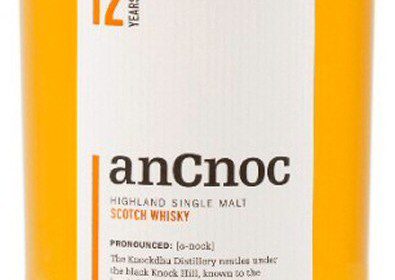
AnCnoc 12 Year Old

The AnCnoc 12 yo is the entry-level release from Knockdhu distillery. It is a popular and relatively available example of the “apperitif-style” single malt from flavour cluster H (i.e., relatively light and sweet).

It is also a very good value, at least here in Ontario ($69 CAD at the LCBO, when in stock). Here is how it compares to some other commonly available Scottish single malts, in this same flavour cluster:

AnCnoc 12yo: 8.67 ± 0.38 on 15 reviews ($$$)
Auchentoshan American Oak: 7.50 ± 0.92 on 6 reviews ($$)
Cardhu 12yo: 8.11 ± 0.52 on 15 reviews ($$$)
Dalwhinnie 15yo: 8.70 ± 0.38 on 14 reviews ($$$$)
Deanston Virgin Oak: 8.23 ± 0.48 on 9 reviews ($$)
Tomatin Cu Bocan: 8.10 ± 0.33 on 10 reviews ($$$$)

I recently reviewed the Dalwhinnie 15 yo, which I consider to be one of the standard bearers for this “apperitif” class. The AnCnoc 12 yo has a nearly identical average score and standard deviation, on a comparable number of reviews. Given that it is typically priced a bit lower, I was curious to try it out.

Here is what I find in the glass:

Nose: Overwhelming apple juice – sweetened apple juice in particular, although some sour green apple does come through as well. Honey is the next major element, followed by some floral and grassy notes (heather in particular). A bit of graininess (i.e., cereals). No smoke per se, but a faint ashy characteristic is present.

AnCnoc.12.Palate: Apple and honey similarly dominate the initial palate. There is also a definite citrus taste (more lime/lemon than orange). Not much else in the way of fruit – I am certainly not getting any of the darker fruits. A bit of vanilla. The grassiness is unmistakable, with hay and heather most prominent. Dried bread, with some mild baking spice. The ash is also there – relatively subtle in the background.

Finish: Surprisingly quick. There are no real lingering flavours – just a bit of light honey sweetness continuing for a brief time, with some of the cereal notes. There is a also a slight waxy bitterness that comes in at this stage (like cereal packaging?), but it is relatively mild. Frankly disappointing, to be honest – I was hoping for a more prolonged finish.

The AnCnoc 12 yo is a nice example of the GH flavour super-cluster, with a fair amount going on for such a light whisky. I expect it would make a good summer sipper – either neat or as a highball.

For me though, it does pale in direct comparison to the Dalwhinnie 15 yo, which has more clearly pronounced flavours at every stage of tasting (including some smoke). The finish is certainly relatively anemic on the AnCnoc 12, in comparison. As such, I would personally give the Dalwhinnie a definite edge in scoring (and frankly, a higher absolute score than the meta-critic average). That said, the AnCnoc is still a great bargain for the class, and I think the meta-critic average is pretty bang-on.

For very positive reviews of this whisky, Chip the RumHowler, André and Patrick at Quebec Whisky and Ralfy all consider it quite highly. I would probably fit in closer to the moderately positive score of Ruben from Whisky Notes. Josh of the WhiskeyJug and Nathan the Scotchnoob are both somewhat less enamored by this expression.

Dalwhinnie 15 Year Old

The Dalwhinnie 15yo is something of a standard bearer for me. It gets one of the best meta-critic scores for its flavour cluster (H) – and it is surprisingly complex for such a light dram. It is also widely available, and reasonably priced for the quality. It is currently $95 at the LCBO.

A final point to commend it – it is one of Mrs Selfbuilt’s current favourites among my collection. 🙂

Let’s see how it compares to some other commonly available Scottish single malts in this flavour cluster:

AnCnoc 12yo: 8.66 ± 0.38 on 14 reviews ($$$)
Auchentoshan American Oak: 7.50 ± 0.92 on 6 reviews ($$)
Cardhu 12yo: 8.11 ± 0.52 on 15 reviews ($$$)
Dalwhinnie 15yo: 8.70 ± 0.38 on 14 reviews ($$$$)
Deanston Virgin Oak: 8.23 ± 0.48 on 9 reviews ($$)
Tomatin Cu Bocan: 8.10 ± 0.33 on 10 reviews ($$$$)

As you can see, the Dalwhinnie and AnCnoc offerings lead the pack here. You can expect to pay a bit more for the Dalwhinnie 15, though.

Here is what I find in the glass:

Nose: Sweet floral quality, with apple blossoms and honeysuckle. Light fruits like apricots, pears, peaches, and apple.  Honey is definitely the dominant sweet note, although there is a touch of vanilla as well. There is also definite whiff of smoke. Very nice.

Palate: Tons of honey now, along with vanilla and toffee flavours. Same fruits as the nose. Malty overall, with a strong cereal component. Not as drying as some malty whiskies, nor as cloying as some fruity/floral ones. Individual flavours are sharp and clear, as opposed to smooth and mellow. A surprising amount of smoke comes in at the end, and lingers as you swallow.

Dalwhinnie 15yo bottleFinish: Moderate. The sweetness lingers after the smoke clears, so there is no real bitterness to speak of. Persistent malty notes, and a touch nutty and fruity until the end.

The GH flavour super-cluster is considered to comprise the “aperitif” class of single malts, owing to their typically lighter flavours. But make no mistake about it, there is a lot going on under the surface here.  The individual flavour components are crisp and clear, not muddled into a “smooth” jumble (as you sometimes find on lighter whiskies).

The smokey aspect to the finish suggests to me that this may be better suited as a disgestif rather than an aperitif (i.e., an after-dinner drink). I expect it would also do very well as a refreshing highball in the summertime – which should nicely bring up its sweet aromatic characteristics.

For more reviews of this whisky, Jason at Whisky Won and Ralfy both have quite positive reviews. Serge of Whisky Fun and Ruben of Whisky Notes both give it more middle-of-the-pack scores.


Kavalan Single Malt

A few months ago, I reviewed the Kavalan Concertmaster – a port-finished single malt whisky from Taiwanese distiller Kavalan. In this commentary, I thought I would look at their base model malt whisky – known simply as Kavalan Single Malt.

As previously mentioned, Taiwan has a marine tropical climate. This means that their whiskies will mature more quickly in the barrel compared to more temperate northerly climes like Scotland and Ireland. As such, don’t expect to see age statements here – they are all quite young whiskies, and tend to be heavily influenced by the types of casks they were matured in.

Both the Single Malt and the Concertmaster are classified as single malts, which means that are solely malt whisky, from a single distillery, made using traditional copper pot stills. And despite their entry-level status, both have won a number of medals at international wine & spirit competitions.

In the interest of full disclosure, my source for the Single Malt was a 50mL sample bottle (glass bottle, in the classic Kavalan art deco shape), picked up on one of my travels through Europe. When it was available at the LCBO, the full 700mL bottle retailed for $140 CAD. As an aside, I’ve noticed that the Single Malt tends to be sold for more than the Concertmaster just about everywhere (i.e., Concertmaster was $125 at the LCBO). One exception in Canada is Nova Scotia, where you can pick the Single Malt up for the relative bargain of $100 CAD (and Concertmaster for $104 CAD).

Here are some current stats for the various entry-level Kavalans from my meta-critic whisky database:

Kavalan Podium: 8.82 ± 0.41 on 5 reviews
Kavalan King Car: 8.58 ± 0.23 on 6 reviews
Kavalan Single Malt Whisky: 8.53 ± 0.55 on 11 reviews
Kavalan Concertmaster Port Cask: 8.41 ± 0.53 on 12 reviews

What I notice in the glass for the Single Malt:

Nose: Starts with classic oaky vanilla, with a touch of sherry dark fruits as well. Nothing very specific jumps out at me – a light mixed berry blend mainly. There’s also a perfumy floral smell, but no specific scents that I can identify. I definitely get a malty aroma, as if a bit of yeast were left behind. There is also a solventy smell lurking underneath it all (which is something I don’t personally care for).

Palate: Toasted caramel and vanilla are probably the most prominent flavours, consistent with ex-bourbon casks. A touch of the dark fruits, like dates and raisins, but not as much as I would like. I don’t really get the promised tropical fruits here at all (unlike, say Amrut, where they come through in spades). It really isn’t sweet – somewhat bitter, in fact. Also very malty, even more than the nose suggests (although this is not a problem for me). Taste of wood pulp. A bit boring perhaps, but not unpleasant. Note that this whisky is oddly astringent, and really dries out the tongue quickly after every sip.

Kavalan Single Malt bottleFinish: Much the same flavours as the palate, medium finish. Leaves you with a vaguely woody and malty aftertaste, and very dry gums and tongue.

I would consider this to be an entry-level single malt. The astringent effect is significant (i.e., very drying in the mouth). This may explain why some reviews complain that it is “hot” or has a “kick” to it, despite its relatively low 40% ABV – I suspect they are really referring to this astringency (i.e., a high alcohol content is also drying).  It comes across as rather young otherwise.

This is one case where I personally differ from the meta-critic scores – I would rank the Concertmaster higher than the Single Malt expression, as I find the port-finishing adds a lot of distinctive flavours to the base spirit. Please see my earlier Concertmaster review for additional comments, and a further discussion of the astringency characteristics.

For more reviews, you could check out Ralfy for a detailed discussion of this whisky. Some favourable reviews can be found by the guys at Quebec Whisky. Oliver at Dramming has a short review, with a somewhat different take on the flavour profile.

I have samples on hand of a couple of the higher-end Kavalan expressions, and will post commentaries of those when I get around to sampling them.

Mackmyra The First Edition

The First Edition (or Första Utgåvan) was the first major release by Mackmyra, an independent distillery in Sweden. Although a number of additional expressions have been released in recent years, the First Edition is still widely available around the world (including here at the LCBO in Canada).

It is distinguished by the use of Swedish oak for a proportion of the casks used for aging, resulting in 5.4% of the final make. Indeed, I note on the Mackmyra website that this expression has recently been re-labeled as Mackmyra “Swedish Oak” (Svensk Ek). But the specs seem otherwise the same as the original First Edition, so I suspect this is mainly a re-branding exercise. As an aside, I can see that highlighting the use of Swedish oak may be more impressive to the typical whisky consumer – but since the relatively low percentage of Swedish oak casks hasn’t changed, it may also be a little misleading.

Mackmyra uses a range of cask sizes for this whisky, and my bottle specifies that 46% of the make comes from quarter casks (100L). The use of smaller casks is a way to “accelerate” the aging of a young spirit, as explained on my source of whisky flavour page. You commonly see this practice with new distilleries, while they wait for the standard size casks to mature at the typical rate. It is bottled at an impressive 46.1% ABV.

I note that it is labeled as being non chill-filtered, with no additives (i.e., no artificial colouring or flavouring). Both statements are believable, as it has a light and bright yellow colour, and I can see small dark particulates floating in my bottle (which I suspect are just barrel char).

I must say, I like this level of label specificity on both the bottle and the outside packaging box.  It is great to know what you are getting ahead of time. I also personally like the funky modern design aesthetic to the packaging – but as always, it is what’s inside the bottle that counts.

Let’s see what the Whisky Database meta-critic scores have to say for some of the recent Mackmyra expressions available locally:

Mackmyra The First Edition: 8.78 ± 0.36 on 13 reviews
Mackmyra Special 04: 8.80 ± 0.37 on 8 reviews
Mackmyra Special 08: 8.38 ± 0.34 on 3 reviews

The average meta-critic score of 8.78 for the First Edition is very impressive for a young whisky with a relatively light flavour profile (i.e., not peated or wine cask-aged). Coupled with a very low typical price world-wide, this makes the Mackmyra First Edition one of the best deals in the GH flavour super-cluster.

I bought this bottle at the LCBO for $67 CAD – which seems like an excellent deal. Availability is limited, however.

Here’s what I notice in the glass:

Nose: Some vanilla sweetness, and lighter-color fruits (i.e., pears, plums, crisp apples). A bright herbal quality, with fresh pine or juniper – definitely something coniferous. Citrus. A faint touch of something smokey, but it’s hard to place. I get black licorice as well (i.e., a sweet anise aroma).

Palate: Now this is interesting – I get a very prominent tip-of-tongue tingle within seconds of the first sip. This characteristic is sometimes referred to as “peppery” by other reviewers, and I find it to be relatively rare outside of smokey whiskies. I don’t get much smoke here – but like on the nose, there is something lurking in the background. Definitely herbaceous, with the conifers turning more toward eucalyptus and menthol. Otherwise, the main characteristics are light sweetness – with a touch of honey, caramel and marshmallow. I get the same fruits as the nose, maybe a touch of berry as well.  And the black licorice is unmistakable now. Mouthfeel is very smooth, I would almost say creamy.

Finish: A clean finish, with no untoward notes emerging. Given the complexity of the palate, you always risk unpleasant surprises as the different characteristics fade out at various rates – but no problem here. The fruity notes do tend to disappear before the herbal ones, though.

I can see why this whisky is so highly ranked in this flavour cluster. Although it has many of the typical light and sweet “aperitif-style” flavours you’d expect (e.g., honey), it also has a surprising depth of complexity. The peppery and herbaceous/coniferous notes in particular are interesting. They make it somewhat “woody” without being “earthy”, if you get my meaning.

Mackmyra.FirstIn any case, if these later notes are not your cup of tea, you can try adding a bit of water to the whisky. I find this tends to subdue some of the spicier notes, and brings up the sweet fruity aspects. I like it fine neat, but at 46.1% ABV, you definitely have room to play with water.

As an aside, I am beginning to wonder if the presumed younger age may have something to do with the peppery “tongue-tingle.” This is something that I have also found quite prominent on the original Stalk & Barrel Canadian whisky (11+1), by Still Waters. That was a very young whisky (indeed, 1/11th of it was new make that couldn’t legally be called whisky on its own at the time of release). While not as complex as the Mackmyra First Edition, it did share a common youthful vibrancy.

For more opinions on the Mackmyra First Edition, I recommend you check out Ralfy’s informative video review, as well as the full team at Quebec Whisky. Thomas at Whisky Saga has a good review of the new “Svensk Ek” edition of this whisky.


Holiday Gift Guide 2015 – Ontario

NOTE: This guide has been replaced by a new up-to-date analysis for 2016 – please check it out!

Welcome to my inaugural 2015 holiday gift guide!

You can find plenty of whisky suggestions online – but, of course, the specific selections may not be available to you locally. Given that liquor is controlled through the LCBO in my province, I thought I would highlight high-ranking, affordable whiskies (~$100 CAD or less) currently in stock across the LCBO this holiday season.

Of course, the following would be good choices for you wherever you live. I certainly also encourage you to explore recommendations from other whisky blog sites – but I also suggest you run them through the meta-critic Whisky Database here first, to see how they compare.

Similarly, nothing is stopping you from spending considerably more on whisky than the rather arbitrary cut-off of ~$100 CAD used below. But again, you will want to check the database to see how they score in comparison.

All scores below are listed as the average meta-critic score, plus or minus the standard deviation, on the given number of reviews. Check out by Meta-critic Score page to understand what the meta-critic scoring is all about.

Single Malts

As usual, it’s worth picking single malt whisky by flavour cluster, as described on my Flavour Map page. Specifically, I am going to work from the 5 general “super-clusters” I describe there.

Aberlour.ABunadh.49Super-cluster A-B-C

Full-bodied, very sweet, pronounced sherry – with fruity, floral, nutty, honey and spicy notes, as well as malty and smokey notes on occasion.

My top pick here would normally be the Aberlour A’Bunadh, which gets an impressive 9.02 ± 0.21 on 16 reviews in my database – and is only $95 at the LCBO. That is a steal for this level of consistent quality (and is bottled at cask-strength to boot). Unfortunately, it’s rarely in stock now, with only a handful of bottles showing up in current online inventory. Snag one if you can!

Failing that, your next best bet for a cask-strength sherry bomb is the more widely available Glenfarclas 105. It is a little over my arbitrary limit at $107, and doesn’t score quite as highly – albeit at a still very respectable 8.80 ± 0.39 on 15 reviews.

My budget choice, at $66, is the GlenDronach 12 Year Old. It gets a very respectable 8.66 ± 0.24 on 15 reviews. And don’t let the relatively young age statement fool you – this whisky packs quite a sherried punch (and see my commentary for info on its true age).


Super-cluster E-F

Medium-bodied, medium-sweet – with fruity, honey, malty and winey notes, with some smoky and spicy notes on occasion

Middleton Redbreast 12yo bottleOne of the highest-ranking budget whiskies in this class is Amrut Fusion, from India. At only $85, and scoring 8.93 ± 0.27 on 17 reviews, this is certainly an excellent choice. It’s also an opportunity for those looking to explore a tropical whisky. Unfortunately, it is not widely available through the LCBO – again, grab one if you can.

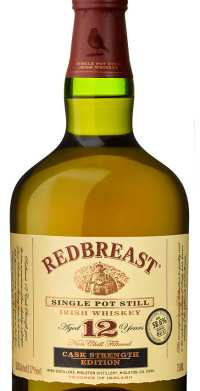
My top budget choice in this category is an Irish whiskey, Redbreast 12 Year Old. Redbreast is a single pot still whiskey. This is a traditional Irish style, where both unmalted and malted barley are distilled together in copper pot stills. The end result is closer to a Scottish single malt than a blend. Only $70, it gets a very good 8.83 ± 0.47 on 16 reviews.

A couple of new options at the LCBO you may want to consider are a pair of Glenfiddichs – Distillers Edition 15 Year Old and Rich Oak 14 Year Old. These are not your every-day entry-level Glenfiddichs, but more robust malts. The DE 15yo is currently on sale for $83, and scores 8.76 ± 0.38 on 8 reviews, and the RO 14yo is priced at $66, with 8.71 ± 0.35 on 6 reviews. Given the lower reviewer experience with the malts however, you should treat these scores as provisional.


Super-cluster G-H 

Light-bodied, sweet, apéritif-style – with honey, floral, fruity and malty notes, sometimes spicy, but rarely smoky.

Hibiki Harmony NASA really good choice here is The Arran Malt 14 Year Old. Typically, whiskies in these flavour clusters score lower than other clusters. And so, 8.71 ± 0.29 on 14 reviews in an excellent showing for this class. It’s not exactly cheap at $98 though, nor is it commonly available throughout the LCBO.

As a result, my top pick in this category (and my wife’s personal favourite) is the Dalwhinnie 15 Year Old ($95, 8.65 ± 0.4 on 12 reviews). A fairly delicate whisky, there is a surprising amount of complexity here. It also has lovely honey sweetness to it. Well worth a try.

A back-up budget choice you may want to consider is The Arran Malt 10 Year Old. A bit lighter in flavour than the 14yo, it’s cheaper at $70 – and more commonly available. Gets a decent 8.55 ± 0.41 on 15 reviews.

A different sort of option to consider is the only Japanese whisky currently on the LCBO’s roster – the Hibiki Harmony. Currently $100, its 8.45 ± 0.84 on 9 reviews is an average overall ranking – but one that has a lot more variability than usual (i.e., some really like it, some really don’t). Note that this is a blend, and is relatively delicate in flavour (which is why I am considering it in this single malt flavour super-cluster). But it’s your only chance to get in on the Japanese whisky craze through the LCBO, and I think it is a worthy contender to try (i.e., I personally fall in toward the higher-end of that scoring range). And it was just named as Japanese Whisky of the Year at WhiskyAdvocate.com.


Talisker 10yo bottleCluster I

Medium-bodied, medium-sweet, smoky – with some medicinal notes and spicy, fruity and nutty notes

This is a classic cluster for fans of smoky and/or peaty whiskies – though not out-right peat-bombs (see cluster J below for that).

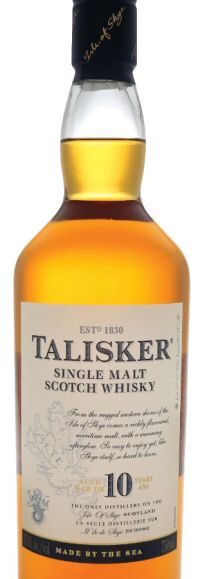
And you would do well to stick with a classic member of this class, the Talisker 10 Year Old. Just squeaking in at $100, it gets an excellent 8.92 ± 0.2 on 15 reviews. Seriously, you can’t go wrong with this choice – anyone would thank you for it.

There are certainly a lot of other options to consider here, but nothing really jumps out at me as a particularly good buy at the LCBO right now (at least, nothing that is commonly available). With moderate availability, I suppose you could consider the Longrow Peated ($98, scoring 8.79 ± 0.27 on 13 reviews), or Springbank 10 Year Old ($99, 8.71 ± 0.30 on 13 reviews), for something a bit different.

A good budget choice – especially if you like a little sherry in your smoky malt – is the Highland Park 12 Year Old ($75, 8.69 ± 0.41 on 17 reviews). Unfortunately, quality seems to have dropped in recent batches, otherwise this one would have been a a top pick. Still, it may serve well for something flavourful in this cluster.


Laphroaig Quarter Cask whisky bottleCluster J

Full-bodied, dry, very smoky, pungent – with medicinal notes and some spicy, malty and fruity notes possible

You really can’t top the value proposition of the Laphroaig Quarter Cask – only $73, yet garnering a meta-critic score of 9.16 ± 0.18 on 15 reviews! That’s a remarkable score, if you are into these really fragrant (aka pungent) peat bombs.

Surprisingly, it’s even cheaper than the standard Laphroaig 10 Year Old expression ($84, 8.92 ± 0.29 on 14 reviews). The Ardbeg 10 Year Old is another consideration for an entry-level expression ($100, 8.99 ± 0.37 on 15 reviews).

Of course, there is a lot more to consider if you are willing to go a bit higher. Stretching the budget a bit, my personal favourite, at $122, is the Lagavulin 16 Year Old. It gets an incredible meta-critic score of 9.36 ± 0.24 on 19 reviews. Full of a wide array of rich flavours, I find it a lot more interesting than the younger peat-bombs above. Just be prepared to smell like a talking ash-tray for the rest of the evening!


Scotch Blends

There are a lot of great blends out there, most of which can be had for much less than a typical single malt.

Why not move beyond the well-established names, into the company that has made the most waves in recent years – Compass Box.

Right now, you can fairly easily find the Great King St Glasgow Blend at $58, scoring 8.75 ± 0.12 on 5 reviews, or Great King St Artist’s Blend at $55, scoring 8.73 ± 0.34 on 11 reviews.

There is a lot more to consider here – especially for those on a tighter budget – so I suggest you explore the Whisky Database in more detail.


Lot 40 canadian rye whisky bottleCanadian Rye Whisky

Ok, you are NOT going to be able to find Jim Murray’s “World Whisky of the Year” – Crown Royal Northern Harvest Rye – very easily at your local LCBO. Due to its popularity, it sells out almost instantly whenever a LCBO store gets it in stock. It is attractively priced (on sale for $30), and gets a very good score of 8.81 ± 0.37 on 7 reviews.

But it certainly is not the highest ranked Canadian whisky overall by reviewers  – indeed, it is not even the highest ranked Crown Royal! That honour goes to the Crown Royal Monarch 75th Anniversary ($60, 8.92 ± 0.62 on 5 reviews). You may want to consider that rye blend as a possible consolation prize.

The highest-ranked Canadian whisky in my database is actually Gibson’s Finest 18yo: 9.11 ± 0.41 on 8 reviews – and currently on sale for $67 at the LCBO. A great blend of flavours, and one of my favourite Canadian whiskies. Highly recommended, if you can find it (may need to hunt around several stores in your area).

Wiser’s Legacy is a solid second choice, with 9.07 ± 0.26 on 12 reviews – and regularly-priced at $50. It has a spicier rye flavour, and is a great introduction to that classic Canadian style.

But a personal favourite that I like to recommend to newcomers to Canadian whisky is Corby’s Lot 40. A straight rye whisky that has been extensively reviewed, it gets a very good 8.89 ± 0.43 on 14 reviews – and is quite affordable at $40. One of the best aromas you will find.

Personally, I would go for any of the three higher scorers above, before any of the Crown Royals.


American Bourbon

Sadly, Ontario is not a good place to find higher-end American bourbons (although you can certainly get a good selection of the more entry-level and lower mid-range stuff).

1792Knob Creek Single Barrel Reserve ($57, 8.89 ± 0.34 on 5 reviews) and Maker’s Mark 46 ($58, 8.89 ± 0.23 on 11 reviews) would be among the top picks for mid-range bourbons, and both are at least somewhat available. Note that the Knob Creek Single Barrel is at cask-strength (60%), and Maker’s Mark is a “wheater” (i.e., mainly wheat-based for the secondary ingredient in the mashbill, after corn).

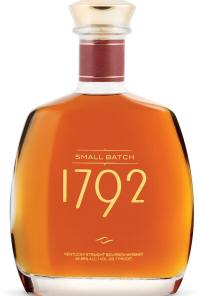
1792 Ridgemont Reserve Bourbon ($50, 8.78 ± 0.33 on 10 reviews) is a good option for those looking for a bit more rye spice in their bourbon, and comes in a nice decanter bottle. Probably the safest “gift” choice for a nice-looking bourbon (given that Blanton’s is not widely available at the LCBO).

Of course, maybe you are simply looking for a good quality “house” bourbon? Elijah Craig 12 Year Old ($43, 8.76 ± 0.36 on 12 reviews), or Buffalo Trace Bourbon ($41, 8.61 ± 0.44 on 14 reviews) would be top picks in that category, and widely available.

There’s a lot more to consider here – it really depends on your tastes. But I find inventories are kept so low on many popular bourbons, that there is really no point in discussing them in too much detail. You are best to see what is available locally, and then check the database to see how they perform.

—-

Again, whatever you choose to get, I strongly suggest you use the Whisky Database to see how it compares to other options in its respective flavour class.

Slainte, and happy holidays!



Aberlour A’Bunadh – batch 49

Welcome to one of the best known “sherry bombs” – the Aberlour A’bunadh.

From Gaelic, a’bunadh means ‘(of) the origin”, or “the original”, and is meant to honour an earlier style of whisky making at the speyside distillery Aberlour. Pronounciations are always tricky, but the full name of the distillery and whisky would best be pronounced a-ber-LAU-er ah-BOON-ar.

A’bunadh is a cask-strength single malt, produced in limited run batches. For this reason, each batch has a batch number instead of an age statement, with a variable absolute alcohol by volume (typically, ~59-61% ABV). They make several batches a year.

One of the distinctive features of A’bunadh is the exclusive aging in first-fill Spanish oak Oloroso sherry butts. I’ve seen various estimates online, but it appears that each batch is blended from barrels in the 5-25 year old range. Note that while it is widely believed that there is significant batch-to-batch variability (see below), all would qualify as “sherry bombs”, given the exclusive sherry cask aging.

Given the heavy focus on statistics on this blog site, an interesting question is how best to incorporate the batch-based A’bunadh into the meta-critic whisky database?

Given the large number of batches each year – and the corresponding limited number of reviews for each batch – I initially considered simply collecting scores on a per reviewer basis. So, if a reviewer had sampled multiple batches, I would average their scores across those batches (thus producing a single score per reviewer). As always, I would limit batches to those produced in the last ~5 years or (i.e., from batch ~30 and on up), to be consistent with other whiskies in the database.

Now, you could argue that this method would obscure any underlying pattern in natural batch variation. So I decided to first look at reviewers who had scored multiple batches. Surprisingly, I found very low variation across batches from each of these reviewers. Indeed, for reviewers who had scored a good number of A’bunadh batches (n>6), the standard deviations of their scores varied from ~0.10 up to ~0.25, per reviewer. Thus, despite the commonly held view that individual batches of A’bunadh are highly variable, you don’t see much variance in scores among at experienced reviewers. As such, I think it is worthwhile considering what an average across batches looks like, for all reviewers:

Aberlour A’Bunadh (all batches): 9.02 ± 0.21 on 16 reviewers

Clearly, this is a popular whisky, with a well above-average meta-critic score for its class (cluster A, of the ABC super-cluster).  It also has a below-average standard deviation across reviewers, compared to other whiskies in my database.

But that isn’t the end of the story – you need to consider all patterns in the data. Specifically, while reviewers generally look favourably on all batches of A’bunadh, they do have their relative preferences. And more importantly, there seems to be some consistency in the relative rankings across reviewers.

To explore what I mean by that, let’s take a look at all A’bunadh batches scored individually, across all reviewers. For this, I am only reporting below modern batches for which I have at least 4 individual reviews.

Aberlour A’Bunadh (Batch 30): 9.00 ± 0.17 on 6 reviewers
Aberlour A’Bunadh (Batch 32): 8.89 ± 0.72 on 4 reviewers
Aberlour A’Bunadh (Batch 33): 9.18 ± 0.16 on 4 reviewers
Aberlour A’Bunadh (Batch 34): 8.93 ± 0.32 on 5 reviewers
Aberlour A’Bunadh (Batch 35): 9.06 ± 0.24 on 5 reviewers
Aberlour A’Bunadh (Batch 36): 9.05 ± 0.52 on 4 reviewers
Aberlour A’Bunadh (Batch 39): 9.12 ± 0.24 on 6 reviewers
Aberlour A’Bunadh (Batch 47): 8.88 ± 0.41 on 5 reviewers
Aberlour A’Bunadh (Batch 48): 8.84 ± 0.57 on 4 reviewers
Aberlour A’Bunadh (Batch 49): 9.24 ± 0.08 on 6 reviewers
Aberlour A’Bunadh (Batch 50): 8.81 ± 0.42 on 4 reviewers

Keeping in mind the relatively low number of reviews, you can see that almost all of these fit quite well within the overall mean and SD of the all-batch data presented earlier (which is, by definition, based on the largest number of reviewers). But one batch really stands out for me, as it is a full SD unit from the overall mean – batch 49.

As you can see above, batch 49 gets the highest score (9.24) and lowest standard deviation (0.08) of any specific batch in my database. More than that, when looking over percentile rankings for the five reviewers who have tried multiple batches including this one, batch 49 is consistently their highest ranked A’bunadh version.

Below is what I find in the glass for this batch. Again, expect some variability from batch to batch, but all should fall within a general flavour range:

Nose: Big and bold sherry flavours, with raisins, figs and chocolate most prominent. Some other dark fruits are below the surface (e.g. cherry), but you will need some water to bring them out. Neat, there is a fair amount of alcohol burn here (i.e. it singes the nose hairs if you inhale too deeply). Water helps on this front as well.

Palate: Sweet and delicious, with more of the fruits showing up now – especially cherry and raspberry. Also orange marmalade and dark chocolate. Mouthfeel is thick and oily, with a syrupy nature. Just a touch nutty as well. With water, it opens up further, with rich notes of Christmas cake, fig pudding, and creamy milk chocolate. Becomes like Christmas in glass, including those chocolate orange candies.

Finish: Long. While there is an initial alcohol burn (subdued with water), a fruity sweetness persists for awhile. Unfortunately, a bit of bitterness creeps in over time (almonds? coffee?) – which is the one thing holding this expression back a bit for me.

General consensus on the subject of water is hard to come by here, as it seems that many prefer drinking it neat, at cask strength. Personally, this is one where I think water greatly improves the experience. And not just a few drops – a significant amount of water is actually better. Taking it down to ~50% ABV was my personal sweet spot, taming the burn and bringing out more of the fruit flavours. There were rapidly diminishing returns beyond that though – by ~45% the whisky definitely felt flooded. You will want to experiment to see what works best for you.

Aberlour.ABunadh.49I am glad I was able to pick up a bottle of batch 49 while it was available, and am now on the hunt for samples of other batches to compare. Batch 49 is certainly very flavourful, with no hints of the sulphur that sometimes mars some sherry cask batches. It is an outstanding value for $95 CAD at the LCBO.

To get the experience of those who have sampled many batches, I suggest you check out André, Patrick and RV at QuebecWhisky.com, Serge and WhiskyFun.com, or Ruben at WhiskyNotes.be. Given the generally high scores, it is hard to find a truly negative review of any A’bunadh batch. When it does happen, it is usually due to the detection of sulphur compounds (see for example Oliver’s experience of batch 45 at Dramming.com).

If you can find it, the Aberlour A’bunadh is a strong candidate to consider for the “sherry-bomb” corner of your whisky cabinet.


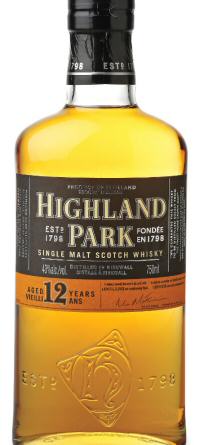
Highland Park 12 Year Old

Highland Park 12 year old

I have to admit that I have a soft spot for Highland Park. Located on the Orkney islands, Highland Park is one of the most northerly whisky distilleries in Scotland. But what truly makes it distinctive is its taste – Highland Park expressions all show an unusual combination of peated malt and sherry cask aging.

As a result, most Highland Park expressions end up in either the C or I flavour clusters. My Flavour Map page describes the cluster analysis and principal component analysis in detail – scroll down to see the full flavour map and cluster descriptions near the bottom of the page.

It is very uncommon to find whiskies in the relatively unpopulated area between C and I in the cluster analysis/PCA. Most rich-tasting whiskies fall firmly into one of the two camps – that is to say, they are either clearly smokey (I-J) or clearly winey (A-C).  This makes Highland Park an unusual exception, as their expressions typically mark the inner edges of the C/I clusters (i.e., where the overlap would be, if there more examples). This gives Highland Park a truly unique – and distinctive – flavour profile.

Let’s take a look at how some of the common Highland Park expressions do in my Whisky Database. Note that there are more HP expressions tracked there than are shown below, but these are among the most commonly available (all carried by the LCBO, for example). The “$” are relative indicators based on worldwide prices (as explained here).

Highland Park Dark Origins: 8.68 ± 0.52 on 11 reviews ($$$$)
Highland Park 10 yo: 8.58 ± 0.32 on 9 reviews ($$$)
Highland Park 12 yo: 8.70 ± 0.41 on 17 reviews ($$$)
Highland Park 18 yo: 9.18 ± 0.28 on 17 reviews ($$$$$)
Highland Park 21 yo: 8.86 ± 0.46 on 10 reviews ($$$$$+)
Highland Park 25 yo: 9.20 ± 0.25 on 11 reviews ($$$$$+)

Clearly, from a simple price/score perspective, the 10yo, 12yo and 18yo are the most compelling options to consider. For my inaugural commentary on Highland Park, I’ve chosen to start with the relatively common (and affordable) 12 yo expression. I hope to do a full commentary on the 18 yo at a later time (UPDATE: available here). The 12 yo was picked up at the LCBO for ~$80 CAD (bottled at 43% ABV).

There is wide range of opinions on the 12 yo, as shown by the standard deviation above. Some hold this whisky in high regard, a close second to the popular 18 yo. Indeed, one reviewer in my database significantly prefers it over the 18 yo. But most reviewers give it a middle-of-the-road score – and one gives it a very low score. Combined, this brings the overall average down (and results in an increased variance).

Nose: Personally, I find a lot of the core Highland Park characteristics present in the 12 yo – at least on first sniff/sip. Orkney peat is very distinctive, and is definitely present on the nose here. It is not overly smokey though – I would describe it instead as a more earthy aroma. It’s also quite fruity, with some definite prune, raisin and plum aromas. Some of the more citrus fruits as well. I personally don’t detect any of the classic sherry red berries on the nose. All in all, definitely a pleasing nose.

Palate: The smokey peat quickly asserts itself, although it is not as overwhelming as some in this flavour class (I).  I get more of the red fruits now, with vanilla and some definite honey/brown sugar sweetness as well. Unfortunately, there’s also a hint of almond-type bitterness that grows more strongly on subsequent sips.

Finish: The finish is surprisingly long lasting, with lightly lingering impressions of the initial earthy and fruity notes from the nose. Unfortunately, the bitter note from the palate remains consistent on the way out, and so eventually becomes the dominant characteristic in the end.  A rather unsatisfying finish for this reason (although I suppose that might just encourage you to drink more!). I suspect this bitterness is a symptom of the young age, as I don’t detect it on the 18 yo.

One thing that definitely helps here is a splash of water. I always encourage my guests to try a bit of water in their whisky (after first tasting it neat – see my hosting a whisky tasting page). While I drink most non-cask-strength whiskies neat, a few drops of water makes a huge difference here. There is an immediate increase in the sweetness on the nose and palate, bringing in some tropical fruit notes that I don’t detect neat (particularly banana). It also seems to help counteract the bitterness in the finish – although I suspect it does this more by masking the bitterness than diminishing it, but the end result is the same.

Highland Park 12 year oldNote that only a few drops of water are required for a standard ~1.5oz whisky pour. If you use a teaspoon, you are likely to flood the whisky (and thin out the body). Of course, that’s fine if that is your preference – but do try just a few drops first to see what you think. This is one case where I find it makes a surprising difference.

The Quebec Whisky guys are typically moderately positive for this whisky. Ralfy gives it a median score – although he also recommends it as one of three beginner malts to try.

UPDATE January, 2016: As pointed out in the discussion thread below, this whisky has been re-reviewed recently by the Rumhowler (original and 2015 re-review), WhiskyWon (original and 2015 re-review), and Jim Murray – and in all cases, the score has dropped significantly.  As a result, I now track reviews pre/post 2014 separately in my database, in addition to the overall average of all reviewers.

Highland Park 12yo (all reviews past 5 years): 8.67 ± 0.23 on 18 reviews
Highland Park 12yo (reviews pre-mid 2014): 8.83 ± 0.26 on 15 reviews
Highland Park 12yo (reviews post-mid 2014): 8.28 ± 0.39 on 8 reviews

UPDATE July, 2016: My Highland Park 18 yo review is now available.


1 8 9 10 11